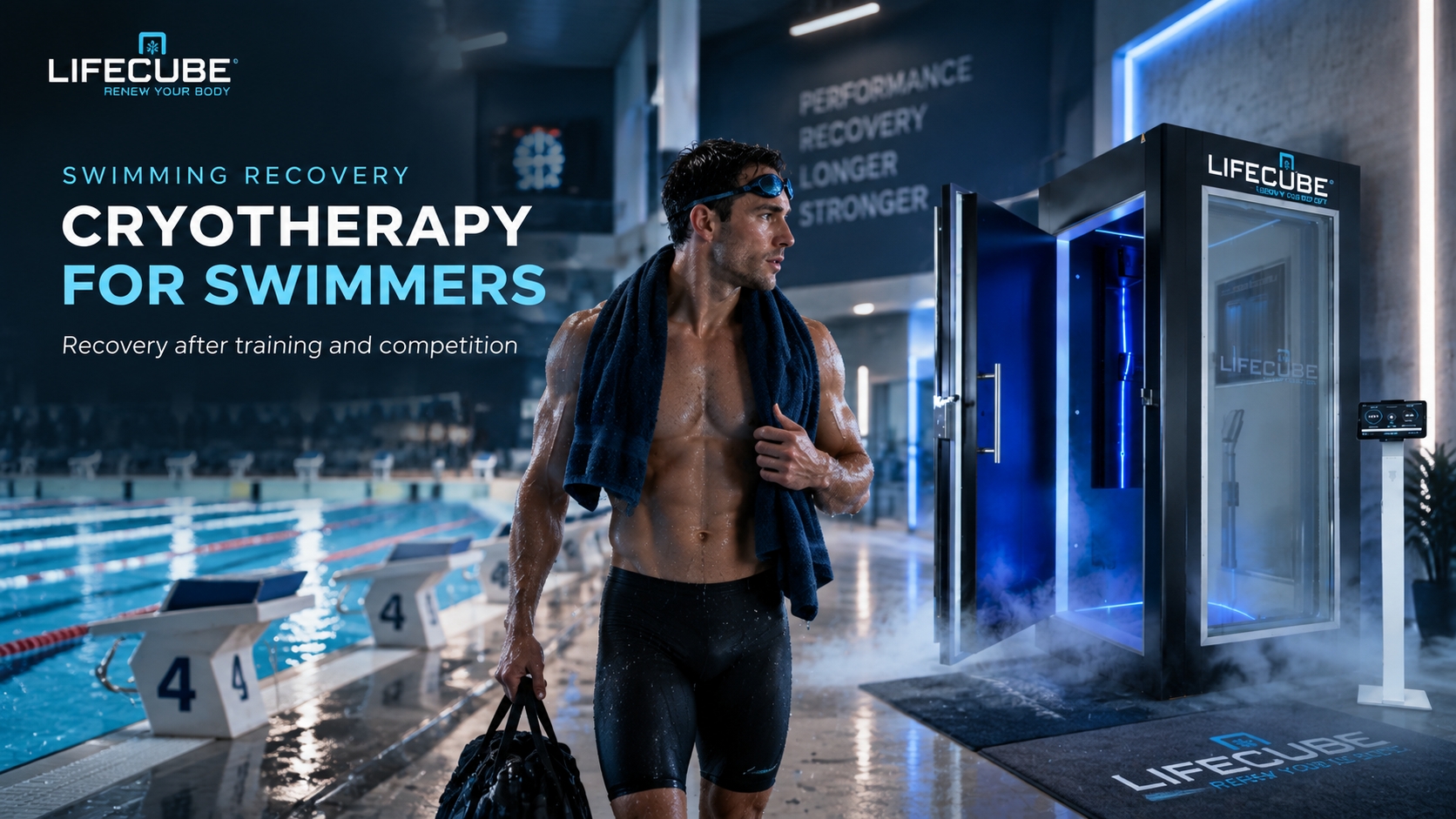

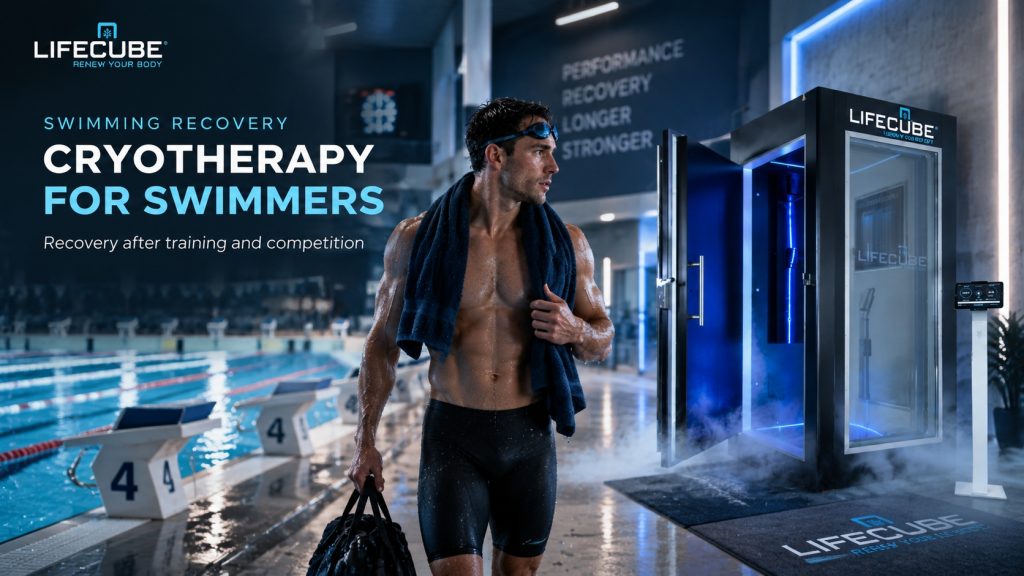
Ask any competitive swimmer what hurts most after a heavy set, and the answer rarely changes: shoulders, lower back, and legs that feel heavier with every length. Cryotherapy for swimmers has therefore become one of the most talked-about recovery tools in British swim clubs and performance centres. Training volume in swimming is relentless, often split across two sessions a day, and the body needs a genuine chance to reset between them.
This guide explains what cryotherapy for swimmers actually involves and why it differs from simply getting out of a cold pool. It also covers how clubs and individual athletes are using it around training blocks and competition weekends. Finally, you will find practical guidance on timing and safety, so you can make an informed decision rather than relying on hype.
What Is Cryotherapy for Swimmers?
Cryotherapy for swimmers means using short, controlled exposure to extremely low temperatures, typically in a whole body cryotherapy chamber, to support muscle recovery after training. Sessions usually last between two and four minutes. The goal is to trigger the body’s natural recovery response rather than simply cooling down.
Unlike a static ice bath, a cryotherapy chamber cools the surrounding air rather than submerging the body in water. As a result, the skin surface cools rapidly while the core stays stable, which many swimmers find far more comfortable than sitting in an ice bath for ten minutes. Because the experience is more tolerable, adherence tends to be higher, and athletes are more likely to use it consistently.
Why Pool Training Alone Doesn’t Cover Recovery
It’s a fair question: if swimmers already spend hours in cool water, why would cold therapy for swimmers add anything extra? The answer, however, comes down to temperature and purpose.
Pool water typically sits between 25°C and 28°C, which is comfortable enough to train in for long periods. It is, however, far too mild to trigger a meaningful recovery response. Cryotherapy chambers, by contrast, operate at temperatures well below freezing for a brief, controlled window. That sharp contrast is what prompts blood flow changes and, in turn, a reduction in perceived soreness once the body warms back up.
The Difference Between Pool Water and a Cryotherapy Chamber
- Pool training conditions the cardiovascular system and technique, but it does not create the rapid temperature shock associated with recovery benefits.
- Cryotherapy exposure, in contrast, is brief, intense, and specifically timed after training to support the muscles that have just been worked hardest.
- Recovery goals differ from performance goals. Treating them as separate tools, rather than assuming one covers the other, tends to work best.
The Benefits of Cryotherapy for Swimmers After Training
Research into whole body cryotherapy is still developing, and no reputable source claims it works identically for every athlete. However, several consistent patterns have emerged from sports science studies, and they map closely onto what swimmers need most.
Reduced Perceived Muscle Soreness
A consensus paper from sports recovery researchers found that cryostimulation is a convenient way to reduce delayed onset muscle soreness (DOMS), particularly when used soon after intense training. For swimmers training twice daily, that reduction in soreness can therefore make the difference between a strong afternoon session and one spent battling fatigue.
Improved Subjective Recovery and Well-Being
Athletes across multiple studies consistently report feeling more recovered and generally better after sessions, even where objective markers vary between individuals. This matters in swimming, where mental readiness before an early morning set is just as important as physical readiness.
Support for Sleep and Next-Day Readiness
Some evidence points to improved sleep quality and reduced nighttime restlessness in elite athletes using cold exposure, although researchers are clear that this area needs further confirmation. Even so, for swimmers managing early alarms and back-to-back training days, a modest improvement in sleep quality is worth exploring.
A Quick Mental Reset Between Efforts
Because a session takes only a few minutes, cryotherapy for swimmers fits neatly into a tight schedule. Many athletes describe the short, focused exposure as a useful mental reset. Afterwards, they feel able to switch off before moving on to the next part of their day.
How Whole Body Cryotherapy Works for Athletes
A whole body cryotherapy machine cools dry air around the body for a short, timed session, usually one to four minutes. The extreme but brief cold prompts blood vessels near the skin to constrict, then dilate again once the session ends and the body warms up. This rebound effect is thought to support circulation and, as a result, help clear some of the by-products of hard exercise.
Timing matters more than most people expect. Research summarised by sports recovery specialists suggests exposure within roughly 24 to 48 hours of intense exercise tends to produce the most noticeable benefits, although individual response varies considerably from one athlete to another. This is why coaches increasingly treat cryotherapy for swimmers as one part of a wider recovery plan, alongside nutrition, sleep, and structured rest days, rather than a standalone fix.
It’s also worth noting that not every chamber works the same way. Older systems rely on liquid nitrogen to reach their target temperature, which requires careful ventilation and monitoring. Modern electric chambers, including a whole body cryotherapy machine built on nitrogen-free technology, cool the air mechanically instead. Consequently, facilities gain tighter, more consistent temperature control and avoid the handling risks that come with nitrogen storage, which matters a great deal in a busy swim club or performance centre.
Using Cryotherapy for Swimmers Around Training and Competition
How a swimmer uses cold therapy for swimmers should change depending on where they are in the season. What works well during a heavy training block is not necessarily right the week of a major gala.
Cold Therapy for Swimmers Between Training Sessions
During high-volume training weeks, a short session after the harder of the day’s two workouts is the most common approach. This gives the body a window to recover before the next set begins. It also avoids interrupting technique work or interfering with strength sessions, which some research suggests should be timed separately from cold exposure.
Recovery During Multi-Day Galas and Competitions
Competition weekends bring a different challenge: repeated high-intensity swims with limited recovery time between heats, semi-finals, and finals. Here, cryotherapy for swimmers is typically used to manage acute soreness and support a fast mental reset rather than to drive long-term adaptation. Many swimmers, therefore, find a brief session more practical than a lengthy ice bath, particularly when changing rooms and schedules are tight.
Situation | Typical goal | Practical fit |
Daily training block | Manage cumulative fatigue | Short session after the harder session of the day |
Taper week | Support freshness without adding load | Reduced frequency, used selectively |
Gala or competition day | Quick recovery between races | Brief, time-efficient session between heats |
Why Electric, Nitrogen-Free Chambers Suit Swimming Clubs
Swim clubs and performance facilities have particular needs: high usage across a training day, multiple athletes moving through quickly, and staff who need a system that is simple and safe to run. This is why an electric chamber has a clear practical edge over nitrogen-based alternatives for anyone offering cryotherapy for swimmers at scale.
Because it doesn’t rely on nitrogen tanks, an electric system avoids the ventilation and oxygen-monitoring requirements that come with gas-based cooling. It also reaches a stable, repeatable temperature session after session, which matters when a club is running dozens of athletes through in a single day. For facility managers weighing up the investment, understanding cryotherapy machine cost alongside running costs and maintenance is therefore a sensible next step before choosing equipment.
Getting Started with Cryotherapy for Swimmers
Anyone considering cold therapy for swimmers should start with a few simple checks. First, speak to a qualified professional if there is any underlying heart condition, circulatory issue, or other health concern, since cryotherapy is not suitable for everyone. Second, treat the first session as an introduction rather than a maximum-intensity test, because most facilities ease new users in gradually.
Finally, remember that cryotherapy for swimmers works best as part of a broader recovery routine. Hydration, sleep, and proper nutrition remain the foundation. Cold exposure is a useful addition on top of those basics, not a replacement for them.
Final Thoughts
Cryotherapy for swimmers isn’t a shortcut, but it is a practical, time-efficient tool for managing the soreness and fatigue that come with a demanding training schedule. Used thoughtfully alongside good nutrition, sleep, and structured rest, it can help swimmers turn up to their next session, or their next race, feeling genuinely ready to perform.
If you’re a club, facility, or performance centre exploring what it would take to bring cold therapy for swimmers in-house, get in touch with the LifeCube team. We can talk through the right whole body cryotherapy machine for your space, your budget, and your athletes.
Frequently Asked Questions
Is cryotherapy safe for swimmers?
For most healthy adults, short cryotherapy sessions are considered safe when supervised by trained staff. However, swimmers with heart conditions, uncontrolled blood pressure, or certain circulatory issues should speak to a doctor before trying it.
How often should swimmers use cryotherapy?
There is no single fixed schedule. Many swimmers use it two to four times a week during heavy training blocks, then adjust frequency during taper or competition periods based on how their body responds.
Does cryotherapy replace warming down in the pool?
No. Cryotherapy for swimmers is a complement to an active warm-down, not a substitute. Light swimming after a race or hard set still plays an important role in flushing the muscles before cold exposure.
What's the difference between cryotherapy and an ice bath?
An ice bath submerges the body in cold water for several minutes, which many swimmers find uncomfortable and time-consuming. A cryotherapy chamber, meanwhile, cools dry air around the body for a much shorter session, which is generally easier to tolerate and fits more easily into a tight schedule.
Can junior or age-group swimmers use cryotherapy?
Most facilities set minimum age guidelines and recommend parental or coach involvement for younger athletes. Always check the specific facility’s policy and consult a medical professional before introducing cold therapy to younger swimmers.
How soon after training should a swimmer use cryotherapy?
Many coaches recommend cryotherapy for swimmers within a day or two of intense training, since this window is where most of the reported recovery benefits appear to be strongest.