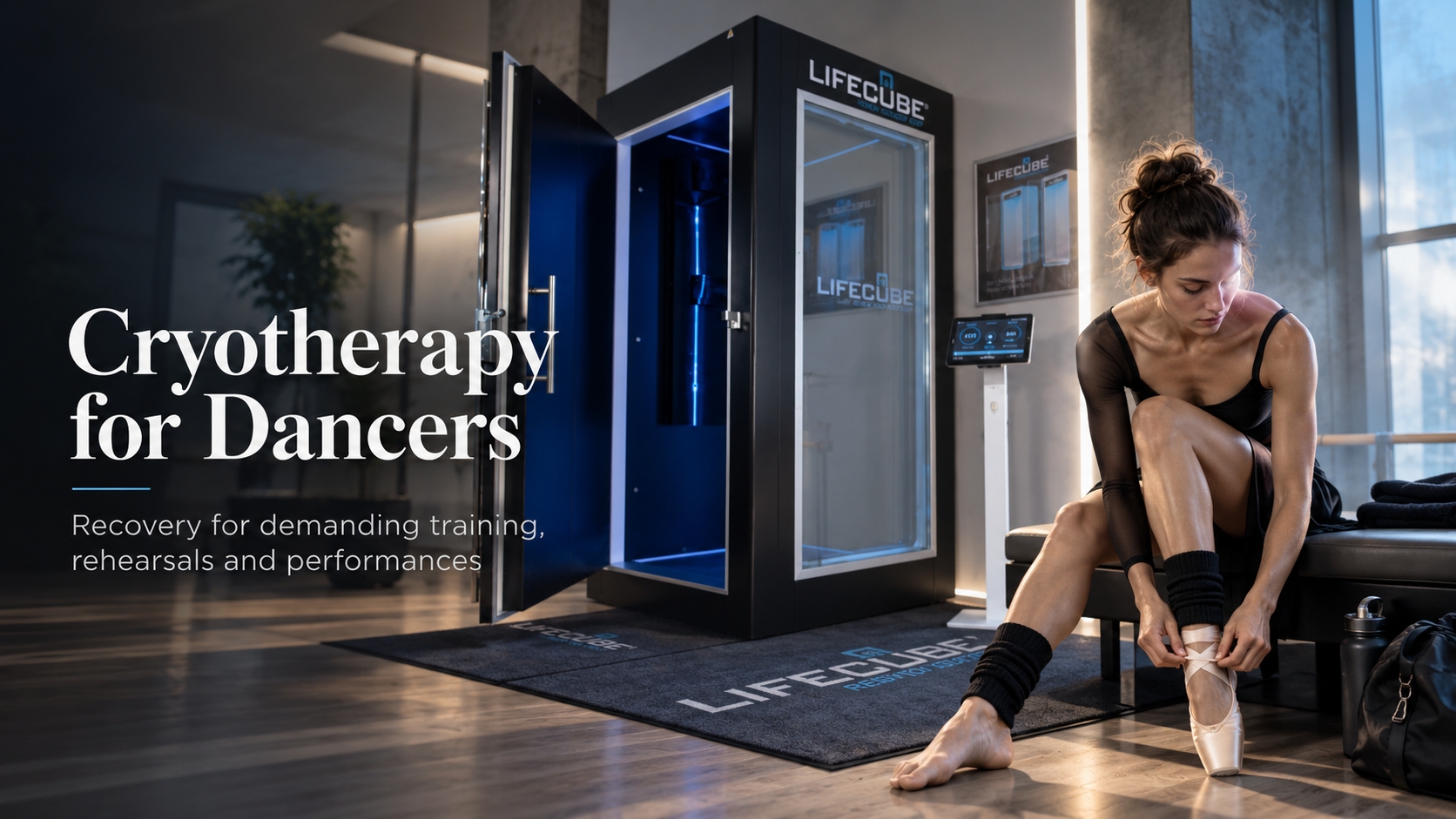

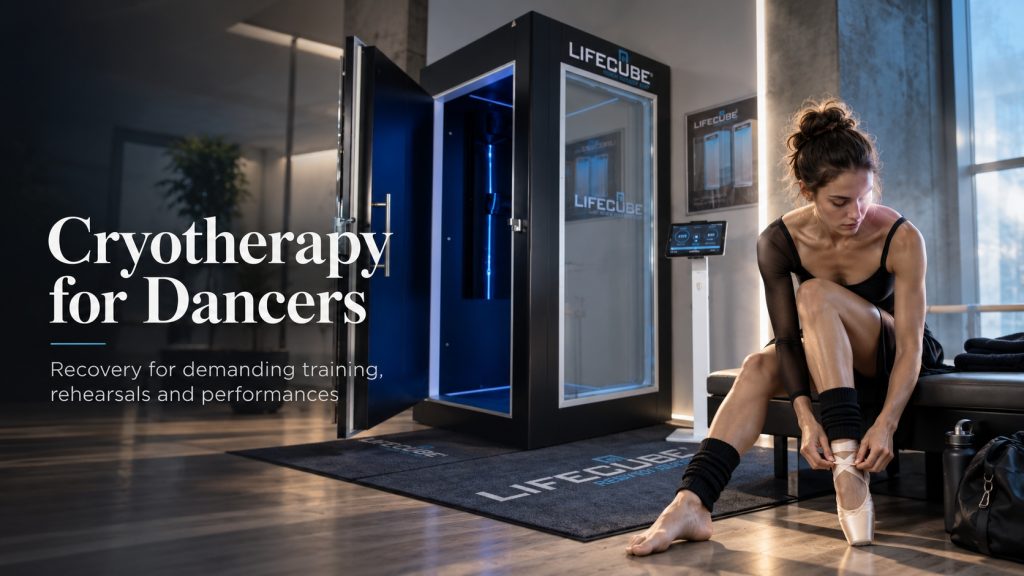
Dancers ask a lot from their bodies. Long rehearsals, repeated jumps, fast changes of direction and demanding performances can place significant stress on muscles and joints. That is why recovery has become such an important part of modern dance training.
Cryotherapy for dancers is one recovery approach that has attracted growing interest among athletes, performers and sports recovery professionals. Whole-body cold exposure may help reduce the feeling of muscle soreness and support short-term recovery after demanding physical activity.
However, cryotherapy is not a replacement for sleep, nutrition, hydration, physiotherapy or a properly planned training programme. Instead, it can form part of a wider recovery strategy.
In this guide, we explore how cryotherapy for dancers works, when it may be useful, what dancers should consider before a session and how professional performance facilities can incorporate modern cold therapy into their recovery offering.
What Is Cryotherapy for Dancers?
Cryotherapy for dancers involves exposing the body to very cold temperatures for a short, controlled period.
Whole-body cryotherapy uses a specialised chamber to expose the body to extremely cold air. Unlike an ice bath, there is no need to immerse the body in water.
For dancers, the appeal is straightforward. A demanding rehearsal or performance can leave the legs feeling heavy, muscles feeling sore and the body generally fatigued. A structured recovery routine may help dancers feel more prepared for their next session.
Research into cold-based recovery methods has found potential benefits for muscle soreness and some measures of short-term physical recovery. However, results vary depending on the type of cold therapy, exercise performed and timing.
Therefore, dancers should view cryotherapy as one tool within a broader recovery plan rather than a guaranteed performance enhancer.
Why Do Dancers Need a Strong Recovery Strategy?
Dance is both an artistic discipline and a physically demanding activity.
A dancer may perform hundreds of jumps, turns, landings and rapid movements during training and rehearsal. Furthermore, professional dancers often repeat similar movements across several days while preparing for a performance.
This creates several common recovery challenges:
- Muscle soreness after intensive rehearsals
- Fatigue between training sessions
- Heavy or tired legs
- Repeated impact from jumps and landings
- Limited recovery time between performances
- Physical stress during intensive production periods
- The need to maintain movement quality and technique
For example, a professional dancer may rehearse during the day and perform in the evening. The following morning, they may need to return to training.
In this situation, recovery becomes more than simply taking a day off.
Sleep, hydration, appropriate nutrition, mobility work and sensible training loads remain essential. However, additional recovery methods may help dancers manage the demands of a busy schedule.
How Can Cryotherapy for Dancers Support Recovery?
The main reason athletes and performers explore cold therapy is its potential effect on post-exercise soreness and perceived recovery.
Cold exposure can temporarily reduce skin and tissue temperature. It also changes blood flow and sensory responses during and after exposure.
For dancers, this may be particularly relevant following demanding sessions.
1. It May Help With Muscle Soreness
Delayed onset muscle soreness, commonly known as DOMS, can appear after unfamiliar or particularly demanding exercise.
Dance training can involve eccentric movements, landing forces and repeated muscular contractions. As a result, dancers may experience soreness in areas such as the:
- Quadriceps
- Hamstrings
- Calves
- Glutes
- Hip muscles
Cold-based recovery methods have been studied for their potential to reduce perceived muscle soreness.
Therefore, cryotherapy for dancers may be considered after particularly demanding training sessions when soreness is affecting comfort and recovery.
2. It Can Fit Into a Busy Training Schedule
Time matters in professional dance.
A recovery method that takes a long time may be difficult to fit between rehearsals, classes and performances. Whole-body cryotherapy sessions are designed around short periods of cold exposure.
As a result, some performance facilities may integrate cryotherapy into a wider recovery programme alongside stretching, mobility work, massage or compression.
The key is not to treat one recovery method as a magic solution. Instead, dancers can build a routine around the strategies that suit their training demands.
3. It May Support Perceived Recovery
Recovery is not only about physical measurements.
How a dancer feels can also influence training quality. Feeling excessively sore or fatigued can make a demanding rehearsal feel harder.
Some research into post-exercise cold exposure suggests potential improvements in perceived recovery and muscle soreness. However, the response differs between individuals.
For this reason, dancers should monitor how they respond rather than assuming that cryotherapy will produce the same effect for everyone.
When Should Dancers Consider Cryotherapy?
There is no single timing strategy that works for every dancer.
Instead, the most useful approach depends on the training schedule, workload and individual response.
After a High-Intensity Rehearsal
A demanding rehearsal may place considerable stress on the lower body.
If a dancer regularly experiences significant soreness after particularly intense sessions, cold therapy could form part of their post-training recovery routine.
During a Performance Run
Performing several shows across a short period can reduce the amount of time available for recovery.
For example, a dancer performing consecutive evening shows may have limited time between performances. In such circumstances, recovery strategies become especially important.
After Unusually Demanding Training
A new choreography routine, additional jumps or an increase in training volume can place different demands on the body.
However, dancers should not use cryotherapy to mask pain and continue training through a suspected injury.
Persistent or severe pain should be assessed by an appropriate healthcare professional.
Cryotherapy vs Other Recovery Methods for Dancers
Cryotherapy does not have to compete with other recovery strategies.
In fact, dancers may benefit from combining different approaches according to their needs.
| Recovery method | Potential role |
|---|---|
| Sleep | Supports overall physical and mental recovery |
| Hydration | Helps maintain normal physiological function |
| Nutrition | Provides energy and nutrients needed for training |
| Mobility work | Supports movement and preparation |
| Massage | May help with relaxation and perceived muscle soreness |
| Compression | Often used as part of post-exercise recovery routines |
| Cold therapy | May help manage post-exercise soreness and perceived recovery |
| Physiotherapy | Important for assessment and rehabilitation when injuries occur |
The most effective recovery programme is therefore usually a combination rather than a single treatment.
Moreover, dancers should consider their individual training load, performance calendar and previous injury history when deciding which recovery methods to use.
Cryotherapy vs Other Recovery Methods for Dancers
Cryotherapy does not have to compete with other recovery strategies.
In fact, dancers may benefit from combining different approaches according to their needs.
| Recovery method | Potential role |
|---|---|
| Sleep | Supports overall physical and mental recovery |
| Hydration | Helps maintain normal physiological function |
| Nutrition | Provides energy and nutrients needed for training |
| Mobility work | Supports movement and preparation |
| Massage | May help with relaxation and perceived muscle soreness |
| Compression | Often used as part of post-exercise recovery routines |
| Cold therapy | May help manage post-exercise soreness and perceived recovery |
| Physiotherapy | Important for assessment and rehabilitation when injuries occur |
The most effective recovery programme is therefore usually a combination rather than a single treatment.
Moreover, dancers should consider their individual training load, performance calendar and previous injury history when deciding which recovery methods to use.
Is Cryotherapy Safe for Dancers?
Whole-body cryotherapy involves exposure to extremely low temperatures, so it should always be approached as a controlled procedure.
Dancers should follow the facility's instructions and disclose relevant health information during the pre-session screening process.
Importantly, cryotherapy should not be used as a way to ignore an injury.
If a dancer has significant pain, swelling, reduced movement or an injury that has not been assessed, they should seek appropriate professional advice rather than relying on cold exposure alone.
It is also important to remember that research on cryotherapy does not support every marketing claim sometimes associated with the treatment. The strongest evidence relates to specific aspects of recovery, such as perceived muscle soreness, while effects on performance can vary.
Therefore, a responsible recovery programme should focus on realistic outcomes.
How to Build a Recovery Routine Around Cryotherapy
For dancers who are interested in trying cold therapy, a simple recovery framework can help.
Step 1: Identify the Training Demand
Consider how hard the rehearsal, class or performance was.
Was it a normal session, or was the workload significantly higher than usual?
Step 2: Prioritise the Basics
Before adding recovery technology, make sure the basics are covered:
- Get enough sleep
- Stay hydrated
- Eat enough to support training
- Include appropriate rest periods
- Follow a sensible training plan
Step 3: Add Recovery Tools Where Appropriate
If soreness or fatigue remains an issue, consider whether methods such as mobility work, massage, compression or cold therapy could fit into the routine.
Step 4: Monitor Your Response
Keep track of how you feel before and after sessions.
For example, dancers can monitor soreness, perceived fatigue, sleep and training quality.
Over time, this can help identify which recovery strategies actually work for them.
Final Thoughts: Could Cryotherapy Be Part of Better Dance Recovery?
Dancers place exceptional demands on their bodies. Therefore, recovery deserves the same level of attention as training.
Cryotherapy for dancers may offer a useful way to support recovery from demanding rehearsals and performances, particularly when muscle soreness and fatigue are part of a busy training schedule.
However, the fundamentals still matter most. Good sleep, nutrition, hydration, appropriate training loads and professional injury management should remain the foundation.
For dance companies, sports facilities, performance centres and wellness businesses, modern whole-body cryotherapy can also create an opportunity to build a more complete recovery experience.
If your business is exploring cold therapy for dancers, athletes or performing artists, learn more about the benefits of an electric cryotherapy machine or explore options for a cryotherapy chamber for sale UK.
Speak with the LifeCube team to discuss your requirements and discover how electric whole-body cryotherapy could fit into your recovery or wellness facility.
Frequently Asked Questions About Cryotherapy for Dancers
Is cryotherapy good for dancers?
Cryotherapy may help dancers manage post-exercise muscle soreness and support perceived recovery. However, results vary between individuals, and it should form part of a broader recovery strategy rather than replace sleep, nutrition, physiotherapy or appropriate rest.
How does cryotherapy help after dance training?
Cold exposure can temporarily reduce tissue temperature and alter sensory and blood-flow responses. Research on cold-based recovery suggests that it may reduce perceived muscle soreness following strenuous exercise.
Can dancers use cryotherapy after a performance?
Yes, dancers may consider cryotherapy as part of their post-performance recovery routine. However, the timing and suitability should depend on the individual's training demands, health and response to cold exposure.
How long does a whole-body cryotherapy session take?
Whole-body cryotherapy sessions are typically short. The exact duration and temperature depend on the equipment, operating protocol and individual facility.
Always follow the manufacturer's instructions and the facility's professional guidance.
Is an electric cryotherapy machine suitable for sports recovery facilities?
An electric cryotherapy machine can be suitable for commercial recovery environments, depending on the facility's space, operating requirements and business model. Electric systems use refrigeration rather than liquid nitrogen, which can simplify the operational model for some businesses.
Can cryotherapy replace physiotherapy?
No. Cryotherapy should not replace assessment or rehabilitation from a qualified healthcare professional. A dancer with persistent pain or an injury should seek appropriate clinical advice.
Can cryotherapy improve dance performance?
The evidence is mixed. Some studies suggest potential benefits for aspects of recovery, while performance effects can vary depending on the exercise and timing. Therefore, cryotherapy should be viewed primarily as a recovery tool rather than a guaranteed performance enhancer.
Where can a business buy a cryotherapy chamber in the UK?
Businesses researching a cryotherapy chamber for sale UK should compare technology, installation requirements, safety documentation, operating costs, maintenance, staff training and after-sales support rather than focusing only on the purchase price.
Explore Electric Cryotherapy for Your Facility
Discover how electric whole-body cryotherapy could fit into a dance studio, performance centre, sports recovery facility or wellness business.
Explore LifeCube →