
Aesthetic clinics face a familiar challenge. Clients want modern treatment options, but adding new equipment is not always straightforward.
A new device needs to fit your services, your team and your clients’ expectations. More importantly, it needs to make commercial sense.
That is why CryoEMS for aesthetic clinics deserves careful consideration before investing.
CryoEMS combines cold therapy with electrical muscle stimulation in one system. This creates an interesting option for clinics exploring technology-led, non-invasive services.
However, understanding the technology is only the beginning.
Before introducing CryoEMS, clinic owners should consider treatment suitability, equipment specifications, staff training, safety and realistic business potential.
This guide explores the essential questions to ask, helping UK aesthetic clinics make a more informed investment decision.
1. What Is CryoEMS and How Does the Technology Work?
CryoEMS technology combines two different approaches: controlled cold exposure and electrical muscle stimulation.
Rather than using separate devices, a combined system can deliver both functions through specialised treatment applicators.
Understanding cold therapy
Cold therapy involves applying controlled cooling to a selected area.
However, not all cold-based aesthetic devices work in the same way.
For example, whole-body cryotherapy uses extremely cold air inside a chamber. In contrast, targeted systems apply cooling to specific areas.
The temperature, exposure method and intended application depend on the equipment.
Therefore, clinics should avoid assuming that research on one type of cold treatment automatically applies to another.
Understanding electrical muscle stimulation
Electrical muscle stimulation, commonly called EMS, uses electrical impulses to activate muscles.
The technology appears in several settings, including physical rehabilitation, fitness and aesthetic equipment.
However, the intended purpose and supporting evidence differ between devices.
For aesthetic clinics, the important question is not simply whether EMS activates muscles.
Instead, it is whether the specific device has reliable evidence supporting its advertised cosmetic outcomes.
How LifeCube CryoEMS combines both technologies
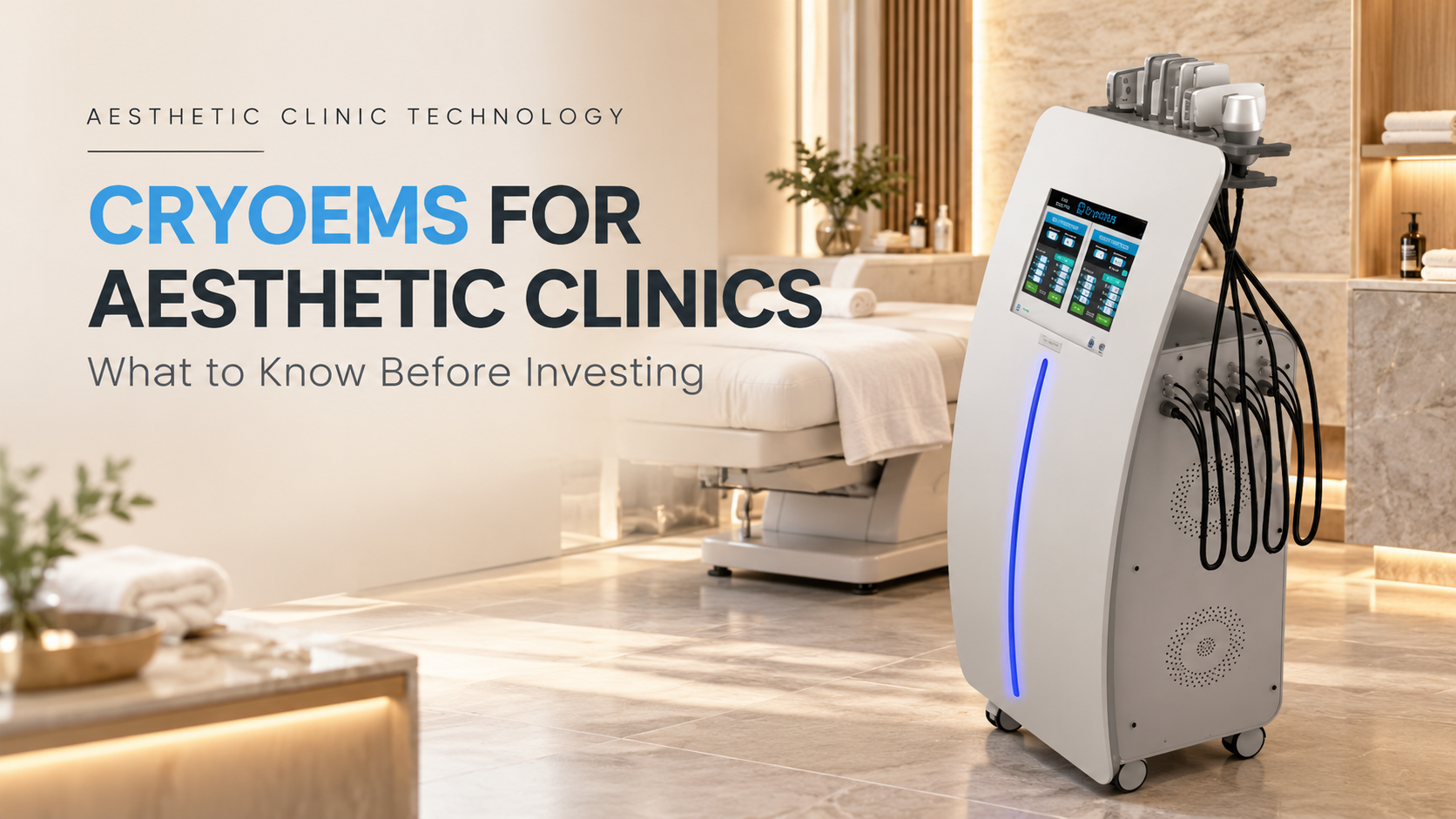
LifeCube’s CryoEMS system combines cooling and muscle stimulation within eight treatment plates.
According to its published product information, both functions can operate simultaneously. The system also features a 15-inch touchscreen that allows operators to adjust cold and EMS settings.
Life Cube
This combination may interest clinics looking to expand their equipment range without introducing two completely separate treatment systems.
However, technical features should not be confused with guaranteed treatment results.
Before purchasing, request the manufacturer’s full specifications, approved applications and supporting evidence.
2. Why Are Aesthetic Clinics Exploring CryoEMS?
Today’s aesthetic market includes more than traditional facials and injectables.
Many clinics now explore equipment-led services as part of a wider treatment offering.
For example, clients may be interested in treatments that do not involve surgery or injections.
Meanwhile, clinic owners want services that complement their existing business.
Expanding the treatment menu
Adding non-invasive aesthetic technology can help clinics explore new service categories.
However, the equipment should support a clear business objective.
Ask yourself:
- Does this technology complement our current services?
- Are existing clients asking about similar treatments?
- Can our team explain the treatment clearly?
- Do we have enough suitable clients to support demand?
- Will the service fit our clinic’s positioning?
For example, a clinic specialising in technology-led body treatments may find CryoEMS more relevant than a business focused entirely on traditional skincare.
The decision should follow your audience, not simply the latest equipment trend.
Creating a consistent client experience
Clients often judge an aesthetic clinic by more than the treatment itself.
Consultations, professionalism, comfort and communication all influence the experience.
Therefore, introducing CryoEMS should involve a clear customer journey.
From the first enquiry to post-treatment guidance, every stage should feel organised and transparent.
This approach can help build trust without relying on exaggerated promises.
3. CryoEMS for Aesthetic Clinics: Questions to Ask Before Investing
Choosing new aesthetic clinic equipment involves several decisions.
Before committing to a CryoEMS machine, focus on the details that affect daily operations.
What are the equipment specifications?
Start by requesting a complete technical specification.
Important questions include:
- How many treatment applicators does the system include?
- Can operators adjust cooling and EMS independently?
- What are the electrical requirements?
- What space does the equipment need?
- What cleaning procedures apply?
- What maintenance does the manufacturer recommend?
- What warranty and technical support are available?
Additionally, ask for a live demonstration whenever possible.
Seeing the system operate can reveal practical details that a product brochure may not explain.
What evidence supports the intended treatments?
This is one of the most important questions.
A manufacturer may describe possible cosmetic applications. However, clinics should ask for evidence supporting each specific claim.
For example, claims about temporary muscle toning are different from claims about permanent fat reduction.
Therefore, request:
- Evidence relating to the specific device
- Details of the treatment protocols studied
- Information about participant numbers
- Results and follow-up periods
- Known limitations and adverse effects
Do not rely solely on promotional photographs or testimonials.
What training and support are included?
A sophisticated device still requires competent operators.
Before investing, ask whether the supplier provides initial training, written protocols and ongoing technical support.
Also, clarify who can operate the system and what qualifications or experience they need.
This helps protect both the clinic and its clients.
4. How to Introduce CryoEMS Into Your Treatment Menu
Adding new equipment should be a planned process.
A successful launch begins with clear treatment pathways and realistic expectations.
Start with client suitability
Not every treatment suits every client.
Before offering a CryoEMS treatment, clinics should review the manufacturer’s contraindications and screening requirements.
For example, electrical stimulation may be unsuitable for some people with implanted electronic medical devices.
Cold exposure may also require additional precautions for certain medical or circulatory conditions.
However, exact exclusions depend on the device and its approved operating instructions.
Therefore, do not create screening rules from generic internet advice alone.
Use manufacturer documentation and appropriate professional guidance.
Build a clear consultation process
An effective consultation should explain what the treatment involves.
It should also give clients an opportunity to ask questions.
A practical consultation process includes:
- Discussing the client’s goals
- Reviewing relevant health information
- Explaining the technology
- Checking suitability and contraindications
- Discussing realistic expectations
- Obtaining informed consent
- Providing appropriate aftercare information
Importantly, avoid promising results that the available evidence cannot support.
Set realistic treatment expectations
Some clients may assume that a new technology produces immediate or permanent changes.
However, treatment outcomes can vary.
Clinics should explain what the manufacturer has demonstrated, what remains uncertain and whether repeat sessions form part of an approved protocol.
This makes aesthetic treatment planning more transparent.
It also helps reduce misunderstandings later.
5. Understanding CryoEMS Equipment Costs and Business Potential
Introducing CryoEMS for aesthetic clinics is both a treatment decision and a financial investment.
Therefore, clinics should assess the complete cost before purchasing equipment.
Calculate the full equipment investment
The purchase price is only one part of the budget.
Additional expenses may include:
- Delivery and installation
- Staff training
- Treatment accessories and consumables
- Equipment servicing
- Insurance
- Marketing and promotional materials
- Software or booking-system updates
- Potential downtime and repairs
Ask suppliers for a written quotation that clearly identifies what is included.
Also, compare warranty terms and technical support arrangements.
A lower initial price may not provide better long-term value.
Estimate treatment revenue realistically
Before investing, calculate how many appointments the clinic could reasonably sell.
For example, consider a hypothetical clinic charging £80 per session.
Paid sessions per week | Weekly gross revenue | Monthly gross revenue* |
5 | £400 | £1,732 |
10 | £800 | £3,464 |
15 | £1,200 | £5,196 |
20 | £1,600 | £6,928 |
*Illustrative figures use 4.33 weeks per month. They exclude VAT where applicable, staffing, equipment costs, consumables, overheads and other expenses. They are not forecasts of actual CryoEMS demand or achievable pricing.
However, revenue does not equal profit.
Your financial model should also include appointment duration, staff availability, cancellations and realistic customer demand.
Calculate your break-even point
A simple formula can help:
Break-evensessions=MonthlyfixedcostsContributionpersession
Contribution per session means the treatment price minus its directly associated variable costs.
For example, assume your monthly fixed costs attributable to CryoEMS are £1,500.
If each £80 session generates £65 after variable costs, you would need approximately 24 paid sessions per month to cover those fixed costs.
However, these are illustrative assumptions rather than verified LifeCube operating figures.
A reliable forecast should use your supplier quotation and actual clinic expenses.
6. Safety, Training and UK Regulatory Considerations
Safety should be part of the purchasing decision, not something to address after installation.
This is especially important when introducing equipment that combines cooling and electrical stimulation.
Check equipment documentation
Before offering treatments, request the manufacturer’s operating manual and safety information.
You should also establish the device’s intended purpose and regulatory status.
Depending on the product’s classification and claims, medical-device requirements may apply.
Therefore, confirm which requirements apply to the specific CryoEMS system rather than assuming that all aesthetic equipment follows the same rules.
Make treatment claims carefully
Marketing can create significant compliance risks.
For example, describing a device as non-invasive does not automatically justify claims about fat reduction, permanent body contouring or medical benefits.
The ASA advises that claims about electrical beauty devices must reflect the available evidence. It also requires robust substantiation for stronger cosmetic claims.
Clinics should therefore review website copy, advertisements and consultation materials before launch.
Avoid unsupported promises such as guaranteed fat loss, permanent skin tightening or results equivalent to surgery.
Establish consistent staff procedures
Staff should understand both the equipment and the client experience.
Training should cover:
- Treatment preparation
- Health screening
- Contraindications
- Equipment settings
- Safe applicator placement
- Client monitoring
- Emergency procedures
- Cleaning and maintenance
- Documentation and consent
Additionally, clinics should review relevant professional insurance requirements.
A clear operating process helps teams deliver a consistent service while managing risk.
7. Is CryoEMS the Right Investment for Your Aesthetic Clinic?
Not every new technology will suit every business.
The best decision depends on client demand, clinical suitability, available space and financial expectations.
Before investing in CryoEMS for aesthetic clinics, review the following questions.
Your pre-investment checklist
- Do we understand how CryoEMS works?
- Does the treatment complement our existing services?
- Have we identified a suitable customer audience?
- Have we reviewed device-specific evidence?
- Do we understand the contraindications?
- Have we confirmed relevant UK regulatory requirements?
- Can our staff receive appropriate training?
- Do we have sufficient treatment space?
- Have we obtained a complete equipment quotation?
- Have we calculated realistic operating costs?
- Can we explain the treatment without exaggerated claims?
- Does the supplier offer reliable after-sales support?
If several answers remain unclear, investigate them before committing.
A thoughtful investment should improve your service offering without creating unnecessary financial or operational pressure.
Should Your Clinic Invest in CryoEMS?
Adding new technology can create opportunities for aesthetic clinics. However, the strongest investments begin with informed decisions.
CryoEMS for aesthetic clinics brings together controlled cold therapy and electrical muscle stimulation in a single equipment category.
For clinic owners, the important questions extend beyond the technology itself.
Consider the intended treatments, equipment specifications, client suitability, staff training and ongoing operating costs.
Most importantly, request clear evidence for any advertised outcomes.
A well-planned introduction can help your clinic explore a new service while maintaining professional standards and realistic client expectations.
LifeCube offers CryoEMS technology designed around the combined application of cooling and muscle stimulation.
Interested in adding CryoEMS to your aesthetic clinic?
Explore LifeCube’s CryoEMS technology and contact the team to discuss equipment specifications, training requirements and suitability for your business.
Frequently Asked Questions
What is CryoEMS?
CryoEMS combines controlled cold therapy with electrical muscle stimulation.
LifeCube’s system uses treatment plates that deliver both functions simultaneously, with adjustable settings managed through a touchscreen interface.
Is CryoEMS a non-invasive aesthetic treatment?
CryoEMS uses external treatment applicators rather than surgical incisions.
However, clinics should verify the specific device’s intended applications, safety requirements and supporting evidence before advertising any treatment outcomes.
How is CryoEMS different from traditional EMS?
Traditional EMS uses electrical impulses to stimulate muscles.
CryoEMS combines that approach with controlled cooling. However, the addition of cold therapy does not automatically establish superior cosmetic results.
Can CryoEMS reduce body fat?
Claims about fat reduction require robust evidence for the specific device and treatment protocol.
The ASA does not generally accept unsupported claims that muscle stimulators cause fat loss or reduce body measurements.
What training is needed to operate CryoEMS?
Training should cover equipment operation, screening, contraindications, applicator placement, client monitoring and emergency procedures.
The exact requirements depend on the manufacturer’s instructions, device classification and applicable professional standards.
How much does a CryoEMS machine cost?
The cost depends on the equipment configuration, supplier package and support arrangements.
Clinics should request a current quotation covering purchase price, delivery, training, maintenance and warranty rather than relying on an unverified online estimate.
Can CryoEMS complement existing aesthetic treatments?
Potentially, yes.
However, clinics should assess client suitability, scheduling, intended applications and compatibility with existing treatment protocols before combining services.
Is CryoEMS suitable for every aesthetic clinic?
No single device suits every clinic.
CryoEMS may interest businesses exploring technology-led body treatments, but the decision should depend on verified treatment evidence, customer demand, staff capability and commercial viability.