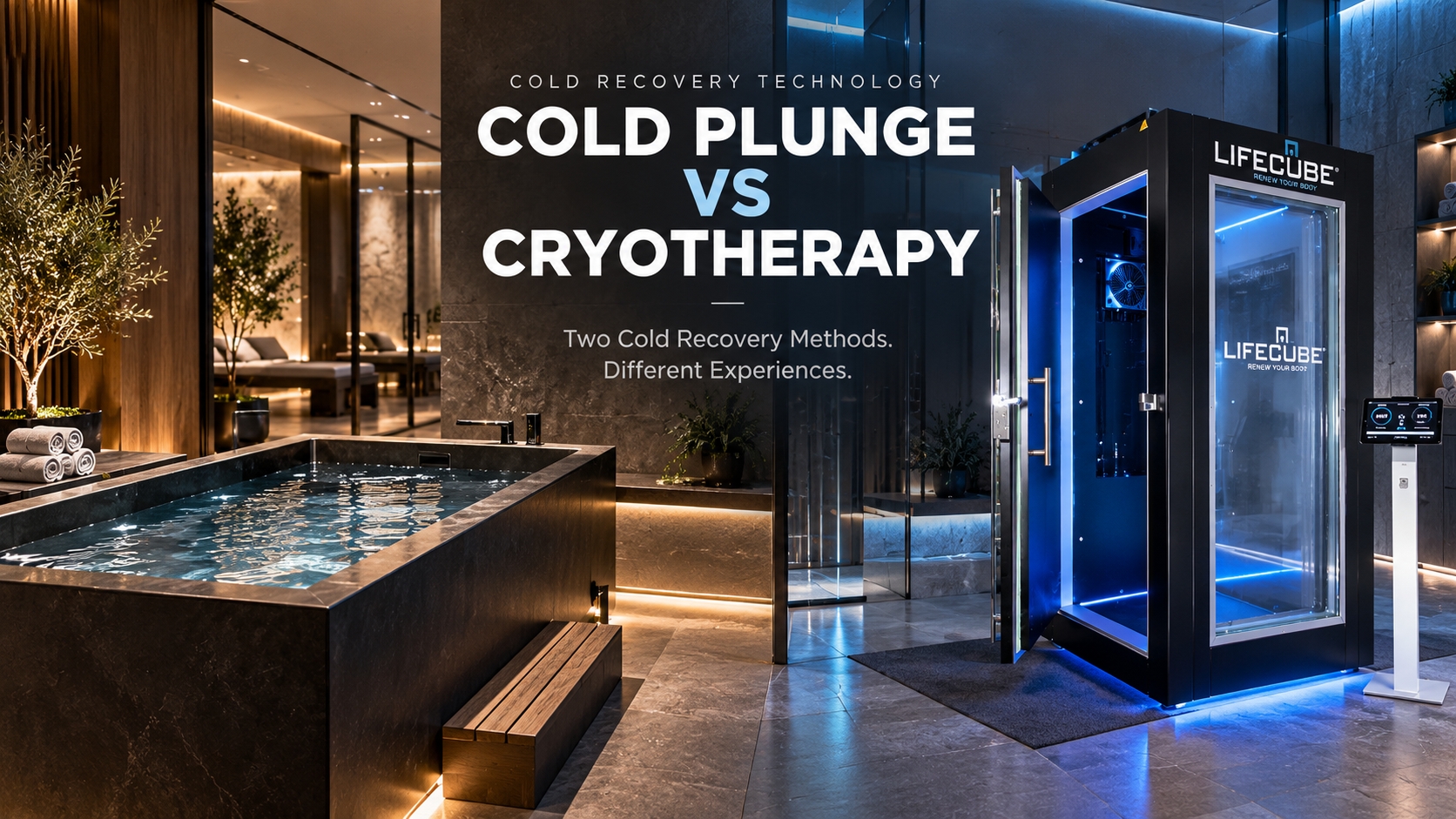

Cold plunges have become a familiar sight in gyms, spas and recovery studios. Meanwhile, whole-body cryotherapy is gaining attention as another way to experience controlled cold exposure.
But when comparing cold plunge vs cryotherapy, which option makes more sense?
Both expose the body to cold temperatures. However, they use different methods, require different equipment and create different experiences.
A cold plunge involves sitting or immersing yourself in chilled water. In contrast, whole body cryotherapy uses extremely cold air inside a specialist chamber for a short session.
Both approaches attract people interested in muscle recovery, sports performance and wellness. Yet neither guarantees faster recovery or better health.
For UK wellness businesses, the choice also involves installation, maintenance, staffing and customer experience.
This guide compares temperatures, session times, potential benefits, safety and commercial considerations to help you understand the differences.
Cold Plunge vs Cryotherapy: Understanding the Basics
Before comparing results, it helps to understand how each method works.
What is a cold plunge?
A cold plunge is a bath, tub or pool containing cold water.
Users immerse part or most of their body for a controlled period. The water commonly ranges from around 10°C to 15°C in sports recovery settings, although some facilities use colder temperatures.
Cold plunges are popular because the concept is simple. You enter cold water, remain there for a set period and leave when the session ends.
However, water removes heat from the body much faster than air at the same temperature.
As a result, cold-water immersion can feel intense even when the temperature is much higher than that of a cryotherapy chamber.
What is whole-body cryotherapy?
Whole body cryotherapy exposes the body to very cold, dry air inside a purpose-built chamber.
Commercial sessions typically last around two to three minutes, depending on the system and operating protocol.
Some electric chambers operate at temperatures around -80°C to -110°C. However, temperature ranges differ between manufacturers and models.
Unlike cold plunges, cryotherapy does not require users to immerse themselves in water.
Instead, they remain in a controlled cold-air environment while wearing appropriate protective clothing.
For many wellness operators, this creates a different type of premium recovery experience.
Cold Plunge vs Cryotherapy: Key Differences at a Glance
Both methods use cold exposure, but the experience and operating requirements differ.
Feature | Cold Plunge | Whole-Body Cryotherapy |
Cooling method | Cold water | Very cold, dry air |
Typical temperature | Around 10°C–15°C for many recovery protocols | Often around -80°C to -110°C, depending on equipment |
Session duration | Often 5–15 minutes in studied protocols | Commonly 2–3 minutes |
User experience | Partial or full immersion in water | Standing inside a specialist chamber |
Clothing | Swimwear | Dry clothing and protective equipment |
Hygiene | Water filtration, cleaning and water-quality management | Chamber cleaning and equipment maintenance |
Installation | Plumbing or water handling, drainage and electrical requirements as applicable | Electrical supply, room conditions and manufacturer-specific installation |
Commercial positioning | Accessible cold-water wellness experience | Technology-led premium recovery service |
These figures describe common approaches, not universal operating instructions.
Importantly, colder air does not automatically mean stronger recovery effects. Water and air transfer heat differently, so chamber temperature alone cannot establish which treatment works better.
Which Offers Better Cold Therapy for Muscle Recovery?
One of the biggest reasons people explore cold exposure is exercise recovery.
After demanding physical activity, muscles may feel sore, heavy or fatigued. Therefore, athletes and active adults often look for ways to manage discomfort between sessions.
However, the research does not show that one cold treatment is best for everyone.
Cold plunge recovery: what does research suggest?
Cold water immersion has a substantial research history in sports recovery.
Some studies suggest it can reduce perceived muscle soreness after strenuous exercise.
For example, systematic reviews have found evidence of reduced delayed-onset muscle soreness after cold-water immersion compared with passive recovery.
However, results depend on water temperature, exposure time and the type of exercise.
Furthermore, frequent cold-water immersion immediately after resistance training may reduce some long-term muscle growth adaptations. This matters for people whose main goal is building muscle.
Therefore, timing and training goals should influence how someone uses cold exposure.
Cryotherapy benefits for post-exercise recovery
Researchers have also examined cryotherapy benefits following exercise.
Some studies report improvements in perceived soreness, fatigue and selected recovery measures.
However, evidence for whole-body cryotherapy remains mixed. Studies often use different temperatures, session schedules and participant groups.
As a result, it is difficult to establish one ideal protocol.
Cryotherapy should therefore complement established recovery practices rather than replace them.
Good sleep, adequate nutrition, hydration and sensible training loads remain essential.
Is cryotherapy better than a cold plunge?
Not necessarily.
Cold-water immersion has a larger evidence base for several exercise recovery outcomes. Meanwhile, whole-body cryotherapy offers a different experience that some people may prefer.
For example, someone who dislikes entering cold water may prefer a brief dry-air session.
In contrast, another person may enjoy the immersive experience of a cold plunge.
Ultimately, personal preference, safety, accessibility and recovery goals all matter.
Comparing Cold Plunge Benefits and Cryotherapy Benefits
Cold exposure can trigger several short-term responses in the body.
However, a physiological response does not always translate into a proven long-term health benefit.
Muscle soreness and fatigue
Both methods may help some users manage post-exercise soreness.
Cold-water immersion has more established evidence for reducing delayed-onset muscle soreness.
Meanwhile, cryotherapy research suggests potential improvements in perceived recovery, although findings remain less consistent.
Inflammation and recovery
Cold exposure can influence blood flow and some inflammatory responses.
However, inflammation also plays an important role in normal tissue repair and exercise adaptation.
Therefore, reducing inflammatory markers does not automatically mean someone will recover faster or perform better.
Mood and wellbeing
Some people describe feeling refreshed or alert after cold exposure.
Nevertheless, individual experiences vary.
Neither method should be promoted as a proven treatment for anxiety, depression or other medical conditions.
Weight loss and metabolism
Cold exposure requires the body to maintain its temperature.
However, neither cold plunges nor whole-body cryotherapy provide a reliable shortcut to weight loss.
Long-term nutrition, physical activity and lifestyle habits remain more important.
The most credible way to discuss cold plunge benefits and cryotherapy is to separate promising research from claims that science has not established.
Cold Plunge vs Cryotherapy: Which Is Better for Wellness Businesses?
For gym owners, spa directors and recovery-centre operators, the comparison goes beyond personal preference.
Both services can attract customers interested in recovery and wellness. However, each creates different operational responsibilities.
Installation and maintenance
A commercial cold plunge needs reliable water-quality management. Depending on the setup, this may include filtration, disinfection, drainage and temperature control.
Additionally, staff must monitor cleaning schedules and customer hygiene.
A commercial cryotherapy chamber requires a suitable electrical supply, adequate space and manufacturer-approved installation conditions.
Electric systems avoid liquid nitrogen deliveries. However, they still need maintenance, technical support and trained operators.
Session capacity and customer experience
Cryotherapy sessions are generally shorter than typical cold-water immersion protocols.
This can help businesses design structured appointment schedules.
However, actual throughput depends on preparation, screening, chamber recovery time and staff availability.
Cold plunges may suit facilities that already offer sauna circuits or contrast bathing.
In contrast, cryotherapy can complement premium recovery studios, physiotherapy clinics, luxury spas and performance centres.
Commercial costs
There is no universal cost winner.
A cold plunge may require a smaller initial investment, depending on its size and specification. However, commercial water treatment, energy consumption and maintenance create ongoing expenses.
Cryotherapy chambers generally represent a larger equipment investment. In return, businesses may be able to position sessions as a premium service.
For UK operators, compare total costs rather than purchase prices alone.
A practical business assessment should include:
- Equipment purchase or rental costs
- Installation and room preparation
- Energy and water consumption
- Cleaning and maintenance
- Staff training
- Realistic sessions per day
- Customer pricing and demand
For example, a business charging £35 per cryotherapy session and completing eight paid sessions daily would generate £280 in daily gross session revenue.
However, this is only an illustration. It excludes operating expenses, tax, downtime and other business costs.
Choosing the best cryotherapy machine
If your facility is considering cryotherapy, selecting the best cryotherapy machine means finding a system that matches your business needs.
Consider chamber capacity, electrical requirements, temperature control, customer comfort and technical support.
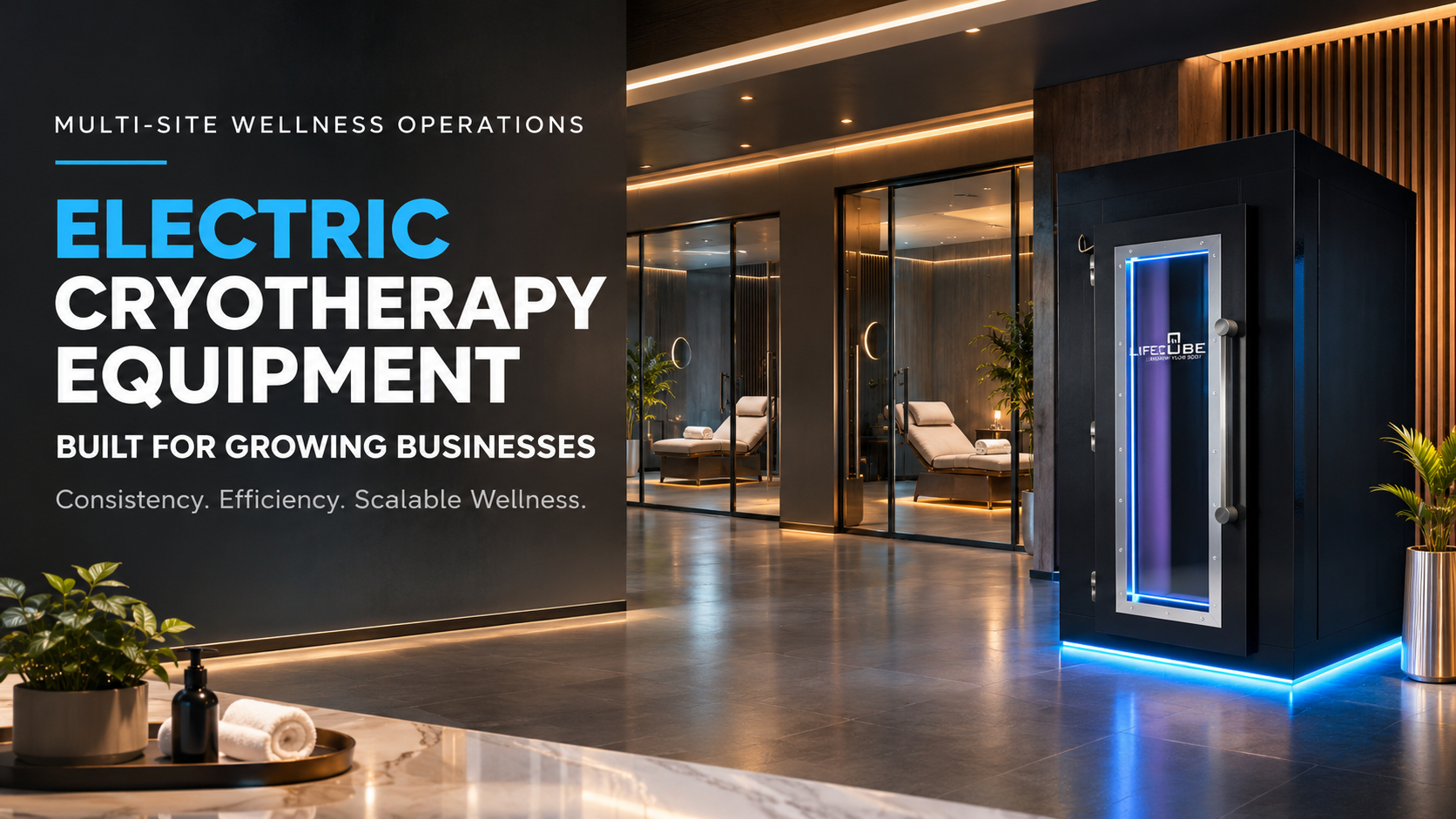
LifeCube offers German-engineered, fully electric, nitrogen-free cryotherapy chambers designed for professional recovery and wellness environments.
Its Plug & Play positioning can simplify some operational requirements. However, every installation still needs a proper site assessment.
Likewise, when evaluating a cryotherapy chamber for sale uk, ask about training, servicing, warranty and long-term running costs before making a decision.
Is Cold Plunge or Cryotherapy Safer?
Both methods involve exposure to cold temperatures. Therefore, neither is completely risk-free.
Cold-water immersion can trigger an immediate cold-shock response. This may cause rapid breathing, changes in heart rate and cardiovascular strain.
Meanwhile, whole-body cryotherapy can create risks such as cold injury, dizziness or problems linked to unsuitable operating procedures.
Some people should avoid cold exposure or seek medical advice first, particularly those with certain cardiovascular or circulatory conditions.
For commercial facilities, safety should include appropriate health screening, supervision, emergency procedures and staff training.
Importantly, users should never exceed the manufacturer’s recommended temperature or session duration.
Conclusion: Cold Plunge vs Cryotherapy — Which Should You Choose?
The cold plunge vs cryotherapy decision depends on your goals, preferences and operating requirements.
Cold-water immersion offers an accessible recovery experience with a substantial research base for post-exercise soreness.
Meanwhile, whole-body cryotherapy provides a brief, dry-air experience that may appeal to customers seeking a technology-led wellness service.
Neither method guarantees improved athletic performance or better health.
For businesses, the decision also involves customer demand, operational costs, safety and the experience you want to offer.
If you operate a UK gym, spa, physiotherapy clinic or recovery centre, electric cryotherapy may be worth exploring as part of a wider wellness offering.
Ready to explore whole-body cryotherapy for your facility?
LifeCube provides German-engineered, fully electric, nitrogen-free cryotherapy chambers, supported by commercial installation and training services.
Explore the LifeCube cryotherapy chamber range or contact the LifeCube team to discuss the right solution for your business.
Frequently Asked Questions
What is the main difference between cold plunge and cryotherapy?
A cold plunge uses cold water, while whole-body cryotherapy uses extremely cold air inside a chamber.
Cryotherapy sessions are usually shorter. However, the two methods transfer heat differently and cannot be compared using temperature alone.
Is cryotherapy better than an ice bath for muscle recovery?
Not consistently.
A 2026 review of 13 randomised trials involving 214 participants found that cold-water immersion performed better for short-term muscle soreness, particularly within 24 hours. Body cryotherapy showed a possible small benefit for jump-performance recovery, although that finding was uncertain.
Which is colder, a cold plunge or cryotherapy?
Cryotherapy chambers operate at much lower air temperatures than cold plunges.
However, water transfers heat more efficiently than air. Therefore, a cold plunge can feel extremely intense despite having a higher numerical temperature.
How long should a cold plunge or cryotherapy session last?
Whole-body cryotherapy commonly lasts around two to three minutes.
Cold-water immersion research often uses longer exposures, but there is no universal safe duration. Always follow an appropriate protocol and obtain professional guidance where needed.
Does cryotherapy help with inflammation?
Some studies report changes in inflammatory markers after cryotherapy.
However, these findings do not establish that cryotherapy treats inflammatory diseases or delivers the same results for everyone.
Is a cold plunge cheaper than cryotherapy?
A basic cold plunge usually costs less to purchase than a commercial cryotherapy chamber.
However, businesses should also consider water treatment, energy use, maintenance, staffing and expected revenue.
Can a wellness centre offer both services?
Yes. Cold plunges and cryotherapy can complement each other.
For example, a spa might include cold plunges within a thermal wellness circuit while offering cryotherapy as a separate appointment-based service.