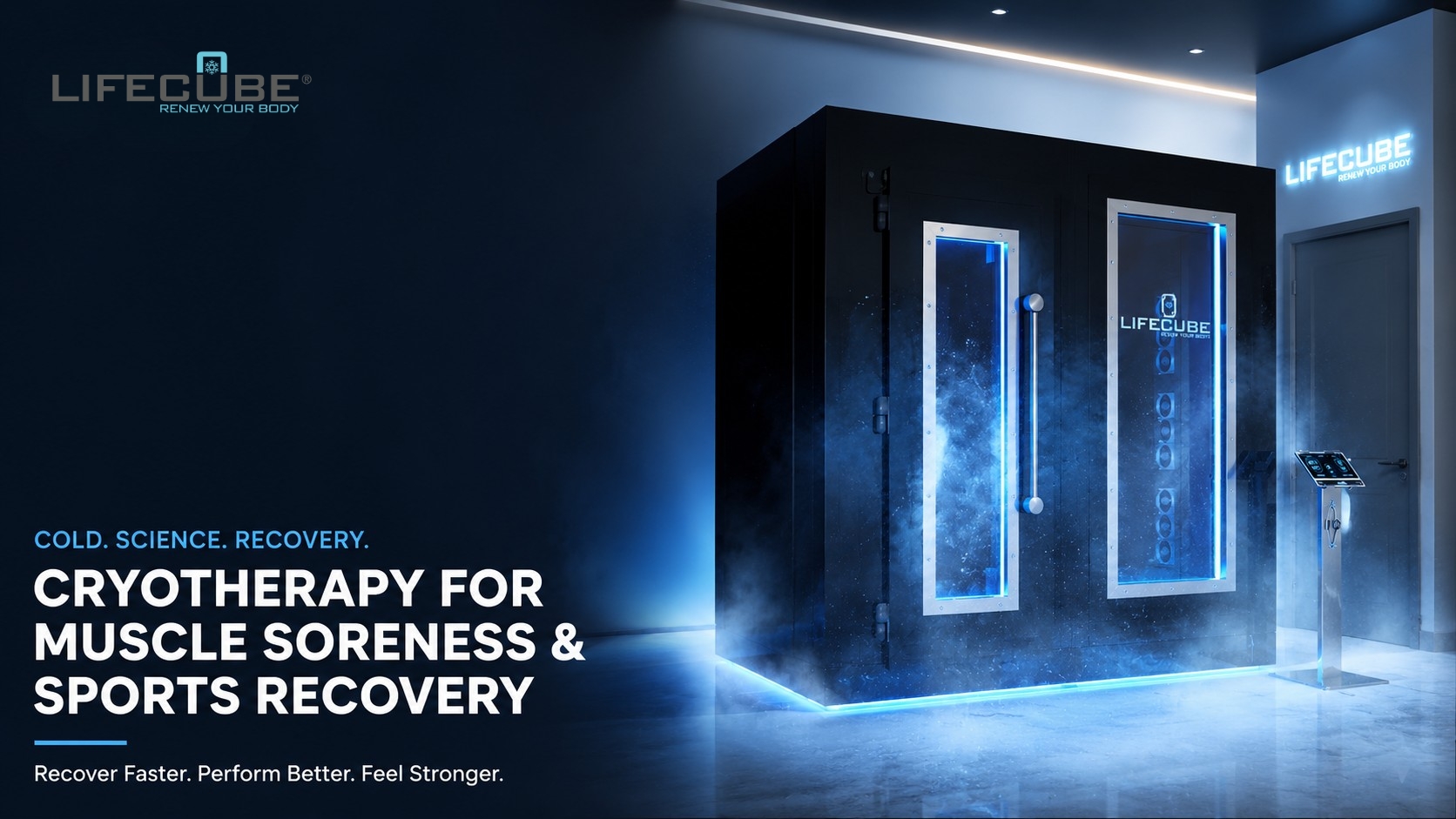

Woke up two days after leg day and could barely sit down? That’s DOMS – delayed-onset muscle soreness – and it’s the reason so many athletes and gym-goers ask their physio the same question: does cryotherapy for muscle soreness actually work, or is it just cold air and hype? The short answer is yes, with conditions. Whole-body cryotherapy can ease muscle soreness and speed up how quickly you feel ready to train again, but it isn’t a magic reset button, and the research is more nuanced than most marketing suggests.
What Is DOMS, and Why Does It Happen?
DOMS shows up 12 to 48 hours after unfamiliar or intense exercise, peaking around day two. It’s caused by microscopic damage to muscle fibres, which triggers inflammation and a build-up of metabolic byproducts like creatine kinase. That’s why your legs feel stiff and tender for days after a first hard sprint session, not immediately after you finish it.
Physios treat DOMS as a recovery problem, not an injury. The goal isn’t to eliminate soreness entirely; it’s to reduce how much it interferes with training load, sleep, and daily movement.
Does Cryotherapy for Muscle Soreness Work? Here’s What the Evidence Shows
Yes, whole-body cryotherapy helps muscle soreness. A Cochrane review looking specifically at whole-body cryotherapy for exercise-induced muscle soreness found it can reduce self-reported soreness compared to doing nothing, especially when used within a few hours of hard training. A more recent systematic review comparing different cold-based recovery methods (whole-body cryotherapy, cold water immersion, contrast water therapy, and local cold packs) found they produce broadly similar reductions in soreness and creatine kinase levels, though timing and duration of exposure matter more than which method you pick.
Where the evidence gets more cautious is functional recovery – things like jump height or sprint speed. Several trials note that cryotherapy helps people feel less sore without necessarily restoring full muscle performance any faster than rest alone. In other words: cryotherapy is genuinely useful for comfort and perceived recovery, but it’s one tool in a recovery stack, not a replacement for sleep, nutrition, and load management.
What Physios Actually Say About Cryotherapy in Practice
Talk to sports physios who work with cryo chambers day-to-day and you’ll hear a consistent theme about cryotherapy for muscle soreness: it earns its place when it’s used with intent, not as a blanket treatment for every twinge.
Where physios see it working well:
- After high-load training blocks or matches, to help athletes feel ready to train again sooner
- Alongside active recovery (light movement, mobility work) rather than instead of it
- For athletes managing a heavy fixture schedule, where reducing perceived soreness protects sleep and mood as much as muscles
Where physios are more cautious:
- As a stand-alone fix for chronic pain or an underlying injury
- Immediately post-injury in the first 24 hours, where a clinical assessment should come first
- As a substitute for proper warm-up, hydration, and progressive loading
Whole-Body Cryotherapy vs. Other Cold Recovery Methods
| Method | Typical Duration | Soreness Relief | Practicality for Clubs | Best For |
| Whole-body cryotherapy (chamber) | 2-3 minutes | Strong, fast | High – quick turnaround between athletes | High-volume clubs |
| Cold water immersion (ice bath) | 10-15 minutes | Strong | Moderate – slower, needs more space and cleaning | Home recovery |
Local cold packs | 15-20 minutes | Moderate | High but localised only | Localised injury |
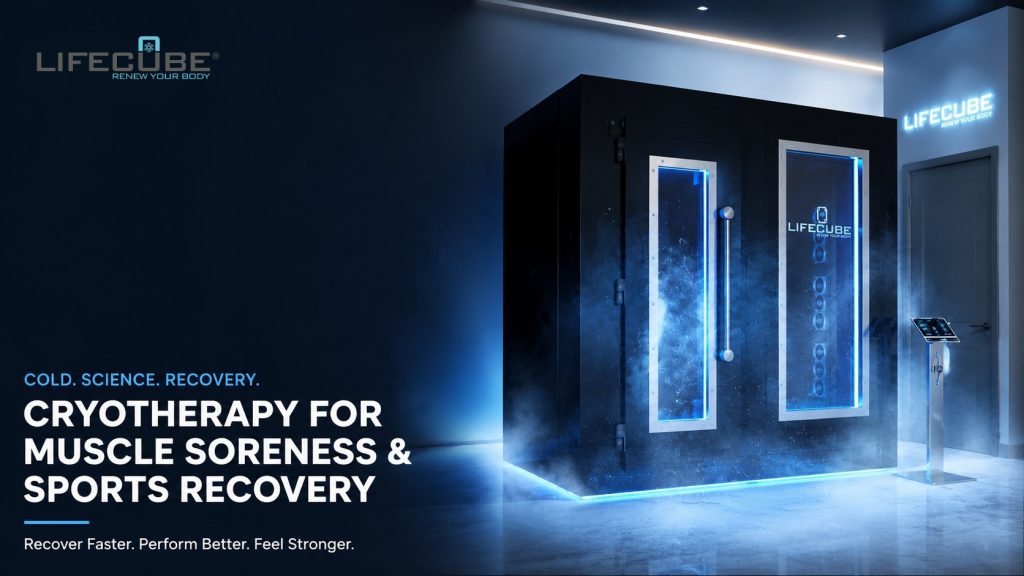
For sports clubs and physio clinics running multiple athletes through recovery in a single session, the shorter exposure time of a chamber like LifeCube’s electric cryo units is often the practical deciding factor, not just the physiological effect.
For clubs comparing cryotherapy machine cost against ice baths or contrast therapy, the calculation isn’t just upfront price – it’s turnaround time per athlete and staffing hours saved across a season.
How Soon After Exercise Should You Use Cryotherapy?
Most of the research supporting soreness reduction uses cryotherapy within one to three hours after training or competition, sometimes repeated over the following 24 to 48 hours during a heavy block. Waiting several days rarely produces the same benefit, since by then the inflammatory response that cryotherapy targets has largely settled on its own.
What Actually Determines Whether Cryotherapy Works
Not every cryotherapy session delivers the same result, and the research is fairly specific about why.
Three variables do most of the work:
Temperature and duration. Studies on whole-body cryotherapy generally use exposures between -110°C and -140°C, lasting two to three minutes. Go warmer or shorter, and the soreness-reducing effect drops off; going colder or longer doesn’t necessarily add extra benefit, and it increases discomfort and risk for little gain.
Timing relative to exercise. As covered above, sessions taken soon after training consistently outperform delayed ones. A physio programming cryotherapy the morning after a match, rather than immediately post-match, is working against the biology rather than with it.
Consistency across a training block. Single sessions help, but the strongest soreness reductions in the research come from repeated exposure across 24, 48, and 72 hours following intense exercise – not a one-and-done treatment squeezed in whenever the schedule allows.
For clinics and clubs weighing up equipment, this is where the practical case matters as much as the physiological one. A chamber that reaches consistent target temperatures quickly, session after session, is doing more for outcomes than any marginal difference in how cold it technically goes.
For localised issues rather than full-body soreness, a targeted cryotherapy machine can deliver similar relief to a specific muscle group without a full chamber session.
Building Cryotherapy Into a Recovery Programme, Not Using It in Isolation
Physios are consistent on one point: cryotherapy works best as part of a stack, not a stand-alone habit. A typical recovery sequence after a hard session might include cryotherapy for immediate soreness relief, followed by light active movement and adequate protein intake.
Sleep remains the single biggest driver of muscle repair, so prioritising it that night matters as much as the cryo session itself. Clubs that treat the cryo chamber as the entire recovery strategy, rather than one component of it, tend to see athletes plateau on perceived benefit faster than those who build it into a wider protocol.
This is also why physios are cautious about over-promising to athletes. Framing cryotherapy honestly – as a tool that reduces discomfort and supports faster return to training, rather than a cure for soreness or a shortcut around proper load management
The Bottom Line
Cryotherapy for muscle soreness has real evidence behind it, not just cold-air hype. Used within a few hours of hard training, it can meaningfully reduce how sore athletes feel and help them get back to full training sooner – though it works best as part of a wider recovery plan, not a stand-alone fix. For sports clubs and physio clinics deciding whether a cryo chamber is worth the investment, the practical case is as strong as the physiological one: short sessions, fast turnaround between athletes, and consistent results your team can plan around.– tends to produce better buy-in and more consistent use over a season.
Frequently Asked Questions
Does cryotherapy get rid of DOMS completely?
No. It reduces how sore you feel and can shorten the window before you’re comfortable training again, but it doesn’t undo the underlying muscle fibre damage. Rest, protein intake, and sleep still do most of the repair work.
How many cryotherapy sessions does it take to notice a difference in soreness?
Many athletes report feeling less sore after a single session, but physios typically recommend it as part of a repeated recovery routine during heavy training blocks rather than a one-off treatment.
Is cryotherapy safe for muscle soreness, or only for injuries?
Whole-body cryotherapy is generally considered safe for otherwise healthy adults managing normal exercise soreness. People with cardiovascular conditions, cold sensitivities, or recent injuries should get clearance from a physio or doctor first.
Can cryotherapy replace an ice bath for muscle soreness?
It can achieve similar soreness reduction in far less time – typically 2-3 minutes versus 10-15 minutes for cold water immersion – which is why many clinics and clubs are switching to chambers for practicality rather than superior results alone.
Does cryotherapy help sore muscles after every type of workout?
It’s best evidenced for soreness following unfamiliar or high-intensity exercise, such as eccentric loading, sprint sessions, or match play. For light, routine training, soreness is usually mild enough that cryotherapy adds little extra benefit.
Is cryotherapy or an ice bath better for muscle soreness?
Both reduce soreness by similar amounts, but cryotherapy does it in 2-3 minutes versus 10-15 minutes for an ice bath, making it more practical for clubs recovering multiple athletes at once.