Cryotherapy Before Training
Most people associate cryotherapy with recovery – something you do after a hard session to ease soreness. But a growing number of athletes, coaches and sports clinics are now exploring cryotherapy before training instead of, or as well as, afterwards.
Is there anything to this, or is it just another wellness trend? In this article, we’ll look at what pre-training cold exposure actually involves, why some facilities are introducing it, and what business owners considering a whole body cryotherapy machine should know before adding it to their service menu.
What Is Cryotherapy Before Training?
Cryotherapy before training simply means completing a short whole-body cold exposure session in the minutes leading up to physical activity, rather than only using it for post-workout recovery.
A typical session lasts just a few minutes inside a controlled chamber. The body is exposed to very low temperatures, and the client steps out, warms up naturally, and moves straight into their training session.
The idea itself isn’t new. Athletes have long used ice baths, cold showers and cooling vests before competing in hot conditions. Modern electric cryotherapy machine technology simply offers a faster, more controlled and more comfortable way to achieve a similar cooling effect, without the mess or complexity of ice or nitrogen handling.
For facilities already running post-training recovery sessions, adding a pre-session option is often a natural extension rather than a completely new service.
How Does It Work?
Understanding the mechanism helps explain why some coaches are curious about cold exposure as part of a warm-up routine, rather than purely as a recovery tool.
During a session, skin and surface body temperature drop quickly. This triggers several short-term physiological responses, including changes in blood flow, a temporary reduction in perceived fatigue, and a spike in alertness as the nervous system reacts to the cold stimulus.
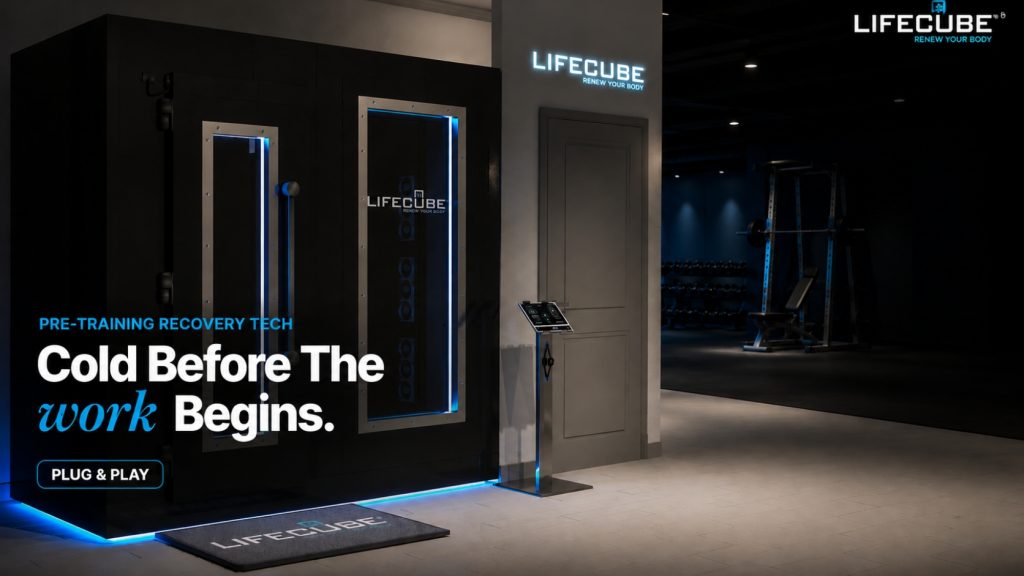
Modern chambers, such as LifeCube’s fully electric cryotherapy machine range, use a double-chamber design. Clients move through a pre-chamber before reaching the main chamber, allowing the temperature to ease down from around −30°C to as low as −110°C. This gradual transition is designed to make the experience manageable, even for people trying it for the first time before a workout.
Potential Benefits of Pre-Training Cold Exposure
So why would someone choose this approach instead of waiting until afterwards? A few reasons come up repeatedly among athletes and facility owners.
Reduced Heat Stress in Warm Conditions
For athletes training or competing in hot environments, pre-cooling may help delay the point at which the body starts to overheat. This is one of the more established uses of pre-cooling in elite sport, particularly for endurance events held in high temperatures.
A Mental and Physical “Switch On”
Many clients describe feeling more alert and focused immediately after a cold exposure session. For some, this makes a pre-session cold plunge feel like a sharper alternative to a traditional static warm-up.
Reduced Perceived Fatigue
Some athletes report feeling less heavy heading into a session after cold exposure beforehand, which may support a stronger start to a workout, even if underlying fatigue levels are unchanged.
A Point of Difference for Facilities
Beyond the individual experience, offering sessions ahead of training gives gyms, sports clubs and recovery centres a way to differentiate their offering – turning a single chamber into two distinct services: pre-session activation and post-session recovery.
It’s worth noting that research specifically on this pre-training approach is still developing, and results vary between individuals and sports. Facilities should avoid presenting it as a guaranteed performance enhancer, and instead position it as a supportive part of an athlete’s broader routine.
Cryotherapy Before vs After Training
Both approaches have a place, and many facilities offer both, simply framing the service differently depending on timing.
Before Training
Before training, cold exposure is generally used for:
- Pre-cooling ahead of activity in hot conditions
- A mental “reset” before competition or a heavy session
- Reducing perceived fatigue before starting
After Training
After training, cold exposure is generally used for:
- Supporting recovery from muscle soreness and stiffness
- Helping manage inflammation following intense training
- Building a repeatable, weekly recovery habit
For most facilities, the sensible approach is to offer clients the flexibility to book either – and to let staff explain the difference during onboarding, rather than assuming one is always the better option.
Who’s Using Pre-Training Cold Exposure?
Interest in this pre-training approach is growing across several types of business:
- Sports clubs and academies, using it as part of pre-match or pre-training routines
- Gyms and performance centres, offering it as a premium add-on before high-intensity sessions
- Physiotherapy and rehabilitation clinics, supporting clients easing back into activity
- Hotels and luxury spas with a sports or wellness focus, positioning it as part of a broader active-recovery experience
In each case, the appeal is similar: a short, controlled session that fits neatly into an existing routine, using equipment that’s already on-site rather than requiring a separate investment.
For multi-site operators, offering a pre-session option can also help even out demand across the day. Post-training recovery bookings tend to cluster after peak training hours, whereas a pre-session slot can fill quieter mid-morning or early-afternoon periods, making better use of the chamber across a full working day.
Things to Consider Before Introducing This Service
Before adding a pre-session option to your menu, it’s worth thinking through a few practical points with your team.
First, staff need a clear script for explaining the difference between pre- and post-training sessions, so clients understand which one suits their goals. Second, scheduling should allow enough buffer either side of a session so clients aren’t rushed straight from a cold chamber into intense activity. Finally, it’s sensible to gather informal feedback from early clients – how they felt going into training, and whether they’d book again – rather than assuming the service will land the same way for everyone.
None of this requires new equipment if you already operate a chamber for recovery. It’s largely a case of adjusting scheduling, staff briefing and how the service is marketed to clients.
What to Look for in an Electric Cryotherapy Machine for Pre-Training Use
If you’re a facility owner considering adding a pre-session cold offering to your services, the equipment itself matters. A few practical points are worth thinking through before you invest.
Session Speed
Pre-training sessions need to fit into a tight window before a workout, so quick setup and fast turnaround between clients matter more than they might for a purely post-session recovery service.
Comfortable Temperature Transition
A chamber that eases clients into the cold, rather than exposing them abruptly, tends to suit first-time and pre-session users better. This is particularly relevant if you expect nervous or first-time clients to try this ahead of a workout, rather than after one.
100% Electric Operation
An electric cryotherapy machine removes the need for nitrogen storage and handling, which simplifies day-to-day operation for busy facilities running back-to-back sessions across a full day.
Client Throughput
If you’re planning to offer both pre- and post-training sessions, consider a whole body cryotherapy machine built for higher daily usage, such as a double-room design that can support greater client flow.
Staff Training
Pre-session sessions still require a guided, professional briefing, just like post-training recovery sessions. Staff should be confident explaining the difference between the two use cases to clients.
Final Thoughts
Cryotherapy before training is an emerging use case rather than an established standard, but it’s one more facilities are exploring as they look for ways to get more value from their cryotherapy equipment. For gyms, sports clubs and clinics already offering post-training recovery, adding a pre-session option is often a simple way to extend the appeal of the same chamber to a new part of the client’s routine, without adding significant cost or complexity.
Ready to explore whole-body cryotherapy for your facility? Get in touch with LifeCube to discuss the right chamber for your business.
FAQ: Cryotherapy Before Training
Does cryotherapy before training actually improve performance?
Some athletes and coaches report feeling more alert and less fatigued after a pre-training session, particularly in hot conditions. Evidence is still developing, and results vary by individual and sport, so it shouldn’t be treated as a guaranteed performance boost.
How long should a pre-training cryotherapy session last?
Sessions are typically short – a few minutes – designed to fit easily into a warm-up routine without disrupting training time.
Is cryotherapy before training safe for beginners?
Modern electric cryotherapy machine chambers with a gradual temperature transition are generally considered more comfortable for first-time users than sudden, extreme cold exposure. As with any new activity, clients should be briefed properly by trained staff beforehand.
Can the same chamber be used before and after training?
Yes. Most facilities use the same whole body cryotherapy machine for both pre- and post-training sessions, simply adjusting how the service is scheduled and explained to clients.
Is it better than a normal warm-up?
It’s best viewed as a complement to, rather than a replacement for, a proper physical warm-up. Many athletes use both together as part of their pre-session preparation.