

A long ride can leave more behind than a satisfying number on your cycling computer. Tired quads, heavy legs and delayed muscle soreness can all affect how ready you feel for your next session.
That is why cryotherapy for cyclists has become an increasingly discussed recovery option among riders, coaches and performance facilities.
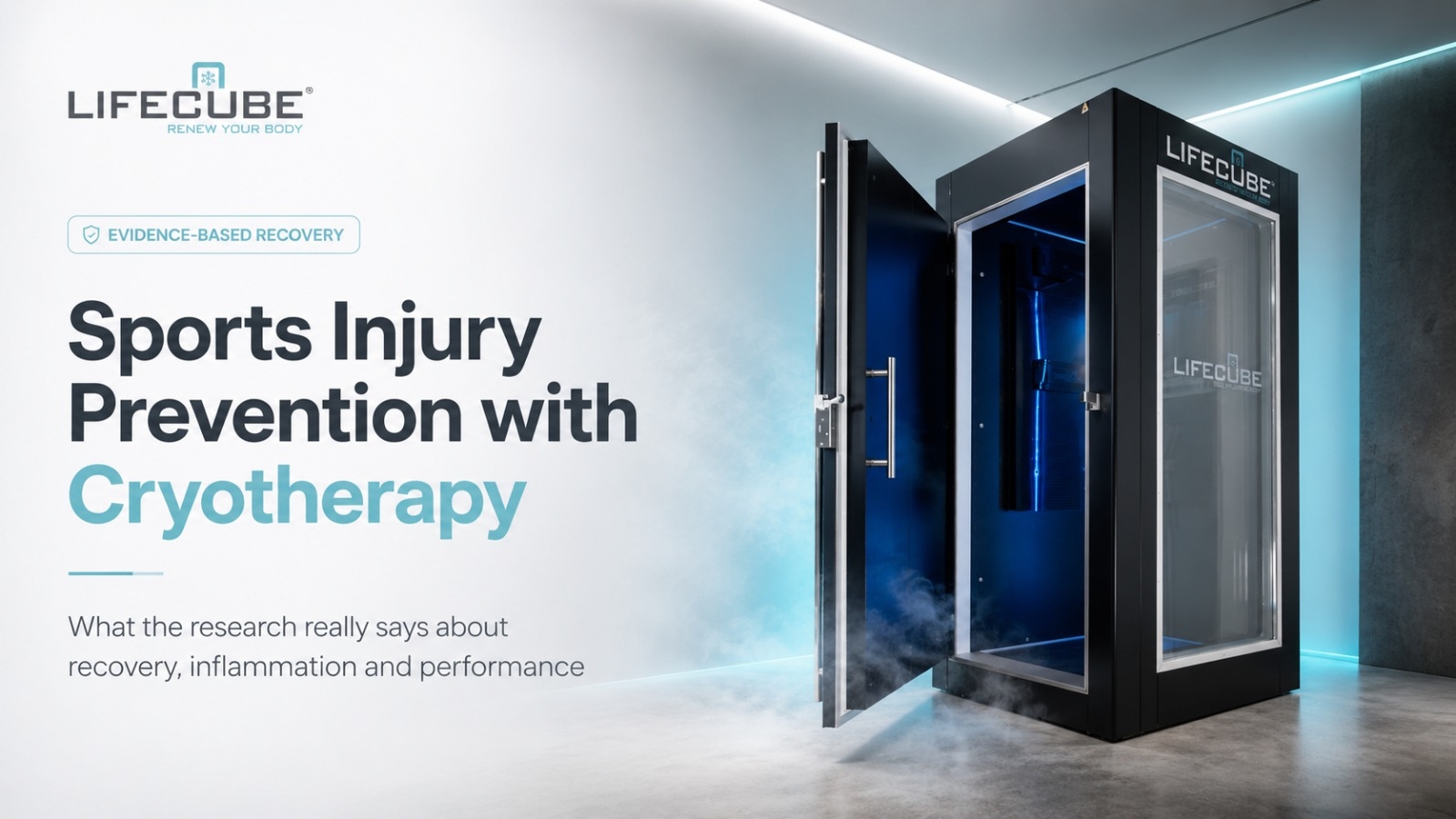
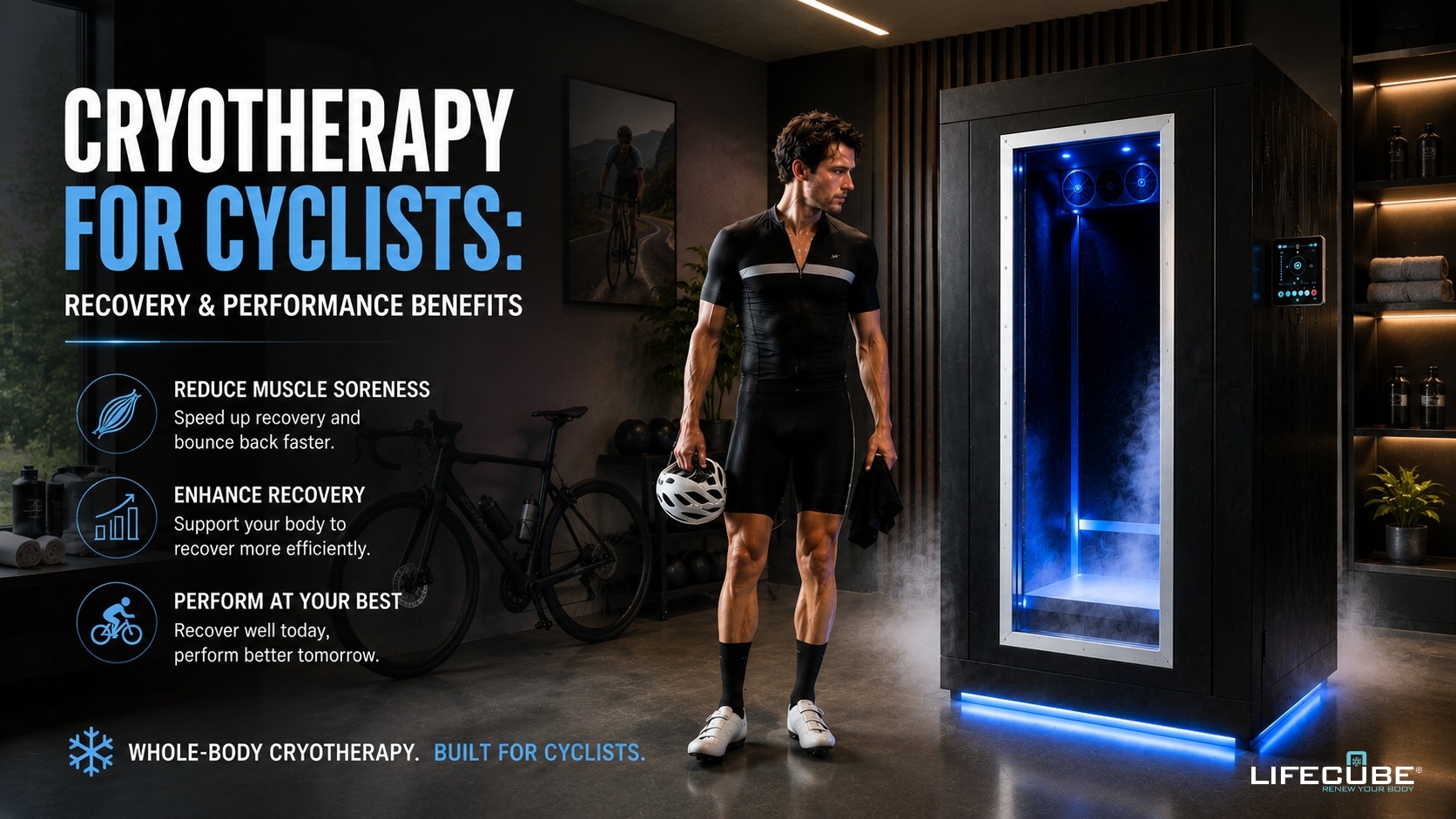
Whole-body cryotherapy exposes the body to very cold, dry air for a short period inside a specialist chamber. Riders may use it as part of a wider recovery routine after demanding training, racing or back-to-back cycling sessions.
However, cryotherapy is not a shortcut to better performance. Sleep, nutrition, hydration and sensible training remain the foundations of recovery.
So, where can cryotherapy fit?
This guide looks at how cryotherapy for cyclists may support muscle recovery, how cyclists can use it alongside other recovery strategies and what the scientific evidence currently tells us.
What Is Cryotherapy for Cyclists?
Cryotherapy for cyclists generally refers to using controlled cold exposure as part of a cyclist’s recovery routine.
Several forms of cold therapy exist. These include ice packs, cold-water immersion and whole-body cryotherapy.
Whole-body cryotherapy is different from sitting in an ice bath. Instead, the cyclist enters a purpose-built chamber that exposes the body to very cold, dry air for a short session.
The goal is usually recovery rather than training itself.
How does whole-body cryotherapy work?
During a whole-body cryotherapy session, cold exposure causes several short-term physiological responses.
Blood vessels near the skin narrow as the body responds to the cold. After the session, circulation returns towards normal as the body warms again.
Importantly, researchers continue to investigate how these responses relate to soreness, inflammation, fatigue and sporting performance.
A 2026 systematic review and network meta-analysis of 51 randomised controlled trials found that different forms of cryotherapy produced different recovery effects depending on the time after exercise. Whole-body cryotherapy showed potentially favourable results for some muscle-damage and performance markers, although the authors stressed that effects depend on the recovery outcome being measured.
Therefore, it makes more sense to view cryotherapy as one recovery tool rather than a guaranteed performance enhancer.
Cryotherapy for Cyclists and Muscle Recovery
Cycling may be low impact compared with running, but hard riding can still place major demands on the legs.
Climbs, sprint intervals, time trials and long-distance rides repeatedly load the quadriceps, hamstrings, glutes and calves.
Consequently, good muscle recovery for cyclists matters throughout the training week.
Can cryotherapy for cyclists reduce muscle soreness?
It may help some riders manage how sore they feel after demanding exercise.
Delayed-onset muscle soreness, commonly called DOMS, often appears after unusually hard or unfamiliar exercise. For cyclists, this might follow a race, a steep climbing session or a return to high-intensity training.
Research on cold-based recovery methods suggests they can influence post-exercise soreness. However, results vary between treatments.
For example, a 2026 systematic review comparing body cryotherapy with cold-water immersion found that cold-water immersion was more effective for short-term DOMS relief within 24 hours. Differences were less clear at 48 hours. Body cryotherapy showed a small potential advantage for one measure of short-term performance recovery, although the researchers described that result as limited.
Therefore, cryotherapy for muscle recovery should not be presented as a guaranteed cure for sore legs.
Instead, cyclists can consider it as one possible addition to an established recovery plan.
Potential reasons cyclists use cryotherapy
Cyclists may choose cryotherapy because they want to:
- Manage the feeling of post-training muscle soreness
- Feel fresher between closely scheduled sessions
- Add another recovery method during intensive training periods
- Support recovery after races or long-distance events
- Avoid spending long periods in cold-water immersion
- Build a consistent post-training recovery routine
However, the experience varies between individuals. A strategy that works well for one rider may offer less noticeable benefits for another.
Cryotherapy for Cycling Performance Recovery
Recovery and performance are closely connected.
A rider who completes a demanding session on Tuesday but still feels heavily fatigued on Thursday may struggle to complete the next workout at the intended quality.
That is why cycling performance recovery matters just as much as the training session itself.
Can cryotherapy directly improve cycling performance?
Cryotherapy should not be viewed as a direct way to increase watts, FTP or VO2 max.
Instead, its potential value lies in recovery.
If a cyclist feels less sore or better prepared between demanding sessions, maintaining training consistency may become easier. However, this is different from saying cryotherapy directly makes someone faster.
Research also remains mixed.
A 2024 systematic review found that cryostimulation could reduce perceived muscle pain and fatigue, but improvements in exercise performance were not consistently significant across all methods.
Therefore, cyclists should keep expectations realistic.
A cryotherapy session cannot replace:
- High-quality sleep
- Adequate carbohydrate intake
- Sufficient protein
- Good hydration
- Rest days
- Structured training
- Professional treatment for an injury
Instead, it may complement these foundations.
When Can Cyclists Consider Cryotherapy?
There is no single protocol that suits every cyclist.
Your training load, event schedule, goals and personal response all matter.
Still, several situations may make cryotherapy for cyclists particularly relevant.
After high-intensity interval sessions
Repeated sprint work or VO2 max intervals can leave the legs feeling heavily fatigued.
Therefore, riders sometimes use recovery treatments after these demanding sessions, especially when another important training day follows soon afterwards.
Following a race or sportive
British cyclists regularly take part in road races, criteriums, time trials, gran fondos and sportives.
These events can create substantial fatigue.
As a result, some riders may include cryotherapy within their post-event recovery routine alongside food, hydration and rest.
During high-volume training blocks
Cyclists preparing for endurance events often increase training volume over several weeks.
For example, a rider preparing for a 100-mile sportive may combine long weekend rides with interval sessions and endurance work during the week.
During these heavier periods, recovery becomes increasingly important.
Between competition days
Stage races and multi-day cycling events create a different recovery challenge because athletes have limited time before competing again.
However, recovery protocols during competition should be planned carefully. Riders working with a coach, sports therapist or performance professional should consider how cold exposure fits their individual programme.
Building a Better Muscle Recovery Routine for Cyclists
The strongest recovery strategy is rarely one treatment.
Instead, combine several proven habits.
For effective muscle recovery for cyclists, consider the following approach:
- Refuel after demanding rides. Replace carbohydrates used during exercise and consume enough protein to support muscle repair.
- Rehydrate properly. Long rides can lead to significant fluid and electrolyte losses, particularly during warmer UK summer conditions or indoor turbo sessions.
- Prioritise sleep. Aim for a consistent sleep schedule because recovery continues long after you get off the bike.
- Plan easy days. More training is not always better. Low-intensity sessions and rest days give your body time to adapt.
- Use additional recovery tools selectively. Massage, compression, cold-water immersion or cryotherapy for muscle recovery can complement the basics where appropriate.
- Track your response. Monitor soreness, sleep quality, perceived fatigue and training performance. This helps you understand whether a recovery method genuinely works for you.
Most importantly, do not use recovery treatments to hide persistent pain.
Pain that feels sharp, unusual or progressively worse may indicate an injury rather than normal post-training soreness. In that situation, speak with an appropriately qualified healthcare professional.
Whole-Body Cryotherapy Technology for Cycling and Recovery Facilities
Cryotherapy is not only becoming relevant to individual athletes.
Cycling performance centres, premium gyms, recovery studios, sports clinics and hotels may also consider adding whole-body cryotherapy to their recovery services.
For a commercial facility, the type of system matters.
A modern whole body cryotherapy machine can allow a facility to offer short recovery sessions alongside physiotherapy, sports massage, compression therapy and other performance services.
Meanwhile, an electric cryotherapy machine removes the need to rely on liquid nitrogen as the cooling method.
For facilities that expect regular use, this can simplify day-to-day operation and help create a more streamlined customer journey.
Sports businesses should still consider factors such as installation requirements, operating procedures, staff training, manufacturer instructions and appropriate customer screening before introducing any cryotherapy service.
Is Cryotherapy for Cyclists Worth Considering?
For the right rider, it may be.
The best case for cryotherapy for cyclists is not that several minutes of cold exposure will suddenly make someone cycle faster.
Instead, the potential value comes from fitting it into a broader recovery strategy.
Research suggests whole-body cryotherapy and other cold-based interventions may influence soreness, perceived fatigue and some physiological recovery markers. However, study findings vary, and researchers continue to investigate which protocols work best.
That balanced view is important.
A serious cyclist should build recovery around nutrition, hydration, sleep and sensible training first. Cryotherapy can then become an additional tool rather than the foundation of the programme.
Using Cryotherapy for Cyclists as Part of Smarter Recovery
Training makes you tired. Recovery allows your body to adapt.
For that reason, successful cyclists do not only think about their next interval session or weekend mileage. They also consider what happens between those sessions.
Cryotherapy for cyclists may provide a useful addition to that recovery process. Research suggests cold-based recovery methods can influence muscle soreness, fatigue and certain recovery markers, although the results depend on the method, timing and individual athlete.
Therefore, keep the fundamentals first.
Sleep well. Refuel properly. Stay hydrated. Manage your training load.
Then, if you want to explore additional recovery options, whole-body cryotherapy may be worth considering.
Want to add professional whole-body cryotherapy to your gym, cycling performance centre, recovery studio or sports facility?
Frequently Asked Questions
What is cryotherapy for cyclists?
Cryotherapy for cyclists is the use of controlled cold exposure as part of a rider’s recovery routine. Whole-body cryotherapy involves spending a short period inside a specialist chamber containing extremely cold, dry air.
Cyclists may use it after demanding rides, races or intensive training blocks.
Does cryotherapy help cycling recovery?
Cryotherapy may support certain aspects of cycling performance recovery, particularly perceived soreness, fatigue and some physiological recovery markers.
However, research results vary. Therefore, cryotherapy should complement sleep, nutrition, hydration and structured training rather than replace them.
Is cryotherapy good for sore cycling legs?
Some research suggests cold-based therapies can help reduce post-exercise muscle soreness.
However, not every study shows the same result. Furthermore, a 2026 meta-analysis found cold-water immersion produced better short-term DOMS relief than body cryotherapy in the studies analysed.
Should cyclists use cryotherapy after every ride?
Usually, there is no reason to automatically use cryotherapy after every ride.
Easy recovery spins and low-intensity endurance sessions may not create enough fatigue to justify additional recovery interventions.
Instead, cyclists may find it more relevant after races, hard intervals, long rides or demanding training blocks.
How long does a whole-body cryotherapy session last?
Protocols vary according to the equipment and provider.
Research has commonly studied brief exposures lasting several minutes. Cyclists should always follow the operating protocol and safety instructions provided by the facility and equipment manufacturer.
Is cryotherapy better than an ice bath for cyclists?
Not necessarily.
Research suggests cold-water immersion may offer stronger short-term relief from DOMS in some situations, while body cryotherapy may perform differently for other recovery measures.
Comfort, access, training goals and individual response should all influence the choice.
Can cryotherapy treat a cycling injury?
Cryotherapy should not be used as a substitute for a medical diagnosis or injury treatment programme.
If you develop persistent knee pain, back pain, numbness, swelling or another unusual symptom while cycling, speak with an appropriately qualified healthcare professional.