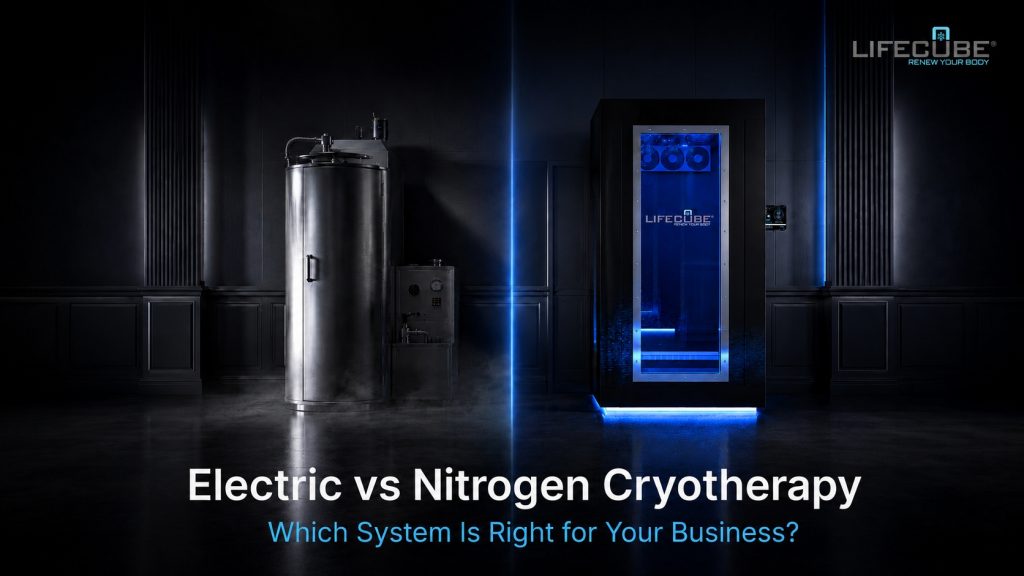
Choosing between electric vs nitrogen cryotherapy is one of the first decisions any gym, clinic, spa or hotel faces when adding whole-body cold therapy to their services. The system you pick affects your running costs and staff training. It also shapes your health and safety obligations, and how smoothly the treatment fits into a busy day.
Therefore, this guide compares both systems in plain terms. You’ll learn how each chamber works and what safety measures each one requires. You’ll also see how running costs compare, and how to choose the right cryotherapy unit for your facility. Understanding these trade-offs upfront can save you time, money and hassle later on.
Electric vs Nitrogen Cryotherapy: What’s the Core Difference?
Both systems expose the body to extreme cold for a short session, usually two to three minutes. The aim in each case is to support recovery and wellness goals. However, the two methods reach that temperature in very different ways.
Nitrogen cryotherapy cools the chamber by releasing vaporised liquid nitrogen directly into the space around the client. Electric cryotherapy, in contrast, uses a fully electric refrigeration system to reach the same low temperatures. It works on a similar principle to industrial cooling technology, without any nitrogen supply at all.
This distinction sits at the heart of the electric vs nitrogen cryotherapy debate across the wellness and sports recovery industry. One method relies on a consumable gas that requires delivery, storage and handling. Meanwhile, the other doesn’t rely on any external supply chain at all.
How Nitrogen Cryotherapy Works
Clinics have used nitrogen chambers for longer, and many still rely on them today. A tank stores liquid nitrogen, typically outside the treatment room. From there, pipes carry it into the chamber, where it vaporises and displaces the air around the client to create the cold environment.
This method can reach very low temperatures quickly. However, it also comes with several operational demands:
- Regular nitrogen deliveries need scheduling and payment
- Tanks require dedicated storage space, often outdoors or in a ventilated area
- Staff need specific training in handling liquid nitrogen safely
- Ventilation and oxygen monitoring are essential, since nitrogen gas displaces oxygen in enclosed spaces
None of this makes nitrogen cryotherapy inherently unsafe, provided the facility installs and manages it properly. Nevertheless, it does add a layer of logistical and safety responsibility that many commercial operators would rather avoid. For that reason, electric cryotherapy has become the more popular route for new commercial installations.
How Electric Cryotherapy Works
Electric cryotherapy chambers remove the nitrogen supply chain altogether. Instead, they use a compressor-based cooling system that plugs into standard power to bring the chamber down to treatment temperature.
For example, most modern electric chambers use a double-chamber design. First, a pre-chamber gradually cools the client. Then the main chamber takes them down to full treatment temperature, typically in the region of -80°C to -110°C. This staged approach aims to make the experience more comfortable, particularly for first-time clients, while still delivering a fast, intense session.
Because there’s no gas to deliver, store or vent, electric systems are generally simpler for staff to operate day-to-day. Furthermore, they typically require less specialist training to run sessions safely.
Safety Considerations for Electric and Nitrogen Cryotherapy Chambers
Safety is one of the most common reasons operators start comparing electric and nitrogen cryotherapy options in the first place. Each system carries a different risk profile, so it’s worth understanding both before you commit to either one.
Nitrogen Safety Requirements
With nitrogen systems, the main consideration is oxygen displacement. If a chamber or room lacks proper ventilation, or if nitrogen leaks into an enclosed space, oxygen levels can drop fast. This happens without any obvious warning sign, since the gas itself is odourless. The UK’s Health and Safety Executive publishes detailed guidance on managing these risks in enclosed and confined spaces. Any facility running a nitrogen chamber should know this guidance well.
This is why nitrogen cryotherapy facilities typically need oxygen sensors, ventilation systems and strict standard operating procedures. Facilities should also train staff to recognise the early signs of oxygen deficiency, and to know exactly what to do when an alarm sounds. In the electric vs nitrogen cryotherapy safety comparison, this is usually the single biggest factor operators raise.
Electric Cryotherapy Safety
Electric systems don’t carry the oxygen displacement risk, since no nitrogen gas features at any stage. That said, electric chambers still need proper installation, routine maintenance and staff training. In this respect, they’re no different from any other piece of commercial equipment.
For many facility owners, removing the nitrogen handling risk entirely is a significant factor in the electric vs nitrogen cryotherapy decision. A peer-reviewed scoping review from an international research consortium looked at whole-body cryotherapy safety. It highlights operational and procedural safeguards as central to safe delivery, regardless of which cooling method a facility uses.
Electric vs Nitrogen Cryotherapy: Comparing Running Costs
This is where the two systems diverge most in day-to-day business terms. Nitrogen systems involve an ongoing consumable cost, whereas electric systems run on standard electricity with fewer moving parts to manage.
| Cost Factor | Nitrogen Cryotherapy | Electric Cryotherapy |
| Primary running cost | Regular liquid nitrogen deliveries | Standard electricity usage |
| Storage requirements | Dedicated tank storage, often ventilated | None required |
| Specialist maintenance | Gas handling equipment servicing | Compressor and cooling system servicing |
| Safety monitoring | Oxygen sensors and alarms required | Standard equipment checks |
| Staff training | Nitrogen handling certification | General operator training |
Because electric chambers don’t rely on a consumable supply chain, many operators find running costs easier to predict. However, exact figures depend on your local energy rates, session volume and specific chamber model. It’s always worth requesting a tailored cost breakdown for your facility rather than relying on general estimates.
Client Experience: Electric vs Nitrogen Cryotherapy Chambers
Beyond the technical specification, it’s worth considering how each system shapes the client-facing experience. Nitrogen chambers can sometimes create a slightly clinical or industrial impression, given the visible gas supply and associated safety signage.
Electric chambers, meanwhile, often focus more on interior aesthetics. Clean lines, ambient lighting and a more premium, spa-like feel are easier to achieve. There’s no gas supply to accommodate in the design.
For businesses positioning cryotherapy as a premium recovery or wellness service, rather than a purely clinical treatment, this visual difference matters. It can carry as much weight as the technical specification. Throughput matters too. Because electric chambers don’t pause for nitrogen top-ups or ventilation checks between sessions, many commercial operators move clients through more smoothly across a busy day. That said, actual session capacity always depends on the specific chamber model and staffing levels.
Choosing the Right Cryotherapy Unit for Your Facility
There’s no single correct answer to the electric vs nitrogen cryotherapy question. Instead, the right choice depends on your business model, your available space, and your existing infrastructure.
Before selecting a cryotherapy unit, therefore, it’s worth working through a few key questions:
Do you have space and ventilation for nitrogen storage, or would you prefer to avoid gas handling altogether?
How important is minimising staff training and daily operational complexity?
Is the visual design of the chamber part of your brand experience, particularly in a spa, hotel or premium gym setting?
What client volume do you expect, and how does that affect your throughput needs?
Are you looking to buy outright, or would a rental arrangement suit your business while you test demand?
Work through these questions with a supplier who can explain real installation requirements, not just a spec sheet. This will usually get you to the right decision faster.
Is a Home Cryotherapy Machine the Same as a Commercial Chamber?
It’s worth noting, however, that the electric vs nitrogen cryotherapy conversation looks a little different outside a commercial setting. A home cryotherapy machine is generally a much smaller, lower-powered unit. It targets localised or partial-body cold exposure, not the whole-body treatment that commercial chambers in this guide provide.
Consequently, if you’re a business owner rather than an individual consumer, keep your focus on commercial-grade equipment. Look for kit built for repeated daily use, with proper servicing support and commercial safety standards.
Final Thoughts: Electric vs Nitrogen Cryotherapy
Choosing between electric vs nitrogen cryotherapy ultimately comes down to two things. How much operational complexity are you willing to take on? And how do you want the treatment to feel for your clients? Electric systems have become increasingly popular with commercial operators. They remove the nitrogen supply chain, reduce specialist training needs, and tend to suit a more premium, design-led environment. Nitrogen systems remain a valid option too, provided the facility has the right safety infrastructure in place.
Ready to explore electric cryotherapy for your facility? Get in touch with LifeCube today to discuss the right chamber for your business.
Frequently Asked Questions
Is electric cryotherapy as effective as nitrogen cryotherapy?
Both systems aim to reach similarly low treatment temperatures. However, the main differences lie in how each method generates that cold, and the operational demands it brings. The treatment experience itself is largely similar.
Is nitrogen cryotherapy dangerous?
Clinics worldwide use nitrogen cryotherapy safely when they install and operate it correctly, with proper ventilation and oxygen monitoring in place. The key risk to manage is oxygen displacement in poorly ventilated spaces.
Do electric cryotherapy chambers need special ventilation?
Electric chambers don’t involve nitrogen gas, so they don’t carry the same oxygen displacement risk. Standard commercial installation and servicing requirements still apply.
Which is cheaper to run: electric or nitrogen cryotherapy?
Electric systems generally avoid the ongoing cost of nitrogen deliveries and tank storage, which many operators find easier to budget for. However, actual running costs vary by chamber model, session volume and local energy prices.
Can I rent a cryotherapy unit before buying one outright?
Yes. Rental options exist for businesses that want to introduce cryotherapy. This lets you test client demand before committing to a full purchase.
How much space does a cryotherapy chamber need?
This depends on the model and, for nitrogen systems, whether it needs external tank storage. Always confirm exact space and ventilation requirements with your supplier before finalising a location.
Do staff need special certification to operate a cryotherapy chamber?
Nitrogen systems typically require specific gas-handling training in addition to general treatment protocols. Electric systems generally involve simpler operator training. Even so, all staff should learn safe client screening and session procedures.
If you’re weighing up your options for a gym, clinic, spa or hotel, LifeCube’s team can help. We’ll talk you through the right cryotherapy unit for your space, including current rental and purchase options.