
Whole-body cryotherapy has moved from specialist sports environments into gyms, recovery centres and wellness facilities. However, many people still want a clear answer to one question: what are the real cryotherapy benefits?
In simple terms, whole-body cryotherapy exposes the body to very cold, dry air for a short period inside a purpose-built chamber. People commonly use it as part of a recovery or wellness routine, especially after demanding exercise.
Research suggests that whole-body cryotherapy may influence muscle soreness, fatigue and some markers linked with inflammation. However, the evidence is not equally strong for every claimed benefit, and results can vary between people and protocols.
This guide explains what whole-body cryotherapy does, where the evidence is strongest, what remains uncertain and how it can fit into a sensible recovery routine.
What Is Whole-Body Cryotherapy?
Whole-body cryotherapy, often shortened to WBC, involves entering a chamber that exposes most or all of the body to very low air temperatures for a brief period.
Unlike an ice bath, the treatment uses cold air rather than cold water.
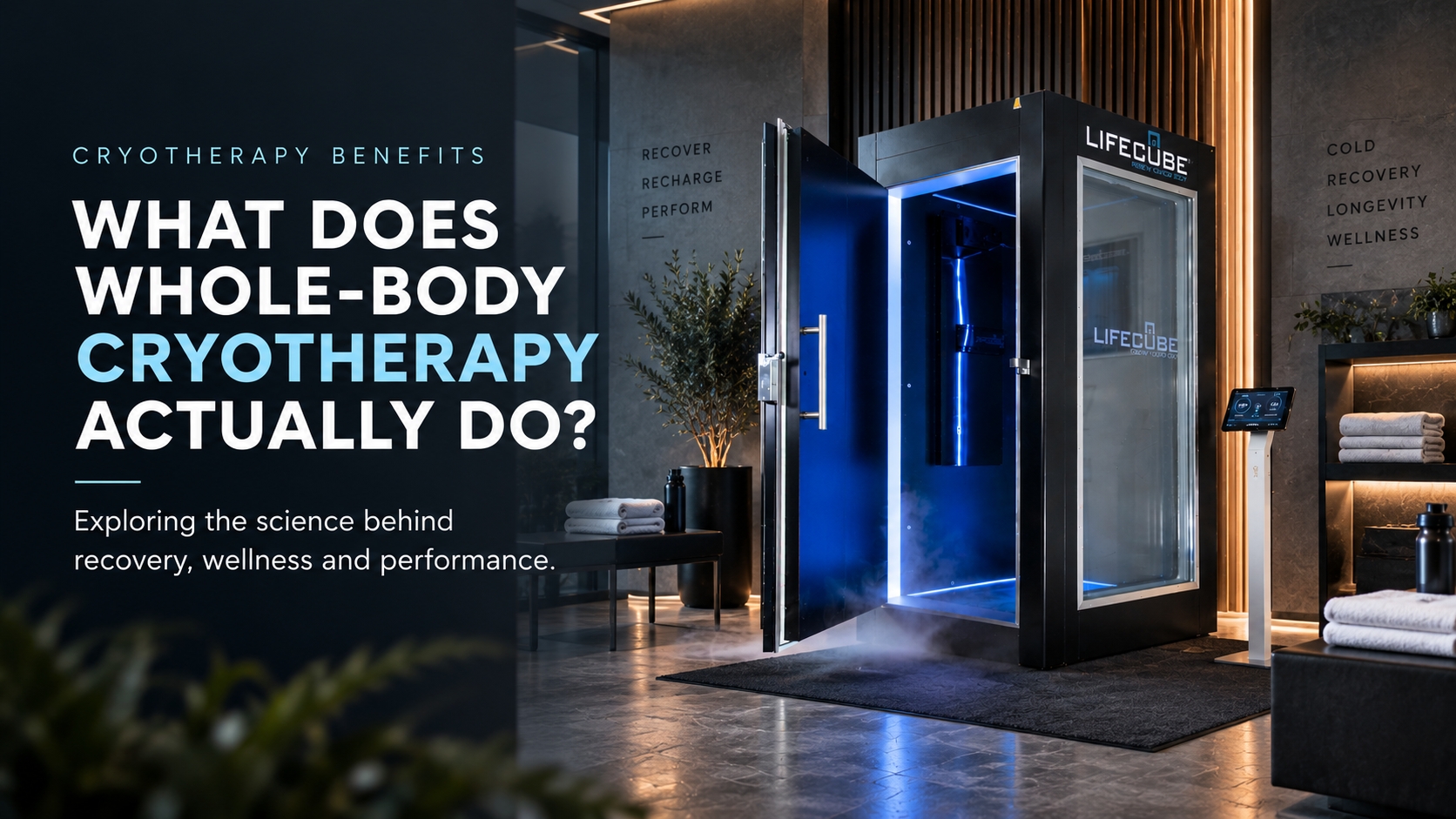
Modern systems can use either nitrogen or electric refrigeration. LifeCube, for example, manufactures fully electric chambers designed for commercial wellness and recovery environments. Its current UK range includes nitrogen-free systems with temperatures down to -110°C, depending on the model.
How does whole-body cryotherapy work?
When you enter a very cold environment, your body reacts quickly.
Blood vessels near the skin narrow, and the body works to conserve heat. After the session, circulation gradually returns towards normal as you warm up.
Researchers have also studied changes in inflammatory markers, perceived soreness, fatigue and muscle function after cold exposure.
However, this does not mean every physiological response automatically translates into a meaningful health or performance improvement.
That distinction is important when discussing cryotherapy health benefits.
Cryotherapy Benefits for Muscle Recovery
One of the most researched areas is post-exercise recovery.
Athletes and active people often use cryotherapy after hard training, competitions or periods of increased exercise volume.
Can cryotherapy reduce muscle soreness?
It may help in some situations.
A 2024 systematic review and meta-analysis found that cryostimulation methods, including whole-body cryotherapy, could reduce perceived muscle pain and fatigue after exercise. However, the same analysis found no consistent improvement in exercise performance across all cryostimulation methods.
Earlier research has also reported reductions in muscle soreness following whole-body cryotherapy, although study protocols vary considerably.
Therefore, the most realistic cryotherapy recovery benefits relate to recovery support rather than guaranteed performance gains.
Where might it fit?
People may consider cryotherapy after:
- High-intensity training
- Heavy strength sessions
- Competitive sport
- Long endurance events
- Repeated training days
- Periods of increased training volume
However, cryotherapy should complement the basics.
Sleep, nutrition, hydration and sensible training remain essential.
Cryotherapy Benefits and Inflammation
Another area of research involves inflammation.
Exercise naturally creates temporary inflammatory responses. These responses form part of how the body adapts to training.
A 2025 meta-analysis of 11 randomised controlled trials involving 274 participants found that whole-body cryotherapy influenced several inflammatory markers. The researchers reported lower IL-1β and higher IL-10 levels after WBC, although effects differed between populations.
This suggests that one of the potential benefits of cryotherapy may involve changes in inflammatory signalling.
However, this does not mean cryotherapy should be described as a treatment for inflammatory disease in a general wellness setting.
Why the wording matters
It is more accurate to say:
Whole-body cryotherapy may influence inflammatory markers after exercise.
Rather than:
Cryotherapy cures inflammation.
The first reflects the available research. The second overstates it.
For an evidence-led wellness article, that difference matters.
Cryotherapy Recovery Benefits for Active People
Recovery is not only relevant to professional athletes.
Many recreational gym users, runners, cyclists and active adults also experience soreness and fatigue.
That is why cryotherapy recovery benefits attract such broad interest.
Cryotherapy and DOMS
Delayed-onset muscle soreness, or DOMS, usually develops after unfamiliar or demanding exercise.
Cold-based therapies are often used to manage this feeling.
However, cryotherapy is not always the most effective cold method.
A 2026 systematic review comparing body cryotherapy with cold-water immersion found that cold-water immersion was more effective for reducing DOMS within 24 hours. The difference became less clear at 48 hours.
A newer network meta-analysis also found that different cold therapies perform differently depending on the outcome and time point being measured. Whole-body cryotherapy performed well for some muscle-damage and jump-performance outcomes, while cold-water immersion performed better for some soreness and inflammatory measures.
Therefore, cryotherapy should not be marketed as universally superior to ice baths.
The better choice depends on:
- Your recovery goal
- Personal preference
- Access
- Time available
- Training schedule
- How your body responds
Cryotherapy Benefits for Performance: What Does the Evidence Say?
This is where marketing claims often move faster than science.
Whole-body cryotherapy may support recovery, but that does not mean it directly improves strength, endurance or speed.
A 2024 systematic review found that cryostimulation reduced muscle pain and perceived fatigue, yet did not consistently improve exercise performance.
Meanwhile, a 2026 network meta-analysis reported improvements in countermovement jump recovery after whole-body cryotherapy at several post-exercise time points.
So, what should you take from this?
The evidence suggests that performance effects depend heavily on:
- Timing
- Type of exercise
- Cryotherapy protocol
- Number of sessions
- Recovery measure
- Athlete characteristics
Therefore, the strongest case for cryotherapy is still recovery support rather than guaranteed performance enhancement.
Recovery can still matter for performance
If someone feels less sore or better recovered between hard sessions, they may find it easier to train consistently.
However, that is an indirect relationship.
Cryotherapy does not replace:
- Structured programming
- Sleep
- Nutrition
- Strength work
- Mobility
- Rest days
Instead, it may sit alongside them.
Other Possible Cryotherapy Health Benefits
Whole-body cryotherapy has also been studied beyond exercise recovery.
Researchers have explored areas including:
- Pain
- Sleep
- mood
- inflammation
- neurological responses
- chronic conditions
A large safety-focused scoping review noted research suggesting possible effects on sleep quality, neuromuscular recovery and pain in some populations. However, it also highlighted the need to consider safety and treatment protocols carefully.
Therefore, many wider cryotherapy health benefits remain areas of ongoing research.
What about mood and wellbeing?
Some people report feeling refreshed or energised after a session.
However, subjective feelings should not be treated as proof that cryotherapy treats anxiety, depression or other mental health conditions.
If cryotherapy forms part of a general wellness routine, that is different from presenting it as a medical treatment.
What about weight loss?
This is another area where claims often become exaggerated.
Cold exposure increases the body's effort to maintain temperature. However, that does not mean a short cryotherapy session should be marketed as a reliable weight-loss method.
Sustainable weight management still depends mainly on long-term nutrition, physical activity, sleep and lifestyle habits.
Is Whole-Body Cryotherapy Safe?
Safety matters whenever people are exposed to extreme temperatures.
A scoping review of whole-body cryotherapy safety found that adverse events have been reported, although risk depends on equipment type, protocol and supervision. The authors also noted that some reported incidents involved nitrogen-based partial-body systems rather than enclosed electric whole-body chambers.
Therefore, reputable providers should use:
- Clear screening procedures
- Appropriate staff training
- Manufacturer protocols
- Correct session durations
- Suitable clothing and protective equipment
- Properly maintained equipment
Anyone with a medical condition should speak with an appropriate healthcare professional before trying whole-body cryotherapy.
How Does an Electric Whole-Body Cryotherapy Chamber Work?
Electric systems use refrigeration technology rather than liquid nitrogen.
A commercial whole body cryotherapy machine can create a controlled cold environment while avoiding nitrogen deliveries and cylinder storage.
LifeCube's UK systems are fully electric and designed for professional wellness, recovery and performance environments. Its chamber range includes single- and double-chamber systems with operating temperatures that vary by model.
Why businesses choose electric systems
For commercial operators, the attraction is often practical.
An electric chamber can remove the need for:
- Liquid nitrogen deliveries
- Nitrogen cylinder storage
- Per-session nitrogen consumption
- Gas-handling logistics
LifeCube also states that its commercial packages include installation, commissioning, training and ongoing support.
If you are comparing equipment, a cryotherapy machine for sale should be assessed on much more than temperature alone.
Businesses should also consider:
- Electrical requirements
- Chamber capacity
- Session throughput
- Installation
- Staff training
- Warranty
- Maintenance
- Technical support
- Total operating cost
Who Might Consider Whole-Body Cryotherapy?
Cryotherapy may appeal to several types of users.
These include:
- Athletes
- Gym members
- Runners
- Cyclists
- Golfers
- Combat-sport athletes
- Active adults
- Wellness customers
However, the goal should be clear.
For example, someone using cryotherapy after a demanding training block has a different objective from a hotel guest trying a wellness treatment for the first time.
The session should always match the user's needs and the provider's operating protocols.
What Do Cryotherapy Benefits Really Mean?
The strongest evidence around cryotherapy benefits currently centres on recovery.
Whole-body cryotherapy may help with muscle soreness, perceived fatigue and certain biological recovery markers. Some research also suggests effects on inflammation and short-term muscle function. However, results depend on the protocol, user and outcome being measured.
That makes balance important.
Cryotherapy is not a replacement for sleep, nutrition, physiotherapy or good training decisions.
Instead, it can become one part of a broader recovery and wellness routine.
For businesses considering professional cryotherapy, the equipment matters too. A whole body cryotherapy machine should offer reliable temperature control, suitable capacity, professional installation and strong ongoing support.
Likewise, anyone evaluating a cryotherapy machine for sale should consider the total operating model rather than focusing only on headline temperature or purchase price.
LifeCube provides fully electric, German-engineered whole-body cryotherapy chambers for professional recovery, wellness and performance facilities in the UK.
Explore LifeCube's electric cryotherapy systems or speak with the team to find out which chamber could fit your facility.
Frequently Asked Questions
What are the main cryotherapy benefits?
The most studied cryotherapy benefits relate to post-exercise recovery.
Research suggests whole-body cryotherapy may influence muscle soreness, perceived fatigue and some inflammatory markers. However, results vary between studies and individuals.
Does cryotherapy help muscle recovery?
It may help support certain aspects of recovery.
Studies have reported changes in soreness, fatigue and muscle-damage markers after cryotherapy. However, cryotherapy should complement sleep, nutrition and sensible training rather than replace them.
Does cryotherapy improve athletic performance?
Not consistently.
Some studies report short-term improvements in specific performance measures, while broader reviews show mixed results. Therefore, cryotherapy is better viewed as a recovery tool than a guaranteed performance enhancer.
Is cryotherapy better than an ice bath?
Not always.
Cold-water immersion appears more effective for some short-term soreness outcomes, while whole-body cryotherapy may perform better for certain other recovery markers.
How long does a cryotherapy session last?
Whole-body cryotherapy sessions are usually brief and commonly last only a few minutes, although exact duration depends on the equipment and protocol.
Always follow the facility's operating guidance.
How often should you use cryotherapy?
There is no universal schedule that works for everyone.
Research uses different frequencies and protocols, so the ideal number of sessions depends on your goals, activity level and response.
Can cryotherapy help with inflammation?
Research shows that whole-body cryotherapy can influence certain inflammatory markers. However, this should not be interpreted as proof that cryotherapy treats inflammatory diseases.
Is whole-body cryotherapy safe?
It can be delivered safely when appropriate screening, equipment and operating procedures are used.
However, adverse events have been reported, so proper supervision and manufacturer guidance matter.