
Match day takes a toll on the body. Sprinting, tackling, and changing direction at speed all add up fast.
The result is inflammation, muscle damage, and soreness that can linger for days. This is exactly why football recovery cryotherapy has become part of the standard post-match routine at clubs, gyms, and wellness facilities across the UK.
Whole-body cryotherapy has moved well beyond a niche recovery gimmick. Premier League clubs use it. Physiotherapy clinics use it. Increasingly, gyms and spas are adding it too.
But does it actually work? How should it be used? And is it worth the investment for a facility owner? This guide answers all three, using real research, real football examples, and practical protocols you can apply today.
What Is Cryotherapy and Why Footballers Use It
Cryotherapy is the use of extreme cold, typically between -85°C and -110°C, to trigger a rapid physiological response in the body.
For footballers, that response is what makes it useful. Cold exposure causes blood vessels to constrict, reduces inflammation, and can ease the sensation of muscle soreness after intense exercise.
Players use cryotherapy for footballers primarily to manage the after-effects of match play and heavy training. That means less muscle soreness, less joint stiffness, and less fatigue building up over a demanding season.
Whole-Body Cryotherapy vs Cold Water Immersion vs Localized Cryotherapy
Not all cold therapy is the same. The differences matter for anyone deciding what to use or invest in.
- Whole-body cryotherapy (WBC): the player stands in a cryotherapy unit for 2–3 minutes at extremely low, dry air temperatures. It’s fast and comfortable, and it doesn’t leave the player wet or chilled to the core the way an ice bath can.
- Cold water immersion (CWI): the traditional ice bath. The body is submerged in cold water for several minutes. This is the most researched method in football specifically, and many clubs still use it alongside or instead of WBC.
- Localized cryotherapy: cold air or cryo-compression directed at a specific injured area, such as a knee or ankle, using a targeted cryotherapy machine rather than a full chamber.
Each method has a place. WBC is generally preferred for convenience, speed, and player comfort. CWI still holds the longest track record of football-specific research.
The Science – How Cold Exposure Aids Muscle Recovery
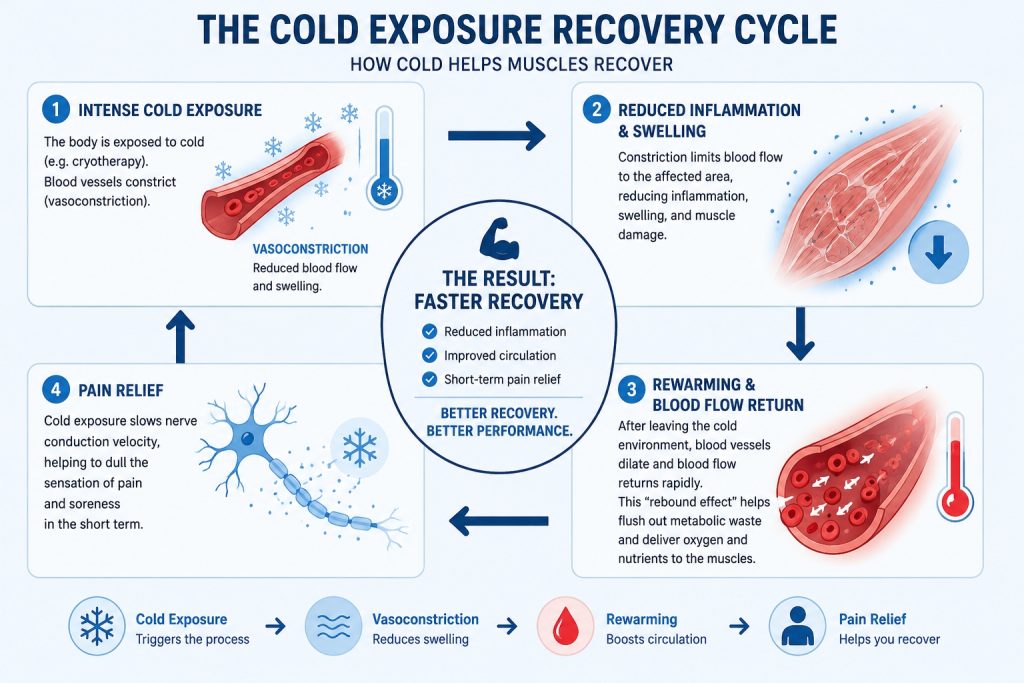
When the body meets intense cold, blood vessels constrict. This is called vasoconstriction, and it reduces blood flow and swelling around damaged tissue.
Once the player leaves the cold environment, blood flow returns rapidly. This rebound effect is thought to help flush out metabolic waste products and deliver oxygen and nutrients back to the muscles.
Cold exposure is also believed to slow nerve conduction velocity. In simple terms, this can dull the sensation of pain and soreness in the short term.
Together, these three effects – reduced inflammation, improved circulation on rewarming, and short-term pain relief – explain why football recovery cryotherapy has become so popular at every level of the game.
Does Cryotherapy Actually Work for Football Recovery? What the Research Says
This is the question every gym owner, physio, and player should ask before committing to a protocol.
The honest answer: it depends on what you’re measuring.
Key Findings from Recent Systematic Reviews
A 2026 systematic review published in the German Journal of Sports Medicine examined the research on cryotherapy and compression therapy for football players specifically.
It found that cold water immersion has by far the largest evidence base in football recovery research. Whole-body cryotherapy, by contrast, has been studied far less often in football-specific populations, even though it is widely used at professional level.
That doesn’t mean WBC doesn’t work. It means the research hasn’t caught up with how popular it has become in elite sport.
Muscle Soreness (DOMS) Reduction – The Data
Delayed onset muscle soreness, or DOMS, is one of the most consistent outcomes measured across cryotherapy studies.
Several trials on footballers and other team-sport athletes have recorded measurable reductions in perceived soreness within 24–72 hours of intense exercise, compared with passive recovery alone.
Performance Recovery – Sprint, Jump & Strength Results
Researchers also track whether players recover their physical output faster, not just how sore they feel.
Some studies on soccer and rugby players show improved recovery of sprint times and jump height (measured via countermovement jump tests) after cryotherapy, particularly in the first 24–48 hours post-match. Strength recovery results are more mixed, with several studies showing little difference compared to standard recovery methods.
The Placebo Effect – What Practitioners Should Know
It would be misleading to ignore this: some researchers believe part of cryotherapy’s benefit comes from the psychological effect of doing something proactive for recovery, not from physiological change alone.
That doesn’t make it worthless. Professional sport is built on marginal gains that combine physical and mental benefits. But it’s worth being transparent with clients rather than overselling cryotherapy as a guaranteed fix.
Which Premier League and Football Clubs Use Cryotherapy
Cryotherapy’s popularity in football didn’t come from marketing. It came from players and clubs adopting it and talking about the results.
Cristiano Ronaldo and Personal Cryotherapy Use
Cristiano Ronaldo is one of the most well-known advocates of cryotherapy in football. He has invested in a personal cryotherapy chamber, reportedly using it as part of his recovery and longevity routine.
Many credit this habit as one reason he has maintained elite physical condition well into his late 30s.
Leicester City’s 2016 Title Run
One of the most cited examples in English football is Leicester City’s 2015–16 Premier League title-winning season.
Media coverage at the time pointed to the club’s recovery methods, including cryotherapy, as a contributing factor. Their squad avoided major injuries and recovered quickly between matches during an unexpected title-winning campaign.
Other UK Clubs Using Cryo Chambers
Cryotherapy use has spread well beyond the Premier League’s top clubs. EFL and non-league clubs, along with private clinics working with professional players, now use it as a standard part of recovery and rehabilitation.
Optimal Cryotherapy Protocol for Football Recovery
Getting the protocol right matters. Too short, and players won’t get the intended benefit. Too long or too cold without supervision, and it becomes a safety issue.
Recommended Temperature and Duration
Most whole-body cryotherapy sessions for athletes run between -85°C and -110°C for 2 to 3 minutes.
Sessions are always supervised. Players wear protective gloves, socks, and footwear to protect extremities.
Timing – Post-Match and Post-Training
Cryotherapy is typically used within a few hours of a match or heavy training session, when inflammation and muscle damage are at their peak. Some clubs also use it the following day as part of active recovery.
Table – Protocol Guidelines by Recovery Method
| Method | Typical Temperature | Duration | Best Timing |
| Whole-Body Cryotherapy | -85°C to -110°C | 2–3 minutes | Within hours post-match |
| Cold Water Immersion | 10°C to 15°C | 10–15 minutes | Within 1 hour post-match |
| Localized Cryotherapy | -30°C to -60°C | 5–10 minutes | As needed for specific injury |
Safety, Contraindications & Who Should Avoid Cryotherapy
Cryotherapy is generally safe when properly supervised. But it isn’t suitable for everyone.
People with cardiovascular conditions, uncontrolled high blood pressure, cold hypersensitivity conditions such as Raynaud’s disease, open wounds, or who are pregnant should avoid whole-body cryotherapy unless cleared by a medical professional.
Sessions should always be time-limited and supervised by trained staff, with protective clothing provided for hands and feet.
Cryotherapy for Grassroots and Amateur Footballers
Cryotherapy isn’t just for professional squads anymore.
Amateur and semi-professional players training multiple times a week, especially those juggling football alongside a full-time job, increasingly use cryotherapy sessions at local gyms and wellness centres. It helps them manage soreness and stay consistent with training.
As more gyms and spas add a cryotherapy unit, access has become far easier for everyday players, not just those at academy or professional level.
Bringing Cryotherapy Into Your Gym, Spa, or Club: A Business Perspective
For gym, spa, and wellness business owners, cryotherapy isn’t just a recovery tool for athletes. It’s a genuine revenue opportunity.
Recovery and wellness services are among the fastest-growing add-ons in the UK fitness industry. A cryo chamber gives a facility something to offer that most local competitors won’t have.
Cryotherapy Chamber Cost
Cryotherapy chamber cost varies depending on chamber type, size, and whether it runs on nitrogen or electricity.
Electric chambers tend to carry a higher upfront cost. However, they typically bring significantly lower running costs over time, since there’s no ongoing nitrogen supply to manage.
ROI and Revenue Potential for Wellness Businesses
A single cryotherapy chamber can serve multiple client sessions per hour. That makes it one of the more efficient wellness services a gym or spa can offer per square metre.
Facilities typically position it as a standalone paid service, a membership add-on, or part of a broader recovery package alongside massage, compression therapy, or infrared sauna.
Electric vs Nitrogen Cryo Chambers – What to Choose
- Nitrogen chambers: typically lower upfront cost, but require a constant, well-managed nitrogen supply and stricter ventilation and safety protocols
- Electric chambers: no nitrogen required, generally simpler and safer to operate day-to-day, with more predictable running costs – a growing preference for gyms and spas that want a lower-maintenance option
Case Studies – Clubs and Facilities Using LifeCube
LifeCube chambers are already in use by professional football clubs and elite sporting organisations across Europe, including partnerships with clubs such as AC Milan, Galatasaray, Sparta Prague, and Trabzonspor.
These installations reflect the same demand now reaching UK gyms, spas, and wellness centres: a reliable, electric, nitrogen-free cryotherapy unit that fits into a professional recovery setting without the operational overhead of traditional nitrogen systems. For localised injury work alongside whole-body sessions, many facilities also pair their chamber with a targeted cryotherapy machine to treat specific muscle groups or joints.
Conclusion – Is Cryotherapy Worth It for Football Recovery?
Football recovery cryotherapy isn’t a magic fix. But the evidence and real-world adoption both point the same way.
Used correctly, it’s a genuinely useful tool for managing soreness, supporting faster recovery between matches, and keeping players performing consistently across a demanding season.
Whether you’re a player looking to recover better, or a gym, spa, or club owner considering a cryotherapy unit for your facility, the key is understanding the protocols, the evidence, and the practical realities of running one – not just the hype.
Ready to Bring Cryotherapy Into Your Facility?
If you’re a gym, spa, or club owner exploring whole-body cryotherapy for your players or members, LifeCube offers electric, nitrogen-free cryo chambers built for professional and commercial use.
Get in touch to discuss which cryotherapy unit or targeted cryotherapy machine fits your space and your business.
Frequently Asked Questions
What is football recovery cryotherapy used for?
It’s primarily used to reduce muscle soreness, manage inflammation, and speed up recovery time between matches and training sessions.
How long should a footballer stay in a cryotherapy chamber?
Sessions typically last 2 to 3 minutes, supervised by trained staff, at temperatures between -85°C and -110°C.
Is cryotherapy better than an ice bath for footballers?
Neither is definitively better. Whole-body cryotherapy is faster and more comfortable, while cold water immersion has more football-specific research behind it. Many clubs use both, depending on the situation.
How much does a cryotherapy chamber cost?
Cryotherapy chamber cost varies by type and size. Electric models generally carry a higher upfront cost but lower running costs than nitrogen-based systems over time.
Which Premier League clubs use cryotherapy?
Several top-flight and EFL clubs use cryotherapy as part of their recovery programmes. Leicester City’s 2015–16 title-winning season remains one of the most widely referenced examples.
Cryotherapy for Hamstring Injury: Can Cold Therapy Speed Up Rehab?
A pulled hamstring can sideline you for weeks, whether you’re a weekend footballer or a marathon trainer. Cold therapy has long been the go-to first aid response, but a newer approach is gaining ground in clinics across the UK: cryotherapy hamstring injury treatment using whole-body or localised cold exposure.
In this article, we’ll look at how cryotherapy works for hamstring injuries, what the evidence actually says, and how physiotherapy clinics are using a cryotherapy unit or targeted cryotherapy machine to support faster, safer recovery. You’ll also learn practical tips on timing, technique, and what to expect during rehab.
What Is a Hamstring Injury and Why Does It Happen?
The hamstrings are a group of three muscles running along the back of your thigh. They’re heavily involved in sprinting, jumping, and sudden changes of direction, which is why they’re one of the most commonly strained muscle groups in sport.
Injuries range from a mild strain (Grade 1) to a partial tear (Grade 2) or complete rupture (Grade 3). Most recreational injuries fall into the first two categories and typically need anywhere from two to eight weeks of structured rehab.
Common causes include inadequate warm-up, muscle fatigue, poor flexibility, and returning to activity too soon after a previous strain. Understanding the cause matters because it shapes the recovery plan your physiotherapist recommends.
How Cryotherapy Works for Hamstring Injury Recovery
Cold therapy has been used for soft tissue injuries for decades, largely through ice packs and cold compression. Cryotherapy hamstring injury treatment takes this further by exposing the body, or a specific area, to much lower temperatures for a short, controlled burst.
The theory is straightforward. Cold exposure narrows blood vessels (vasoconstriction), which can reduce swelling and slow nerve conduction, dulling pain signals. When the body warms back up, blood flow increases again, potentially helping flush out inflammatory byproducts.
For hamstring injuries specifically, this cycle may help manage the early swelling and discomfort that comes with a strain, while also supporting the muscle’s transition into the repair phase.
Localised vs Whole-Body Cryotherapy
There are two main approaches worth understanding. Whole-body cryotherapy exposes the entire body to extreme cold for a short session, typically two to three minutes, and is often used for general recovery and inflammation management.
Localised cryotherapy, delivered through a targeted cryotherapy machine, focuses cold air directly on the injured area. This is often preferred for hamstring strains because it allows more precise, sustained cooling exactly where the muscle damage has occurred.
Many UK physiotherapy clinics now offer both options, choosing the method based on injury severity, the athlete’s training schedule, and what’s practical for the treatment room.
The Evidence: Does Cryotherapy Actually Speed Up Hamstring Rehab?
Research into cryotherapy for muscle injuries is still developing, and results are mixed rather than definitive. Some studies suggest cold exposure can reduce perceived pain and swelling in the first 48 to 72 hours after a strain.
Other research questions whether cryotherapy meaningfully speeds up the underlying tissue repair process, since some inflammation is actually part of healing. This is an active area of debate among sports medicine professionals.
What most clinicians agree on is that cryotherapy can be a useful tool for symptom management, particularly pain relief and reduced swelling, which in turn may allow patients to engage more comfortably with active rehab exercises sooner.
It’s worth being realistic here: cryotherapy isn’t a substitute for proper rehabilitation. It works best as one part of a broader plan that includes stretching, strengthening, and a gradual return to activity.
When to Use Cryotherapy After a Hamstring Strain
Timing matters. In the acute phase, typically the first 24 to 48 hours after injury, cold therapy is most commonly recommended to manage swelling and pain, often alongside rest, compression, and elevation.
As you move into the subacute phase, some clinics introduce sessions using a cryotherapy unit as part of a broader recovery protocol, particularly for athletes managing training loads around competition schedules.
A physiotherapist will usually assess the grade of your strain before recommending a specific cryotherapy schedule, since a Grade 1 strain and a Grade 3 tear call for very different approaches.
Signs You Should See a Physiotherapist First
Not every hamstring twinge needs a clinic visit, but certain signs warrant professional assessment before starting any cold therapy programme. These include sudden sharp pain during activity, visible bruising, or difficulty bearing weight.
A physiotherapist can confirm the grade of injury, rule out a full tear, and build a tailored rehab plan. Attempting to self-treat a more serious tear with cryotherapy alone can delay appropriate care.
What Happens During a Cryotherapy Session for Hamstring Injury
If you visit a clinic offering localised treatment, sessions are typically short, often three to ten minutes, using a targeted cryotherapy machine aimed directly at the back of the thigh. You’ll usually remain clothed in light, dry clothing over the treatment area.
Whole-body sessions in a cryotherapy unit are even shorter, generally under three minutes, and involve standing in a chamber cooled with refrigerated air while wearing minimal clothing, gloves, and foot coverings for safety.
Most people describe the sensation as an intense but bearable cold, similar to stepping into freezing outdoor air, rather than uncomfortable pain. Clinics monitor session length and temperature closely to keep treatment safe.
Combining Cryotherapy With Other Hamstring Rehab Methods
Cryotherapy works best as part of a layered recovery approach rather than a standalone fix. Most UK physiotherapy clinics pair cold therapy with hands-on techniques, guided stretching, and progressive strengthening exercises.
In the early stages, gentle isometric exercises are often introduced once acute pain settles, helping maintain muscle activation without overloading the healing tissue. Cryotherapy sessions may be scheduled either before or after these exercises, depending on clinical judgement.
As rehab progresses, the focus shifts toward eccentric strengthening, which research consistently links to reduced re-injury rates in hamstring strains. Cold therapy can continue to play a supporting role in managing soreness during this more demanding phase.
Risks and Precautions to Know Before Trying Cryotherapy
Cryotherapy is generally considered safe when administered by trained professionals, but it’s not suitable for everyone. People with certain cardiovascular conditions, uncontrolled high blood pressure, or cold sensitivity disorders like Raynaud’s should consult a doctor first.
Pregnant women and anyone with open wounds near the treatment area are typically advised to avoid sessions. Reputable clinics will always run a health screening before your first appointment.
Overuse is another consideration. More cold exposure isn’t automatically better, and following a clinician’s recommended frequency helps avoid skin irritation or excessive numbness in the treated area.
Final Thoughts: Is Cryotherapy Worth Trying for Your Hamstring Injury?
Cold therapy remains one of the most accessible early tools for managing a hamstring strain, and modern cryotherapy takes this a step further with more controlled, targeted cooling options. Used alongside proper rehab exercises, it may help you manage pain and get back to movement more comfortably.
The evidence isn’t conclusive that cryotherapy dramatically speeds up tissue healing itself, but its role in symptom management makes it a reasonable addition to a well-rounded recovery plan.
If you’re dealing with a hamstring injury and want to explore whether a cryotherapy unit or targeted cryotherapy machine could support your rehab, speak with a qualified physiotherapist about incorporating cold therapy into your treatment plan. A proper assessment is always the safest first step toward a full recovery.
Frequently Asked Questions
Can cryotherapy heal a torn hamstring completely on its own?
No. Cryotherapy can help manage pain and swelling, but a torn hamstring still needs a structured rehab programme involving stretching and progressive strengthening to heal properly.
How soon after a hamstring injury can I start cryotherapy?
Cold therapy is often used within the first 24 to 48 hours, but it’s best to get a professional assessment first to confirm the injury grade and rule out a serious tear.
Is whole-body cryotherapy better than localised treatment for hamstring strains?
Not necessarily. Localised treatment using a targeted cryotherapy machine allows more precise, sustained cooling of the injured area, while whole-body sessions are often used for general recovery support.
How many cryotherapy sessions are typically needed for a hamstring strain?
This varies by injury grade and clinic protocol, but many patients attend two to three sessions per week during the early rehab phase, tapering off as symptoms improve.
Does cryotherapy hurt?
Sessions feel intensely cold but shouldn’t be painful. Clinics carefully control exposure time and temperature to keep treatment within a safe, tolerable range.
Patients walk into physio clinics every day looking for one thing: relief that actually lasts. Sore joints, inflamed muscles, and slow-healing injuries can make daily life exhausting. This is where a cold therapy clinic steps in, offering a science-backed approach that many practices are now building their treatment plans around.
In this guide, you’ll learn what this type of clinic actually does, how the treatment works on the body, and why more UK physio practices are adding it to their services. We’ll also cover practical considerations, from patient suitability to common questions people ask before trying it.
What Is a Cold Therapy Clinic?
A cold therapy clinic is a facility that uses controlled cold exposure to treat pain, inflammation, and slow recovery from injury or surgery. Treatments range from localised ice application to full-body cryotherapy chambers. The goal is always the same: trigger the body’s natural healing response through temperature control.
Unlike a simple ice pack at home, clinical cold therapy is measured, monitored, and tailored to each patient. Practitioners assess the injury, the stage of healing, and the patient’s tolerance before deciding on intensity and duration. This precision is what separates a professional clinical setting from at-home remedies.
How Cold Therapy Works on the Body
When skin temperature drops rapidly, blood vessels constrict, a process called vasoconstriction. This reduces blood flow to the treated area, which in turn limits swelling and numbs pain receptors. Once the treatment ends, blood vessels widen again, flushing the area with oxygen-rich blood.
This cycle of constriction and rewarming is thought to reduce inflammatory markers and support tissue repair. Many physios pair cold sessions with movement-based rehab to make the most of this window of reduced pain and improved circulation.
Key Benefits of Cold Therapy in Physio Settings
Cold therapy isn’t a one-size-fits-all fix, but its benefits are well documented across sports medicine and rehabilitation practice. Below are the outcomes clinics most commonly report.
Reduced Inflammation and Swelling
Acute injuries like sprains, strains, and post-surgical swelling respond well to early cold exposure. Reducing swelling in the first 48 hours can shorten the overall recovery timeline. This is often the first reason patients are referred to a specialist clinic after an injury, and it remains one of the most researched uses of cold therapy in physiotherapy today.
Faster Muscle Recovery
Athletes and active patients use cold therapy to manage delayed onset muscle soreness (DOMS) after intense training. Cooling the muscles helps clear metabolic waste products that build up during exercise. Many patients report feeling less stiffness within 24 hours of treatment.
Pain Management Without Medication
For patients who want to avoid or reduce reliance on painkillers, cold therapy offers a drug-free alternative. The numbing effect can be enough to allow patients to move more comfortably during rehab exercises. This makes it a useful tool for chronic pain conditions as well as acute injuries.
Supporting Mental Wellbeing
Whole-body cryotherapy sessions are increasingly linked to improved mood and reduced stress, likely due to the release of endorphins during cold exposure. While this isn’t the primary reason patients book a session, it’s a welcome secondary benefit many report, and it can make regular visits feel less like a chore and more like part of a wellbeing routine.
Common Applications in Physiotherapy
Cold therapy isn’t limited to sports injuries. Clinics use it across a wide range of conditions, and understanding these applications helps patients know what to expect.
Post-Surgical Rehabilitation
Following procedures like knee replacements or ligament repairs, controlled cold exposure helps manage post-operative swelling. It’s often combined with compression therapy for a more complete recovery protocol. Surgeons and physios frequently coordinate on timing these sessions correctly.
Chronic Joint Conditions
Patients with arthritis or long-term joint pain often find cold therapy helps manage flare-ups. Regular sessions can become part of an ongoing management plan alongside strength training. This is particularly common in older patient populations.
Sports Injury Management
From ankle sprains to muscle tears, cold therapy is a first-line treatment in sports physiotherapy. Clinics near training grounds or sports clubs often see a steady stream of athletes using these services. Quick access to treatment can make a real difference to return-to-play timelines.
Setting Up Cold Therapy Services in Your Clinic
For physio practice owners considering adding these services, the decision usually comes down to equipment and space. A local cryotherapy chamber or targeted cooling device requires proper ventilation, trained staff, and clear safety protocols.
Many clinics start by researching a cryotherapy machine for sale to compare features like temperature range, chamber size, and safety certifications. It’s worth comparing several suppliers before committing, since equipment quality varies significantly across the market.
Understanding the Investment
Budget is often the biggest factor in this decision. Clinics researching cryotherapy machine cost will find prices vary widely depending on whether they choose localised cooling devices or full-body cryo chambers. Ongoing costs like maintenance, nitrogen or electric cooling supply, and staff training should also factor into the budget.
Smaller practices sometimes start with portable cold therapy units before scaling up to a dedicated treatment space. This phased approach lets clinics test patient demand without a large upfront commitment.
What to Expect During Your First Visit
Walking into a cold therapy clinic for the first time can feel a little intimidating, especially if you’ve never tried anything beyond a home ice pack. Most clinics start with a short consultation to understand your injury history, current symptoms, and any medical conditions that might affect treatment. This helps the practitioner choose the right method and intensity for you.
After the assessment, you’ll usually be guided through the treatment area and shown exactly what to expect, including how cold the session will feel and how long it will last. Staff typically stay nearby throughout, checking in on comfort levels and adjusting settings if needed. Many UK clinics also provide aftercare advice, such as staying hydrated and avoiding strenuous activity immediately after a session.
Typical Session Length and Frequency
A single session can range from a few minutes for whole-body cryotherapy to twenty minutes or more for localised cooling treatments. Frequency depends entirely on your condition and goals, and your physiotherapist will usually recommend a short course of sessions before reviewing progress. Tracking pain levels and mobility between visits helps clinics fine-tune the treatment plan over time.
Who Should Avoid Cold Therapy?
Cold therapy isn’t suitable for everyone, and a responsible clinic will always screen patients first. People with Raynaud’s disease, certain cardiovascular conditions, or cold sensitivity should be assessed carefully before treatment. Pregnant patients and those with open wounds near the treatment area also need special consideration.
A good practitioner will always take a full medical history before recommending any cold therapy session. This screening step protects patients and helps clinics maintain a strong safety record.
Final Thoughts
Cold therapy has moved well beyond the simple ice pack, becoming a structured, evidence-informed part of modern physiotherapy. Whether it’s helping an athlete recover faster or supporting a patient through post-surgical rehab, a well-run cold therapy clinic offers real, measurable benefits.
If you’re a patient curious about whether cold therapy suits your recovery goals, speak with your physiotherapist about a tailored plan. If you’re a clinic owner exploring new services, take time to compare equipment options and understand the full cost picture before investing.
Ready to explore cold therapy for your practice or your recovery journey? Get in touch with a qualified physiotherapy clinic near you to discuss the right plan for your needs.
Frequently Asked Questions
What does a cold therapy clinic actually treat?
This type of clinic typically treats swelling, muscle soreness, joint pain, and post-surgical inflammation. Sessions are tailored to the injury type and patient tolerance.
Is cold therapy painful?
Most patients describe an intense cold sensation rather than pain, which fades once the session ends. Sessions are usually short, often between 2 and 10 minutes depending on the method used.
How often should someone use cold therapy?
This depends on the condition being treated. Acute injuries may need daily sessions in the first few days, while chronic conditions might only need weekly maintenance sessions.
Can I combine cold therapy with other physio treatments?
Yes, cold therapy is commonly paired with manual therapy, exercise rehabilitation, and compression techniques. Your physio will structure a plan based on your specific recovery goals.
Is cold therapy covered by insurance in the UK?
Coverage varies by provider and treatment type. It’s worth checking with your private health insurer or asking your clinic directly about billing codes for cold therapy sessions.
Patient satisfaction is no longer just about treatment quality – it is about the full recovery experience. Clinics that invest in the right physio recovery equipment are seeing faster results, stronger retention, and better word-of-mouth referrals.
Today’s patients expect more than a standard session. They want to feel supported, see visible progress, and trust that their clinic uses modern, effective tools. This guide covers exactly how better recovery technology helps physio clinics deliver on those expectations.
Why Recovery Support Directly Affects Patient Satisfaction
Slow recovery is one of the most common reasons patients switch clinics. When progress stalls, patients lose confidence – and often blame the clinic, not the injury.
Providing advanced physio recovery equipment creates a tangible sense of progress. Patients feel the difference, which builds trust and keeps them coming back.
Recovery support also reduces the burden on therapists. When equipment assists the process, therapists can focus on technique and connection – the parts patients value most.
Clinics that offer comprehensive recovery solutions consistently outperform competitors on patient satisfaction surveys and Google reviews alike.
The Most Effective Types of Physio Recovery Equipment
Cryotherapy and Cold Treatment Systems
Cold therapy remains one of the most clinically proven tools in sports and physio recovery. It reduces inflammation, controls pain, and accelerates tissue repair after injury or intensive treatment.
Modern cryotherapy machines take this far beyond an ice pack. Whole-body cryo chambers and localised cryo units deliver precise, consistent temperatures that manual cold treatment simply cannot replicate.
If you are researching a cryotherapy machine for sale, you will find options ranging from compact clinic units to full walk-in chambers – each suited to different patient volumes and treatment goals.
Understanding cryotherapy machine cost early helps clinics plan budgets realistically and calculate return on investment before committing.
Cryo EMS Combination Units
Cryo EMS (Electro Muscle Stimulation) devices combine cold therapy with electrical muscle activation. This dual approach both reduces pain and actively strengthens surrounding muscle tissue.
For post-surgical patients or those recovering from sports injuries, this combination significantly shortens the overall rehabilitation timeline. Patients appreciate faster, measurable outcomes from each session.
These units are compact, easy to use, and work well in both dedicated recovery suites and standard treatment rooms. They also create an additional premium service tier that supports higher session pricing.
CoolSkin and Body Contouring Recovery Tools
CoolSkin technology uses controlled cooling to support skin and soft tissue recovery. It is particularly effective for patients dealing with localised swelling, post-procedure sensitivity, or superficial inflammation.
Adding CoolSkin to your clinic’s recovery offering broadens your patient demographic. It appeals equally to sports recovery clients and those attending for wellness or aesthetic rehabilitation.
This type of equipment also differentiates your clinic in a competitive market. Patients seeking comprehensive care will choose clinics that offer layered treatment options over those with a single-modality approach.
How Better Equipment Improves Clinical Outcomes
Reducing Recovery Time Between Sessions
One of the most direct benefits of quality physio recovery equipment is faster inter-session recovery. When patients recover more completely between appointments, they can handle more intensive therapy sooner.
This creates a positive cycle: better recovery leads to stronger sessions, which leads to faster overall progress, which leads to satisfied patients who refer others. The clinical and commercial benefits are closely linked.
Shorter recovery windows also allow clinics to schedule more frequently without risking patient setbacks. This directly improves both outcomes and clinic revenue per patient.
Improving Pain Management Without Medication
Many patients attending physio clinics are actively trying to reduce their reliance on pain medication. Equipment-led pain management – particularly cryotherapy – supports this goal directly.
Controlled cold therapy lowers pain perception at the nerve level. Patients who feel less pain during recovery tend to engage more confidently with their therapy programme overall.
This positions your clinic as a holistic, patient-centred practice – a powerful differentiator for patients who are cautious about pharmaceutical approaches to pain relief.
What UK Physio Clinics Should Consider Before Investing
Space and Workflow Planning
Before purchasing physio recovery equipment, assess your available floor space and patient flow patterns. A cryo chamber, for example, requires a dedicated area with appropriate ventilation and safety clearances.
Smaller clinics often start with portable or compact units and scale up as patient demand grows. This approach manages capital outlay while still elevating the quality of care you provide.
Planning equipment placement around your existing workflow avoids disruption and ensures a smooth patient experience from the moment they arrive to the moment they leave.
Equipment ROI for Physio Clinics
The upfront cryotherapy machine cost can seem significant, but it should always be evaluated against revenue potential. A single cryotherapy session typically commands a premium price point in the UK market.
Most clinics recover equipment costs within 12 to 18 months when cryotherapy is offered as a standalone or add-on service. The margin per session is considerably higher than standard manual therapy.
Reviewing a cryotherapy machine for sale from a specialist supplier also gives you access to financing options, maintenance packages, and clinical training – all of which protect your investment long-term.
Staff Training and Patient Education
Equipment is only as effective as the team using it. Investing in staff training ensures every patient receives a consistent, high-quality experience across every session.
Educating patients on how the equipment works also increases engagement. When patients understand why cryotherapy or EMS is being used, they value the treatment more and are more likely to complete the full course.
Consider creating simple patient-facing guides or video content explaining your recovery technology. This builds authority, supports your marketing, and reassures new patients before their first appointment.
Building a Recovery-First Clinic Culture
Making Recovery a Core Part of Your Brand
Clinics that position recovery support at the heart of their offering attract higher-value patients. Sports professionals, fitness enthusiasts, and post-surgical patients specifically seek out clinics that take recovery seriously.
Your website, social media, and consultation process should all reflect this recovery-first approach. Featuring your physio recovery equipment prominently signals to patients that your clinic is invested in their full rehabilitation journey.
This is also a strong foundation for building referral networks with GPs, surgeons, and sports coaches who want trusted recovery partners for their own clients.
Collecting Patient Feedback to Guide Investment
Gathering structured patient feedback after recovery sessions helps identify which equipment is delivering the most value. Regular feedback loops allow you to refine your offering without guesswork.
Patients who feel heard are significantly more likely to complete treatment plans and refer friends and family. Simple post-session surveys – even via email or SMS – create this feedback culture with minimal effort.
Use this data to guide future equipment investments and to demonstrate clinical outcomes to prospective patients and referral partners.
Invest in Recovery, Invest in Your Patients
The clinics that lead the UK physio market in patient satisfaction are those that treat recovery as a priority – not an afterthought. The right physio recovery equipment shortens timelines, improves outcomes, and builds the kind of patient trust that sustains a clinic long-term.
Whether you are exploring your first cryotherapy machine for sale or scaling up an existing recovery suite, the investment pays back through stronger retention, premium service pricing, and referrals.
Ready to upgrade your clinic’s recovery offering? Visit LifeCube to explore the full range of physio recovery equipment – including cryo chambers, CoolSkin, and Cryo EMS units – and speak with a specialist about the right solution for your clinic.
Frequently Asked Questions
What is the most effective physio recovery equipment for sports injuries?
Cryotherapy systems and Cryo EMS units are among the most effective for sports injuries. Cryotherapy reduces inflammation and pain immediately after injury or intensive training, while EMS supports muscle activation and strength during rehabilitation.
How much does a cryotherapy machine cost for a UK physio clinic?
Costs vary depending on the type and specification of the unit. Entry-level localised cryo devices are more affordable, while whole-body cryo chambers represent a larger investment. Reviewing cryotherapy machine cost with a specialist supplier gives you accurate, current pricing alongside financing options.
Is cryotherapy safe for all physio patients?
Cryotherapy is safe for the majority of patients when used under appropriate clinical guidance. Contraindications include certain cardiovascular conditions and Raynaud’s syndrome. A thorough patient assessment before treatment is always recommended.
Where can I find a cryotherapy machine for sale in the UK?
Specialist suppliers like LifeCube offer a range of cryotherapy machine for sale options suited to physio clinics of all sizes. They also provide installation support, staff training, and ongoing maintenance.
How does physio recovery equipment improve patient satisfaction scores?
Better equipment means faster, more measurable recovery outcomes. Patients who see and feel progress are more satisfied, more likely to complete treatment, and more likely to recommend the clinic to others – directly improving satisfaction scores and referral rates.
Rugby is one of the most physically demanding sports in the world. Whether you are playing in a local club match in Manchester or training at a professional academy in Bristol, the toll on your body is enormous. Tackles, scrums, sprints, and collisions leave muscles battered and joints inflamed – and with modern rugby schedules growing busier every season, rugby player recovery has become just as important as training itself.
One method that has gained serious traction across the sport – from grassroots clubs to Premiership squads – is cryotherapy. Simply put, cryotherapy uses extreme cold to help the body recover faster. But how does it actually work, and how are rugby players using it between sessions? This guide breaks it all down in plain language, so whether you are a player, coach, or sports therapist, you will come away knowing exactly what cryotherapy can do and how to use it effectively.
What Is Cryotherapy and Why Do Rugby Players Use It?
Cryotherapy is the therapeutic use of cold temperatures to reduce inflammation, ease muscle soreness, and speed up physical recovery. It has been used in sports medicine for decades, originally in the form of ice baths. Today, advanced equipment – including the targeted cryotherapy machine – allows practitioners to apply cold precisely to specific areas of the body, making treatments faster and more effective than traditional methods.
Rugby players sustain significant muscular stress during every session. Hard tackles cause micro-tears in muscle fibres. Scrums put enormous pressure on the neck, shoulders, and spine. Repeated sprints burn through glycogen stores and create lactic acid build-up. Without proper recovery tools, players simply cannot perform at their best the following day.
Cryotherapy addresses this by:
- Reducing inflammation in muscles and joints after intense physical effort
- Numbing nerve endings to provide immediate pain relief
- Constricting blood vessels, which limits swelling in injured tissue
- Triggering a rewarming effect that floods the area with oxygenated blood once treatment ends – accelerating tissue repair
It is this final point that makes cryotherapy particularly powerful. The cold does not just mask the pain – it actively triggers a biological response that speeds up healing.
How Rugby Players Fit Cryotherapy Into Their Training Week
Most professional and semi-professional rugby players follow structured recovery windows between sessions. Here is how cryotherapy typically fits into that schedule:
Immediately After a Match or Intense Training
Within one to two hours of finishing, players are most likely to use a targeted cryotherapy machine on the areas that took the most punishment. For a prop, that might be the shoulders and neck. For a winger, it might be the hamstrings and calves. The treatment window here is short – usually five to ten minutes per area – but the impact on next-day soreness is significant.
The Day After a Match (MD+1)
The morning after a game is often when soreness peaks. This is commonly called “the day after the day after” in rugby circles, and it is where cryotherapy sessions tend to be longer and more comprehensive. Players might spend fifteen to twenty minutes treating multiple muscle groups, working through the areas most affected by the previous day’s effort.
Mid-Week Maintenance
During a typical training week, players use cryotherapy two to three times as a maintenance tool. This keeps inflammation low, supports mobility, and ensures they arrive at Thursday or Friday’s full-contact session feeling physically ready. It is not always about treating injury – it is about keeping the body in peak condition consistently.
Targeted Cryotherapy vs Whole-Body Cryotherapy: Which Is Better for Rugby?
This is one of the most common questions in sports recovery circles, and the honest answer is: it depends on what you need.
Whole-body cryotherapy (WBC) involves stepping into a cryotherapy chamber where the entire body is exposed to temperatures as low as -140°C for two to three minutes. It offers a systemic effect, reducing inflammation across the whole body simultaneously. Many Premiership clubs have WBC chambers in their training facilities for post-match recovery.
Targeted cryotherapy, delivered through a targeted cryotherapy machine, applies a focused stream of cold to a specific joint or muscle group. This is ideal when:
- A player has a localised injury, such as a knee sprain or shoulder strain
- You want to treat a specific area without exposing the whole body to extreme cold
- You need a faster, more practical session that can be done in a clinic or even pitch-side
For most club-level rugby environments in the UK, targeted cryotherapy is the more accessible and cost-effective option. You do not need a purpose-built chamber – a well-chosen best cryotherapy machine for your setup can deliver targeted treatments that rival the results of whole-body systems for localised recovery.
What the Research Says About Cryotherapy for Rugby Player Recovery
The evidence base for cryotherapy in sport has grown considerably in recent years. Studies consistently show that cold therapy reduces markers of inflammation – particularly creatine kinase (CK), which is released into the blood when muscle damage occurs. In rugby players, CK levels spike significantly after matches, and cryotherapy has been shown to reduce those spikes more quickly than passive rest alone.
A key study published in the European Journal of Applied Physiology found that athletes who used cryotherapy post-exercise reported lower perceived muscle soreness at 24 and 48 hours compared to control groups. Another paper, focusing specifically on contact sport athletes, showed improved sprint performance in subsequent training sessions when cryotherapy was used as part of a structured recovery protocol.
What does this mean in practical terms? It means that rugby player recovery is measurably faster and more complete when cryotherapy is included alongside other methods like nutrition, sleep, and stretching.
Choosing the Best Cryotherapy Machine for Your Rugby Setup
If you are a physio, a club coach, or a performance director looking to invest in recovery equipment, choosing the best cryotherapy machine for your environment comes down to several factors:
Portability and Practicality
For touring squads or clubs without dedicated recovery suites, a portable targeted unit is essential. These machines typically run on pressurised CO₂ or liquid nitrogen to produce a precise cold stream. They are lightweight, easy to transport, and require no plumbing or specialist installation.
Treatment Versatility
The best machines allow practitioners to treat a range of body parts – from the ankle to the shoulder – with adjustable temperature and airflow settings. This flexibility is crucial in rugby, where injuries occur across the entire body.
Safety and Clinical Standards
Always look for machines that meet UK and European medical device standards. The best cryotherapy machines are CE marked and come with clear operating guidelines. In a professional environment, ensure that whoever is operating the machine has received appropriate training.
Cost vs. Benefit
Entry-level targeted cryotherapy machines start at around £2,000–£4,000 for club-level use. Professional-grade systems used by Premiership teams can run significantly higher. For most semi-professional or amateur clubs in the UK, a mid-range targeted unit will deliver excellent results without breaking the budget.
Other Recovery Methods That Work Well Alongside Cryotherapy
Cryotherapy is not a standalone solution – it works best as part of a wider rugby player recovery strategy. Here are the methods that complement it most effectively:
Compression therapy: Pneumatic compression boots or sleeves are widely used alongside cryotherapy. They help move waste products like lactic acid out of the muscles and can be used immediately before or after a cryo session.
Nutrition and hydration: Post-match nutrition – particularly protein intake within 30 minutes and carbohydrate replenishment within two hours – supports the tissue repair process that cryotherapy initiates.
Sleep: No recovery protocol is complete without seven to nine hours of quality sleep. Growth hormone, which is critical for muscle repair, is released predominantly during deep sleep stages.
Mobility and active recovery: Light movement the morning after a game – walking, yoga, or a gentle swim – promotes blood flow and helps flush out metabolic waste products.
Contrast therapy: Some teams alternate between cold and heat exposure, using cryotherapy and warm baths in sequence to stimulate alternating vasoconstriction and vasodilation. This is sometimes referred to as contrast therapy and is popular in professional rugby environments.
Make Cryotherapy Part of Your Recovery Routine
Rugby player recovery is no longer an afterthought – it is a strategic priority for players at every level of the game. Cryotherapy, whether delivered through a targeted cryotherapy machine or a whole-body chamber, gives players a genuine edge by reducing inflammation, managing soreness, and shortening the time needed to return to peak performance.
The good news for UK rugby clubs is that access to cryotherapy has never been better. From pitch-side portable units to clinical systems at high street physio practices, there are options for every budget and environment. If you want to train harder, recover smarter, and stay on the pitch longer, cryotherapy deserves a serious place in your weekly routine.
Ready to explore the best cryotherapy machine for your rugby club or practice? Get in touch with our team today to find the right solution for your recovery needs.
Frequently Asked Questions
How long should a cryotherapy session last for rugby player recovery?
For a targeted cryotherapy machine session, treatment typically lasts between five and fifteen minutes per body area. Whole-body cryotherapy sessions in a chamber usually last two to three minutes. The right duration depends on the severity of soreness or injury, but most practitioners recommend starting conservatively and increasing over time as tolerance develops.
Is cryotherapy safe for rugby players with existing injuries?
Generally, yes – but there are important exceptions. Cryotherapy should not be used on open wounds, areas with compromised circulation, or over areas with suspected nerve damage. Players with Raynaud’s phenomenon or cold urticaria (an allergic reaction to cold) should avoid it entirely. Always consult a qualified sports medicine practitioner before beginning cryotherapy if you have a pre-existing condition.
How soon after a rugby match should you use cryotherapy?
Most sports physiotherapists recommend beginning cryotherapy within one to two hours of the final whistle for best results. This is the period when inflammation is actively building, and early treatment can significantly reduce the extent of soreness experienced the following day. That said, cryotherapy continues to provide benefits when used 24–48 hours post-match as well.
Can amateur rugby players benefit from cryotherapy, not just professionals?
Absolutely. While professional clubs have easier access to equipment, the physiological benefits of cryotherapy are exactly the same regardless of level. Many physiotherapy clinics, sports centres, and recovery studios across the UK now offer cryotherapy sessions to the general public. For players who train or compete two to three times a week, it can make a meaningful difference to how they feel and perform.
What is the difference between a targeted cryotherapy machine and an ice pack?
An ice pack applies passive, static cold that slowly penetrates tissue. A targeted cryotherapy machine delivers a high-velocity stream of chilled air or gas at temperatures of -30°C to -80°C or lower, which penetrates deeper and more rapidly. This means faster results, more precise treatment, and the ability to treat areas like the shoulder or hip that are difficult to ice effectively with a pack. The physiological response is also more pronounced, triggering a stronger rewarming and healing effect.
Every club wants players who train harder, perform better, and stay injury-free for longer. Yet most clubs still pour their budget into pitches, kits, and coaching staff while leaving recovery as an afterthought. A well-planned sports recovery room changes that equation, giving athletes a dedicated space to repair muscles, reduce soreness, and get back to training sooner.
In this article, you’ll learn what a sports recovery room actually includes, why it matters for both grassroots and elite clubs, and how UK facilities are using smart recovery equipment to gain a competitive edge. By the end, you’ll have a clear picture of what to consider before building or upgrading your own space.
What Is a Sports Recovery Room and Why Does It Matter?
A sports recovery room is a dedicated area within a club, gym, or training facility designed specifically to help athletes recover after intense physical activity. Unlike a standard changing room, it’s built around recovery tools and techniques such as cold therapy, compression, stretching zones, and rehydration stations.
The purpose is simple: shorten the time between training sessions or matches while lowering the risk of injury. Clubs that invest in this kind of space often see fewer missed training days and a noticeable improvement in how players feel during the final stretch of a season.
Recovery rooms aren’t just for professional academies anymore. Local clubs, school sports programmes, and community gyms are catching on too, recognising that recovery is just as important as the training itself.
The Science Behind Athlete Recovery
Muscle tissue breaks down during intense exercise, and that breakdown is what leads to soreness, stiffness, and reduced performance the following day. Recovery isn’t about doing nothing; it’s an active process that helps the body repair itself faster and more completely.
Why Recovery Time Affects Performance
When athletes don’t recover properly, fatigue builds up over time. This often shows up as slower sprint times, weaker grip strength, or a higher chance of strains and tears. A structured recovery routine, supported by the right environment, helps reverse this cycle before it becomes a long-term problem.
Research into sports science consistently points to a few proven recovery methods: cold exposure, compression, sleep quality, and proper hydration. A purpose-built recovery space brings all of these together in one location, making it far easier for players and coaching staff to stick to a routine.
Key Equipment Every Sports Recovery Room Needs
Not every club needs every piece of equipment on day one. Most successful recovery rooms start small and expand as budget and space allow, prioritising the tools that deliver the biggest impact for their squad size and sport type.
Cryotherapy Solutions for Faster Recovery
Cold therapy remains one of the most effective tools for reducing inflammation and easing muscle soreness after training or competition. Many UK clubs are now looking at a cryotherapy chamber for sale UK as a long-term investment rather than relying solely on ice baths, since chambers offer more consistent and controlled cold exposure.
A whole body cryotherapy machine allows multiple players to recover in shorter sessions compared to traditional ice baths, which can be a major advantage for clubs working with tight turnaround times between fixtures.
Compression and Stretching Stations
Pneumatic compression boots and dedicated stretching areas help improve blood flow and flexibility after exercise. These stations don’t require much space and are relatively affordable, making them a sensible starting point for clubs with limited budgets.
Hydration and Nutrition Corners
A simple hydration station stocked with electrolyte drinks, protein snacks, and water can make a real difference to how quickly players bounce back. Pairing this with basic nutrition guidance helps reinforce healthy habits beyond just the physical side of recovery.
Designing a Recovery Room for Your Club's Budget and Space
You don’t need a sprawling facility to create an effective recovery area. Many clubs successfully convert a spare room, storage area, or underused corner of their changing facilities into a functional space.
Start by mapping out your priorities: what does your squad need most right now? A small football club might prioritise compression boots and a stretching mat area, while a swimming club with frequent back-to-back competitions might lean towards cold therapy first. Budget, available space, and the specific physical demands of your sport should all shape the final layout.
It’s also worth planning for future growth. Leaving room to add a whole body cryotherapy machine later, for example, means you won’t need to redesign the entire space when your club’s budget increases.
Benefits for Amateur Clubs vs Professional Clubs
Professional clubs typically use recovery rooms to manage tight match schedules, reduce injury downtime among contracted players, and maintain performance across a long season. The financial stakes are high, so even small improvements in recovery speed translate into real value.
Amateur and grassroots clubs benefit differently but just as meaningfully. Many players juggle sport alongside work or studies, so faster recovery means they can train consistently without burning out. A modest recovery setup can also help with player retention, since athletes are more likely to stay loyal to a club that visibly invests in their wellbeing.
How UK Sports Clubs Are Investing in Recovery Spaces
Across the UK, sports clubs of all sizes are treating recovery infrastructure as a genuine investment rather than a luxury add-on. Rugby clubs, football academies, and even university sports programmes have started building dedicated recovery zones into new facility designs.
This shift is partly driven by greater awareness of long-term player health and partly by the growing affordability of recovery equipment. Where a cryotherapy chamber for sale UK might once have seemed out of reach for smaller clubs, increased competition among suppliers has made these systems more accessible than they were just a few years ago.
Final Thoughts and Next Steps
Building a sports recovery room isn’t about chasing trends; it’s about giving athletes the tools they need to train harder, recover faster, and stay on the pitch longer. Whether you’re running a small local club or managing a professional academy, even modest steps toward dedicated recovery space can pay off in player performance and loyalty.
If you’re ready to explore recovery equipment options for your club, including cryotherapy systems suited to UK facilities, get in touch with a specialist supplier to discuss what fits your space, squad size, and budget.
Frequently Asked Questions
What is the main purpose of a sports recovery room?
A sports recovery room helps athletes reduce muscle soreness, manage fatigue, and lower injury risk after training or competition, using tools like cold therapy, compression, and stretching equipment in one dedicated space.
Do small or amateur clubs really need a recovery room?
Yes. Even a basic setup with stretching areas and hydration stations can improve how quickly amateur athletes recover, helping them stay consistent with training and reducing time lost to minor injuries.
Is cryotherapy better than ice baths for sports recovery?
Cryotherapy chambers offer more controlled, consistent cold exposure and shorter session times compared to ice baths, making them appealing for clubs that need to recover multiple players quickly between sessions.
How much space do I need for a sports recovery room?
There’s no fixed requirement. Many clubs start with a small converted room and gradually add equipment such as compression stations or a whole body cryotherapy machine as space and budget allow.
How quickly will a club see results from a recovery room?
Most clubs notice improvements in player soreness and training consistency within a few weeks of regular use, though injury reduction benefits tend to build over a full season.
Introduction: The Recovery Problem Every Sports Club Faces
Ask any performance coach, physio, or club manager what their biggest challenge is – and the answer is rarely fitness or tactics. It’s keeping players on the pitch. Injuries, fatigue, and insufficient recovery time between fixtures cost clubs at every level, from grassroots academies to professional organisations.The good news? Advances in player recovery methods mean you no longer have to choose between competitive training schedules and adequate recovery time. Modern recovery technology – including tools once reserved for elite athletes – is now accessible to a much wider range of clubs and individual athletes.
In this guide, you’ll learn:
- Why traditional recovery falls short
- The most effective science-backed player recovery methods in use today
- How cryotherapy has become one of the most powerful tools for accelerating recovery
- What to consider when investing in a cryotherapy machine for home or club use
- How UK clubs can find the right solution without breaking their budget
Why Traditional Recovery Methods Are No Longer Enough
For decades, standard recovery protocols centred on rest, ice baths, massage, and nutrition. While these approaches still have value, they come with significant limitations:
- Ice baths are uncomfortable, inconsistent in temperature, and difficult to standardise across a squad
- Foam rolling and massage are time-intensive and dependent on availability of physiotherapy staff
- Passive rest between matches doesn’t actively stimulate muscle repair
- Compression garments help but don’t address deep tissue inflammation efficiently
As fixture congestion increases across leagues – particularly post-COVID scheduling in English football, rugby, and netball – clubs need player recovery methods that work faster, more consistently, and with less demand on staff time.
This is exactly where technology-led recovery steps in.
The Most Effective Player Recovery Methods Used by Sports Clubs Today
1. Whole-Body Cryotherapy (WBC)
Whole-body cryotherapy is widely considered one of the most advanced player recovery methods available. Players enter a cryotherapy chamber where the body is exposed to ultra-cold temperatures (typically between -110°C and -140°C) for two to three minutes.
The physiological effects are well-documented:
- Rapid reduction in muscle inflammation
- Decreased delayed onset muscle soreness (DOMS)
- Accelerated removal of lactic acid
- Improved sleep quality and hormonal recovery
- Reduced psychological fatigue
Unlike ice baths – which only cool the outer skin – cryotherapy chambers deliver a consistent, controlled cold stimulus across the entire body. This makes the session reproducible, measurable, and far more comfortable for players.
Previously only found in elite club facilities, the emergence of the home cryotherapy machine market means smaller clubs and high-performance individuals can now access this technology directly. Companies such as Life Cube offer professional-grade cryotherapy machines for home and club environments across the UK.
2. Contrast Water Therapy
Alternating between hot and cold water immersion stimulates the vascular system, driving blood in and out of muscle tissue. This “pumping” effect removes metabolic waste and delivers oxygenated blood to areas of micro-damage.
While effective, contrast water therapy requires dedicated facilities and significant setup – making it less practical for clubs without permanent hydro suites.
3. Compression Therapy and Pneumatic Recovery Boots
Pneumatic compression devices – often referred to as “recovery boots” – use sequential air pressure to enhance circulation in the legs. They are particularly effective for footballers, rugby players, and distance athletes who carry heavy training loads in the lower limbs.
Recovery boots are a useful complement to primary player recovery methods, particularly when used 30–90 minutes post-training.
4. Sleep Optimisation Protocols
Sleep is still the most underutilised recovery tool in team sport. High-quality, uninterrupted sleep between 8–10 hours is associated with higher testosterone and growth hormone output – both critical for muscle repair.
Clubs investing in sleep tracking technology, blackout facilities, and education programmes for players see measurable reductions in soft tissue injury rates over a season.
5. Nutrition Timing and Hydration
Post-training nutrition windows (typically within 30–45 minutes of exercise) maximise protein synthesis and glycogen replenishment. Combined with structured hydration protocols, this remains a cornerstone of any player recovery plan – and one that costs nothing beyond planning.
Why Cryotherapy Is the Standout Recovery Investment for UK Sports Clubs
Among all modern player recovery methods, cryotherapy stands apart for one key reason: it delivers measurable results in under three minutes per player, without requiring staff supervision for extended periods.
Consider a squad of 20 players rotating through a session each requiring 90 minutes of ice bath and massage recovery. That’s a significant drain on physio time and resources. A cryotherapy machine can process the same squad in under an hour, with consistent results across every session.
The Rise of the Home Cryotherapy Machine in the UK
One of the most significant developments in recovery science over the last five years has been the arrival of the home cryotherapy machine market in the UK. What was previously only available in elite facilities is now accessible to:
- Semi-professional and academy clubs
- High-performance personal trainers and coaches
- Individual athletes serious about longevity and performance
- Sports rehabilitation clinics
Investing in a cryotherapy machine for home use – or installing one at a club facility – allows teams to perform post-training recovery sessions without travelling to specialist centres, saving time and making recovery a consistent, non-negotiable part of the training week.
Buying a Cryotherapy Machine in London: Key Factors to Consider
If you’re exploring cryotherapy machines for your club, training facility, or personal use in the UK, here are the most important factors to evaluate before making a purchase decision.
Safety Certifications and Compliance
Any cryotherapy machine for home or commercial use in the UK should carry relevant CE marking and comply with applicable safety standards. Nitrogen-based systems require proper ventilation protocols; electric cryotherapy chambers are typically considered safer for environments without specialist installation infrastructure.
Always verify that the supplier provides full safety documentation, operator training, and ongoing technical support.
Chamber Type: Nitrogen vs. Electric
- Nitrogen-based cryosaunas cool rapidly and reach very low temperatures quickly, but require nitrogen supply logistics
- Electric cryotherapy chambers use refrigeration technology and are generally more convenient for club environments – no gas refilling, consistent temperature, and lower ongoing operating costs
For UK clubs and individuals considering a home cryotherapy machine, electric chambers are increasingly the preferred option.
Running Costs and Maintenance
Purchase price is only part of the equation. Ask suppliers about:
- Energy consumption per session
- Maintenance schedules and service contracts
- Replacement parts availability in the UK
- Expected lifespan of the unit
A well-maintained cryotherapy chamber should deliver thousands of sessions over its lifespan, making the cost-per-session extremely competitive with alternative recovery modalities.
Supplier Reputation and UK Support
For clubs in London and across the UK, working with a supplier who has a strong service presence domestically is essential. A cryotherapy machine is a long-term investment – you need reliable after-sales support, rapid response to technical issues, and ideally a supplier who understands the demands of sports club environments.
Companies such as Life Cube specialise in providing home cryotherapy machines and professional cryotherapy solutions to the UK market, with experience supporting clubs, clinics, and individual performance athletes.
How to Integrate Cryotherapy Into Your Club’s Recovery Protocol
Introducing cryotherapy doesn’t require rebuilding your entire recovery structure. Here’s a practical framework for integrating it effectively:
Step 1 – Post-Match or Post-Training Priority Sessions Schedule cryotherapy sessions within 30–60 minutes of the final whistle or training session. This is when the anti-inflammatory and recovery benefits are greatest.
Step 2 – Stagger Player Groups With most cryotherapy chambers allowing two to three players simultaneously (depending on the unit), stagger squad groups through the session to minimise downtime.
Step 3 – Combine With Nutrition Follow cryotherapy with a structured nutrition window – protein shake, high-quality carbohydrates – to maximise recovery synergy.
Step 4 – Track and Measure Use RPE (Rate of Perceived Exertion) and HRV (Heart Rate Variability) scores before and after introducing cryotherapy to measure its impact on your squad’s recovery benchmarks.
Step 5 – Educate Players Player buy-in is critical. When athletes understand the physiological reasoning behind a player recovery method, compliance and consistency improve dramatically.
Investing in the Right Player Recovery Methods Pays for Itself
The clubs and athletes who win over a long season aren’t always the ones who train the hardest – they’re the ones who recover the smartest. Modern player recovery methods, and particularly whole-body cryotherapy, have moved from elite privilege to practical necessity for any serious sporting programme.
Whether you’re managing a semi-professional squad in London, running an academy, or a high-performance individual looking to extend your athletic career, investing in a home cryotherapy machine or club cryotherapy solution is one of the highest-return decisions you can make for performance and injury prevention.
Ready to explore cryotherapy solutions for your club or home facility? Visit Life Cube to browse professional-grade cryotherapy machines for home and commercial environments, and speak to a UK-based expert about the right solution for your needs.
FAQ: Player Recovery Methods and Cryotherapy
Q1: How quickly does cryotherapy work for player recovery?
Most athletes report a noticeable reduction in muscle soreness within 24 hours of a cryotherapy session. The anti-inflammatory response begins immediately during the treatment and continues for several hours post-session. For player recovery, this means players can return to high-intensity training significantly sooner than with passive rest alone.
Q2: Is a cryotherapy machine for home use safe?
Yes – when used correctly with proper safety protocols. Electric home cryotherapy machines are designed for non-specialist environments and include built-in safety systems. It’s essential to purchase from a reputable UK supplier who provides full operator training and documentation.
Q3: How much does a cryotherapy machine cost in the UK?
Entry-level professional cryotherapy machines suitable for home or small club use start from approximately £20,000–£40,000 in the UK market, with larger commercial chambers ranging higher. Running costs are typically low relative to the volume of sessions delivered. Always request a full cost-of-ownership breakdown from your supplier.
Q4: Can cryotherapy replace other player recovery methods?
Cryotherapy is most effective when integrated into a comprehensive player recovery protocol alongside proper nutrition, sleep, and active recovery work. It is a powerful accelerator rather than a standalone solution.
Q5: What sports benefit most from cryotherapy recovery?
Cryotherapy is widely used across football, rugby, cricket, cycling, athletics, and combat sports. Any sport with high training volume, contact elements, or tight fixture schedules benefits significantly from whole-body cryotherapy as a core player recovery method.
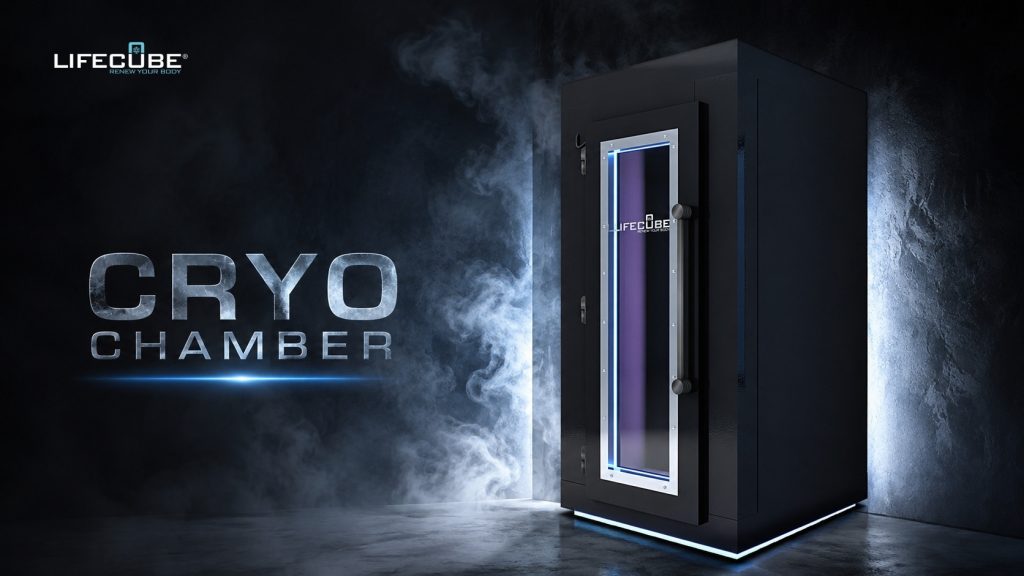
If you’re searching for a cryotherapy machine in London, you already know the therapy is booming. Elite sports clubs, wellness studios, physio clinics, and luxury spas across the UK are adding cryo chambers to their treatment menus – and with good reason. Whole-body cryotherapy offers documented benefits for recovery, inflammation, pain management, and even mood.
But buying the wrong machine is an expensive mistake. Prices range from a few thousand pounds to well over £100,000, and not every unit on the market is built to the same standard. Whether you’re opening a new wellness facility or upgrading an existing one, this guide walks you through the 10 key questions you must ask before purchasing a cryotherapy chamber – so you invest with confidence and avoid costly surprises.
1. What Type of Cryotherapy Chamber Best Suits Your Needs?
Not all cryo chambers are the same, and the differences go well beyond price. Before you start comparing models, it helps to understand what’s available.
Electric vs. Nitrogen-Based Systems
Electric whole body cryotherapy machines use refrigeration technology to cool the chamber – similar in principle to a walk-in freezer but designed for therapeutic use. They’re generally considered safer because they cool the air rather than flooding the space with cryogenic gas. There’s no risk of oxygen displacement, which makes them a preferred choice for unattended or less-supervised settings.
Nitrogen-cooled chambers use liquid nitrogen to drop temperatures rapidly, often reaching -110°C to -140°C. They can achieve colder temperatures faster, which some practitioners prefer. However, they require careful ventilation, ongoing nitrogen supply contracts, and a higher level of operator training.
Partial-body cryo units (where the user’s head remains outside) are a lower-cost entry point, but whole body cryotherapy machines – where the entire body is enclosed – are now the clinical and commercial standard for serious facilities.
Key question to ask suppliers: Is this an electric or nitrogen system, and what ongoing consumable costs should I budget for?
2. Is the Machine CE Marked and Compliant with UK Regulations?
This is non-negotiable. Any cryotherapy chamber for sale in the UK should carry a CE mark (or the UK Conformity Assessed UKCA mark for post-Brexit compliance), confirming it meets European or British safety standards.
Beyond the mark itself, ask:
- Is it classified as a medical device or a wellness appliance? (This affects your insurance and liability)
- Does it comply with Machinery Directive 2006/42/EC or the relevant UK equivalent?
- Has it been independently tested and certified by a notified body?
Reputable London suppliers will have this documentation ready. If a vendor hesitates or cannot provide certification paperwork, walk away.
3. What Temperature Range Does It Achieve – and How Consistently?
Therapeutic cryotherapy protocols typically operate between -85°C and -140°C. The key isn’t just the minimum temperature – it’s how consistently the chamber holds that temperature throughout a two- to three-minute session.
Ask suppliers for:
- The verified minimum operating temperature
- Average pull-down time (how long it takes to reach target temperature)
- Temperature variation data during a session (particularly relevant for larger walk-in chambers)
- Recovery time between sessions
A machine that hits -130°C but loses 20°C during a session is less effective than one that holds -110°C steadily throughout. If you’re running back-to-back bookings, recovery time between sessions also directly affects your throughput and revenue.
4. How Many People Can Use It Per Hour?
This is a business-critical question that many buyers overlook. If you’re running a commercial cryotherapy operation in London – a city where studio time and floor space are both expensive – your sessions per hour will determine whether the investment is viable.
Factors affecting throughput include:
- Pull-down time between sessions
- Whether the unit is single-person or multi-person
- Changeover time for cleaning and dressing rooms
- Whether clients share the chamber or use it individually
A good commercial whole body cryotherapy machine should allow at least 3–4 sessions per hour for a single-person unit, with minimal downtime between bookings.
5. What Safety Features Are Built In?
Safety is paramount when you’re exposing clients to extreme cold. A well-engineered cryotherapy chamber will have multiple layers of protection built into the hardware and software.
Look for:
- Emergency stop button accessible from inside and outside the chamber
- Oxygen monitoring system (especially important for nitrogen chambers) with automatic shut-off
- Temperature override sensors to prevent dangerous overcooling
- Door release from inside – clients must always be able to exit without assistance
- Automatic session timer that terminates the session after the prescribed time
- Interlock systems that prevent the unit from operating if safety parameters aren’t met
Ask the supplier for the full safety specification sheet and check whether their emergency protocols align with UK Health and Safety Executive (HSE) guidelines.
6. What Does the Warranty and After-Sales Support Look Like?
A cryotherapy machine is not a set-and-forget purchase. Like any complex refrigeration equipment, it requires regular servicing, calibration, and occasional parts replacement. The quality of after-sales support can make or break your experience as an owner.
Before committing to any cryotherapy machine London supplier, find out:
- What is the standard warranty period? (Look for a minimum of 12–24 months on parts and labour)
- Is there a UK-based engineering team for call-outs?
- What is the average response time for urgent repairs?
- Are spare parts held in the UK, or do they need to be shipped from overseas?
- Is there a planned maintenance schedule, and what does it cost annually?
Downtime is lost revenue. A supplier with strong UK-based technical support is worth paying a premium for.
7. What Is the Total Cost of Ownership?
The sticker price of a cryotherapy chamber is just the beginning. Savvy buyers always calculate the total cost of ownership (TCO) over a three-to-five-year period.
Include in your calculations:
- Purchase price or lease/finance cost
- Installation (electrical upgrades, ventilation, structural changes)
- Annual maintenance and servicing contract
- Liquid nitrogen supply costs (if applicable)
- Electricity consumption (electric units can be energy-intensive)
- Staff training
- Operator certification or insurance requirements
A cheaper machine with high running costs and poor support can easily cost more than a premium unit over five years. When looking at any cryotherapy chamber for sale UK, insist on a full TCO breakdown before signing anything.
8. What Training and Certification Do You Need to Operate It?
This is an area where UK buyers sometimes get caught out. Operating a whole body cryotherapy machine in a commercial setting carries real responsibilities – to your clients, your staff, and your insurers.
Ask the supplier:
- What operator training do they provide, and is it included in the purchase price?
- Is training CPD-accredited or recognised by a professional body?
- What qualifications do staff need before operating the machine unsupervised?
- Do they provide training materials, protocols, and client consent forms?
Many insurance providers now require documented training for anyone operating cryotherapy equipment commercially. Getting this right from day one protects you legally and clinically.
9. Does It Integrate with Your Existing Facility?
A cryotherapy chamber doesn’t exist in isolation – it needs to fit into your operational and physical environment. Practical integration questions include:
- Space requirements: What are the external footprint dimensions, and is there sufficient ceiling height?
- Power supply: Does it require a three-phase supply or a standard 240V connection?
- Ventilation: Does the unit require dedicated HVAC modifications?
- Noise levels: Is the compressor noise acceptable for your setting?
- Software integration: Does it come with booking system software or integrate with your existing CRM?
For London facilities in particular – where premises are often converted buildings with limited plant room space – these practical details can significantly affect the viability of your purchase.
10. What Do Existing Customers Say?
This last question is the simplest but often the most revealing. Any reputable supplier of cryotherapy machines in London should be happy to provide:
- Case studies or testimonials from UK-based operators
- Site visit opportunities to see the machine in operation
- Contact details for reference customers you can speak to directly
Online reviews, industry forums, and LinkedIn connections in the wellness and sports recovery sector can also give you an unfiltered view of what it’s really like to own and operate a particular machine.
Make Your Investment Work Harder
Investing in a cryotherapy machine in London is a significant decision – one that will shape the quality of service you deliver and the financial returns you achieve for years to come. By asking these 10 questions before you buy, you put yourself in a far stronger position to choose the right unit, from the right supplier, at the right price.
Don’t be rushed by promotional timelines or aggressive sales tactics. A reputable supplier will welcome your scrutiny, provide full documentation, and give you the time you need to make a well-informed choice.
Ready to take the next step? Contact our team today for an independent consultation on the best whole body cryotherapy machines available in the UK, including site assessments, ROI modelling, and access to the latest cryotherapy chambers for sale UK-wide. We help wellness businesses and clinical facilities make confident, informed purchasing decisions.
Frequently Asked Questions
How much does a cryotherapy machine cost in the UK?
Entry-level partial-body units start from around £15,000–£25,000, while professional whole body cryotherapy machines suitable for commercial use typically range from £40,000 to over £100,000 depending on the technology, brand, and specification. Leasing and finance options are widely available and can reduce upfront capital requirements significantly.
Do I need planning permission to install a cryotherapy chamber in London?
In most cases, installing a cryo chamber inside an existing commercial premises does not require planning permission, but you may need building regulations approval if structural changes, new electrical circuits, or significant ventilation works are required. Always consult your local council and a qualified building surveyor before proceeding.
Is cryotherapy regulated in the UK?
Cryotherapy occupies a grey area in UK regulation. It is not regulated as a medical device unless specific clinical claims are made. However, operators are subject to general health and safety law, consumer protection regulations, and have a duty of care to clients. Professional bodies such as the UK Cryotherapy Association provide guidance on best practice, and commercial operators should carry appropriate public liability and treatment liability insurance.
How long does a whole body cryotherapy session last?
A standard whole body cryotherapy session lasts between two and three minutes. The extreme cold triggers the body’s natural response mechanisms without causing tissue damage within this timeframe. Sessions are typically bookable at 15–30 minute intervals when accounting for preparation and changeover time.
What is the difference between a cryotherapy chamber and a cryosauna?
A cryosauna (or cryo cabin) is a partial-body unit where the client’s head remains outside the chamber throughout the session. A whole body cryotherapy chamber encloses the client entirely. Whole body chambers are generally preferred for clinical applications and are considered the gold standard for serious commercial and therapeutic use.
Cryotherapy for Anxiety and Mental Health: What Does the Science Say?
Feeling overwhelmed, wired but tired, or just unable to shake that low-level hum of stress? You’re not alone. Anxiety is one of the most common mental health challenges in the UK, affecting millions of people every year. And while therapy, medication, and lifestyle changes remain the cornerstones of treatment, a growing number of people are turning to an unexpected source of relief – extreme cold. Cryotherapy for anxiety is gaining serious traction. From professional athletes using it for recovery to wellness clinics popping up across British high streets, the idea of stepping into sub-zero temperatures to feel better mentally is no longer fringe. But does the science back it up? And is it something worth exploring for your own mental wellbeing?
In this article, we’ll break down exactly what cryotherapy for anxiety involves, what the research currently says, how it affects your brain chemistry, and how you can safely explore it – whether that’s at a clinic or with a cryotherapy home machine.
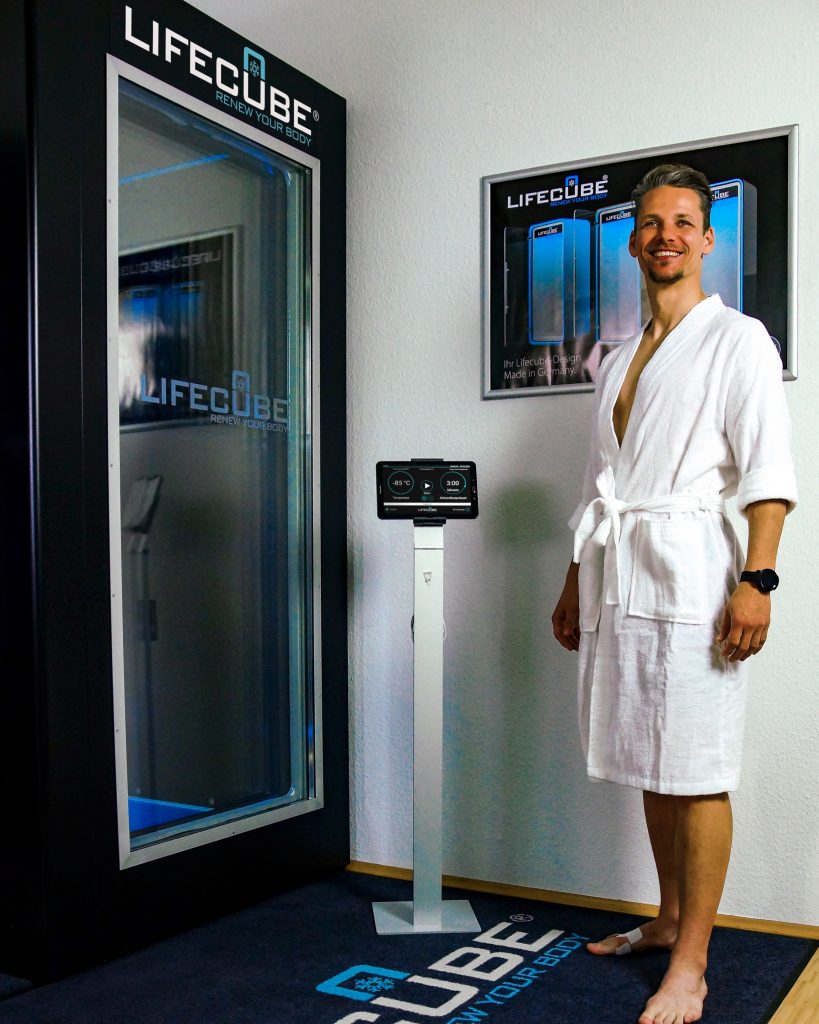
What Is Cryotherapy and How Does It Work?
Cryotherapy – literally meaning “cold therapy” – involves exposing the body to very low temperatures for a short, controlled period. There are two main forms:
Whole Body Cryotherapy (WBC)
A whole body cryotherapy machine envelops you in nitrogen-cooled air, typically between -110°C and -140°C, for two to four minutes. You stand in a chamber (with your head above the cold zone) while the cold works across your skin surface. Despite the dramatic temperatures, most people describe it as intense but entirely manageable.
Localised and Cold Water Therapy
Localised cryotherapy targets specific body areas, while cold water immersion (ice baths, cold showers) offers a more accessible version of the same principle. These are generally less intense but still trigger many of the same biological responses.
The Science: How Cold Temperatures Affect Anxiety and Mood
Here’s where things get genuinely interesting. Cryotherapy for anxiety isn’t just a wellness trend with no substance – there are real physiological mechanisms at play.
Norepinephrine Release
When your body is exposed to extreme cold, it releases norepinephrine (also called noradrenaline) – a neurotransmitter and hormone that plays a key role in attention, focus, and mood regulation. Research has shown that cold exposure can increase norepinephrine levels by up to 300%. Low norepinephrine is linked to depression and anxiety, so this spike may help reset your neurochemical baseline.
The Vagus Nerve and the Stress Response
Cold exposure activates the vagus nerve – the long nerve running from your brainstem down through your chest and abdomen. Vagal activation is associated with reduced heart rate, lower cortisol (your primary stress hormone), and an improved sense of calm. This is part of why cold showers after a stressful day can feel so effective – it’s not just psychological.
Endorphin and Beta-Endorphin Surge
During and after a cryotherapy session, the body releases endorphins – the same feel-good chemicals triggered by exercise. This contributes to the mood lift that many people report in the hours following treatment. Some users describe it as a natural “high” that can last for several hours.
Reduction in Inflammatory Markers
Chronic anxiety is increasingly being linked to systemic inflammation. Studies have found that regular cold exposure can meaningfully reduce pro-inflammatory cytokines – proteins that, when elevated, are associated with both depression and anxiety disorders. By tamping down inflammation, whole body cryotherapy may help address one root cause of persistent low mood.
Benefits People Report from Cryotherapy for Mental Health
Setting aside the clinical data for a moment, what do people who use cryotherapy regularly actually notice? The most commonly reported benefits include:
- Immediate mood lift – most people feel noticeably better within minutes of finishing a session
- Reduced anxiety and mental noise – the focus required to withstand the cold appears to quieten an overactive mind
- Better sleep quality – lower cortisol and reduced inflammation can support more restful sleep, which itself has a huge impact on anxiety levels
- Increased energy and mental clarity – the norepinephrine surge leaves many people feeling sharp and motivated
- A sense of accomplishment – doing something physically challenging builds psychological resilience over time
Using a Cryotherapy Home Machine: Is It a Viable Option?
A cryotherapy home machine generally refers to portable cold therapy devices – including cold plunge tubs, localised cryo devices, and chilled water immersion systems. These won’t replicate the -130°C experience of a clinical whole body cryotherapy machine, but they can still deliver meaningful cold exposure that triggers many of the same physiological benefits.
What to Look for in a Home Device
If you’re considering a cryotherapy home machine, look for:
- Temperature control – the ability to consistently reach at least 10-15°C for effective cold water immersion
- Safety features – especially a timer and clear guidance on session length
- Build quality – insulated tubs or tanks that maintain temperature without constant topping up of ice
- Ease of use – something you’ll actually use regularly rather than store in the garage
Cold Showers as an Entry Point
If you’re curious but not ready to invest in equipment, cold showers are a completely free starting point. Begin with 30 seconds of cold water at the end of your normal shower and build up over several weeks. It won’t match the full-body impact of a clinical cryo chamber, but research suggests even brief cold water exposure can shift your neurochemical profile meaningfully.
Who Should Be Cautious – or Avoid Cryotherapy?
Cryotherapy for anxiety is generally well-tolerated by healthy adults, but it’s not for everyone. You should speak to your GP before trying cryotherapy if you have:
- Cardiovascular conditions – the cold causes vasoconstriction and elevates heart rate initially
- Raynaud’s syndrome – cold exposure can trigger painful episodes
- Uncontrolled high blood pressure
- Cold urticaria (cold allergy)
- Severe claustrophobia – particularly relevant for enclosed cryo chambers
- Open wounds or skin conditions affecting large areas of the body
Pregnant women and children under 18 should also avoid whole body cryotherapy sessions.
How to Get Started with Cryotherapy in the UK
If you’d like to try cryotherapy for anxiety, here’s a practical approach:
Step 1: Start Small at Home
Begin with two to three minutes of cold water at the end of your shower. Focus on your breathing – inhale slowly through the nose, exhale through the mouth. Build this habit for two to three weeks before progressing.
Step 2: Find a Reputable UK Clinic
Search for registered wellness clinics or sports recovery centres in your area. Many major UK cities including London, Manchester, Edinburgh, and Birmingham have dedicated cryotherapy facilities. Look for clinics where staff can talk you through the process and have clear safety protocols in place.
Step 3: Plan a Consistent Schedule
As with exercise, consistency matters more than intensity. Three sessions per week over four to six weeks appears to be the threshold at which people begin noticing sustained improvements in mood and anxiety. Sporadic single sessions may give you an immediate lift, but the neurochemical benefits compound with regularity.
Step 4: Combine with Other Mental Health Practices
Cryotherapy works best as part of a broader approach. Pair it with regular physical exercise, adequate sleep, reduced alcohol intake, and – most importantly – professional support if your anxiety is significantly impacting your daily life.
Cold Therapy, Warm Results
The science behind cryotherapy for anxiety is genuinely compelling, even if it’s still maturing. The combination of norepinephrine release, vagal nerve activation, anti-inflammatory effects, and endorphin surges gives cold therapy a real biological basis for supporting mental wellbeing – not just a placebo effect or wellness fad.
Whether you start with cold showers, invest in a cryotherapy home machine, or book a session at a whole body cryotherapy machine clinic near you, the key is consistency and integration. Cold therapy isn’t a magic bullet – but as part of a thoughtful, multi-pronged approach to mental health, it could be a genuinely powerful tool in your toolkit.
Ready to explore cryotherapy further? Browse our guides on choosing the right cryotherapy home machine and what to expect from your first whole body cryotherapy machine session.
Frequently Asked Questions
Can cryotherapy replace medication or therapy for anxiety?
No – and it shouldn’t be used that way. Cryotherapy for anxiety is best understood as a complementary tool. It can support mood, reduce stress hormones, and improve sleep, but it does not address the cognitive and behavioural patterns that therapies like CBT are designed to treat. If you’re currently on medication or in therapy, speak to your healthcare provider before adding cryotherapy to your routine.
Is a whole body cryotherapy machine safe to use?
When operated by trained professionals at a reputable clinic, whole body cryotherapy machines are considered safe for healthy adults. The sessions are brief (two to four minutes), your head remains above the cold zone, and staff are present throughout. Home cold plunge setups carry a lower risk profile since temperatures are far less extreme – but always follow manufacturer guidance.
Can I try cryotherapy for anxiety at home?
Yes, with realistic expectations. A cryotherapy home machine – such as a cold plunge tub – won’t reach the temperatures of a clinical cryo chamber, but consistent cold water immersion at home still triggers norepinephrine release, vagal activation, and endorphin production. It’s an accessible and cost-effective starting point.
Does cryotherapy help with stress as well as anxiety?
Absolutely. The mechanisms that make cryotherapy for anxiety effective – reduced cortisol, increased norepinephrine, endorphin release – are equally relevant to stress management. Many users find it particularly useful during high-pressure periods at work or significant life events.
If you train hard, you recover harder – or at least, you should. For MMA fighters and martial artists across the UK, the gap between a tough sparring session and being ready to go again can make or break a training camp. That’s where cryotherapy for MMA fighters is changing the game.
Cold therapy has been used by elite athletes for decades, but modern cryotherapy takes it to a whole new level. Whether you’re a weekend warrior grappling at your local gym or a professional preparing for a title fight, understanding how cryotherapy works – and how to access it – could be the edge you’ve been missing.
In this guide, we’ll cover what cryotherapy for MMA fighters actually does to your body, why UK martial artists are increasingly turning to it, how to choose the right equipment, and how to build it into your training routine safely and effectively.
What Is Cryotherapy and How Does It Work for MMA?
Cryotherapy simply means “cold therapy.” In practice, it refers to the controlled exposure of the body – either whole-body or localised – to extremely low temperatures for a short, defined period. Whole-body cryotherapy (WBC) typically involves standing in a cryochamber chilled to between -110°C and -140°C for two to four minutes.
The cold triggers a cascade of physiological responses. Blood vessels constrict near the skin’s surface, drawing blood toward the core to protect vital organs. When you step out, that blood rushes back to the periphery, flushing tissues with oxygen-rich, nutrient-loaded blood. Inflammation is dampened, pain signals slow down, and the body essentially gets a hard reset.
For cryotherapy for MMA fighters, this matters because the sport is brutally demanding on the body. A single MMA session can involve striking, grappling, wrestling, and high-intensity conditioning – all of which create significant muscle damage and inflammatory stress. Traditional recovery methods like ice baths help, but they can’t match the speed or the full-body coverage of modern cryotherapy.
Key Recovery Benefits of Cryotherapy for MMA Fighters
Faster Muscle Recovery Between Sessions
One of the biggest challenges in MMA training is managing volume. Fighters often train twice a day – strength and conditioning in the morning, technical work in the evening. Without proper recovery, quality drops, and injury risk climbs.
Cryotherapy for MMA fighters accelerates muscle recovery by reducing delayed onset muscle soreness (DOMS) – that deep ache you feel 24 to 48 hours after a hard session. Research consistently shows that cold exposure reduces the inflammatory markers associated with DOMS, helping athletes return to full capacity faster.
For UK fighters cramming preparation into a 12-week camp, even shaving a day off recovery time between hard sessions adds up to significantly more quality training over the course of a camp.
Reduced Inflammation and Joint Pain
MMA is notoriously hard on joints. Fighters commonly deal with chronic inflammation in knees, hips, shoulders, and wrists from the repetitive impact of striking and the joint stress of grappling.
Whole-body cryotherapy has been shown to measurably reduce systemic inflammation – the kind that builds up over time and can quietly erode performance and long-term joint health. By incorporating regular cryotherapy sessions, fighters can keep inflammatory load lower across an entire training camp, rather than only addressing acute soreness after individual sessions.
Better Sleep and Mental Recovery
Recovery isn’t just physical. MMA fighters carry significant psychological stress – the pressure of competition, the mental load of learning complex techniques, and the emotional toll of hard sparring. Poor sleep is one of the most common complaints among competitive fighters.
Cryotherapy stimulates the release of norepinephrine and endorphins, which have mood-lifting and stress-reducing effects. Many athletes report substantially improved sleep quality after regular cryotherapy sessions, and better sleep is arguably the single most important recovery tool available.
Improved Circulation and Oxygen Delivery
The vascular pumping action triggered by cryotherapy – constriction followed by dilation – acts almost like a cardiovascular workout for your circulatory system. Over time, regular sessions can improve peripheral circulation, helping muscles receive nutrients more efficiently and clear waste products more quickly.
For fighters working on cardio endurance, improved circulation means the muscles they’re training are better supported at a cellular level.
Using an Electric Cryotherapy Machine: What UK Fighters Need to Know
Commercial cryotherapy chambers have historically been large, expensive, and found only in dedicated sports medicine clinics or elite football clubs. That’s changing fast, with a new generation of compact, efficient machines making professional-grade recovery more accessible.
An electric cryotherapy machine uses electrical refrigeration to achieve extremely low temperatures, rather than relying on liquid nitrogen. This brings several practical advantages for UK fighters and gyms:
- Safety – No liquid nitrogen means no risk of oxygen displacement or handling hazardous cryogenic gases. This is a significant factor for gym environments where multiple people train.
- Consistency – Electric systems maintain precise temperatures reliably, session after session.
- Lower running costs – No consumables to refill means operational costs are more predictable over time.
- Regulatory compliance – In the UK, liquid nitrogen cryotherapy is subject to specific HSE guidelines. An electric cryotherapy machine sidesteps many of these concerns.
For serious MMA clubs, investing in a professional electric cryotherapy machine can make daily cryotherapy sessions accessible for every member of the squad – not just headline fighters.
Cryotherapy Machine for Home: Recovery on Your Own Schedule
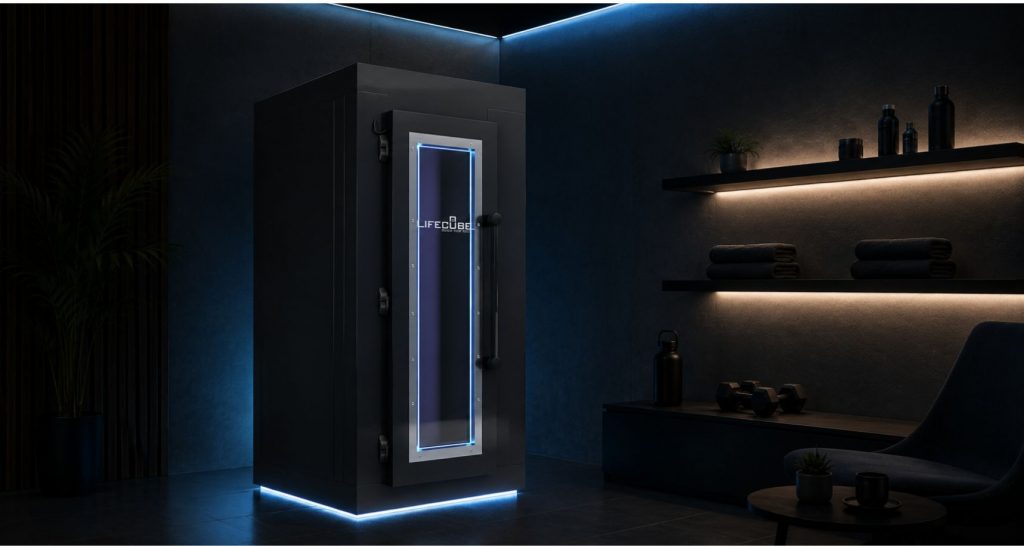
Not every fighter trains at a club with its own recovery suite. And even those who do often find that their recovery happens at home – evenings after training, rest days, and the final week before a fight when travel to a facility feels like an unnecessary effort.
A cryotherapy machine for home makes it possible to integrate cold therapy into your routine without leaving the house. Home units have improved dramatically in quality and affordability in recent years, and several models now offer performance close to commercial-grade chambers.
When considering a cryotherapy machine for home, UK fighters should look at:
- Temperature range – The unit should reach at least -85°C to deliver genuine therapeutic benefit. Machines that only reach -60°C are less effective.
- Session timer and safety cut-off – Essential for unsupervised home use.
- Size and power requirements – Some home units require a three-phase power supply, which not all UK homes have. Confirm electrical compatibility before purchasing.
- Warranty and UK support – Recovery equipment takes regular use. Choose a supplier with genuine UK-based customer support and replacement parts availability.
A quality cryotherapy machine for home represents a significant but potentially transformative investment for any athlete serious about maximising their recovery between sessions.
How to Build Cryotherapy Into Your MMA Training Plan
Cryotherapy works best as part of a broader recovery protocol, not as a standalone fix. Here’s how UK fighters can practically integrate it:
During a Training Camp
- Use cryotherapy after your hardest sessions – particularly after sparring days or heavy strength work.
- Aim for three to five sessions per week during peak camp. Daily use is safe and even beneficial if your schedule allows.
- Combine with good nutrition, hydration, and adequate sleep for compounding recovery benefits.
In the Off-Season
- Two to three sessions per week is sufficient to maintain the circulation and anti-inflammatory benefits during lower-intensity training blocks.
- Use this period to build familiarity with the protocol and dial in what works for your body.
Fight Week
- Light cryotherapy (shorter sessions, slightly less extreme temperatures) in the days before a fight can help manage pre-fight inflammation and support sleep quality.
- Avoid very intense cold exposure in the 24 hours before competition, as it can temporarily affect muscle contractility in some individuals.
Make Cryotherapy Part of Your Competitive Edge
The difference between good fighters and great fighters often comes down to recovery. Training hard is the easy part – everyone does that. The athletes who consistently reach their next session at 100% are the ones who put as much thought into recovery as they do into their technique work.
Cryotherapy for MMA fighters is no longer a luxury reserved for professional clubs or football academies. Whether you access it through your gym’s electric cryotherapy machine or invest in a cryotherapy machine for home, the science and the athlete testimonials both point in the same direction: regular cryotherapy can meaningfully improve how fast you recover, how well you sleep, and how consistently you perform.
If you’re serious about your training and your results, it’s time to get cold.
Ready to explore cryotherapy equipment for your gym or home setup? Browse our range of electric cryotherapy machines and home cryotherapy units – built for UK athletes who train at the highest level.
Frequently Asked Questions
Is cryotherapy safe for MMA fighters?
Yes, whole-body cryotherapy is generally considered safe for healthy athletes when used as directed. Sessions are short (two to four minutes), and modern machines – particularly electric cryotherapy machine models – include automated safety cut-offs. Anyone with cardiovascular conditions, Raynaud’s disease, or cold urticaria should consult a GP before starting.
How quickly will I notice results?
Many fighters report reduced soreness and better sleep quality after their first few sessions. More significant benefits – improved recovery speed and reduced chronic inflammation – typically become apparent after two to three weeks of consistent use.
Is a cryotherapy machine for home worth the investment?
For fighters training at high volume – five or more sessions per week – a cryotherapy machine for home can pay for itself through improved performance and reduced time lost to soreness and minor injuries. The convenience factor also means you’re far more likely to actually use it consistently.
