

The modern football calendar is relentless. Between league fixtures, cup ties, and international duties, professional and semi-pro players in the UK are often asked to perform at 100% intensity twice a week. When you’re covering 10km to 12km per match with constant sprints and physical collisions, the body takes a battering. This is where cryotherapy for footballers has shifted from a “luxury extra” to a non-negotiable part of the weekly routine. Gone are the days of shivering in a wheelie bin filled with ice; today’s elite recovery involves sophisticated cold-air technology designed to get players back on the pitch faster than ever before.
In this guide, we’ll explore how extreme cold helps the body heal, why clubs are investing in their own setups, and how you can integrate these benefits into your own training regime.
Why Elite Clubs Prioritise Cryotherapy for Footballers
In the Premier League and Championship, “recovery” is the buzzword of the decade. Coaches know that the team with the freshest legs in the 80th minute usually takes the three points. Cryotherapy involves exposing the body to ultra-low temperatures (often below -100°C) for a short period, typically two to three minutes.
The Science of “The Big Freeze”
When a player enters a cryotherapy chamber, the sudden drop in skin temperature triggers a systemic response. Blood rushes to the core to protect vital organs, becoming enriched with oxygen and nutrients. Once the session ends and the player warms up, this oxygenated blood rushes back to the extremities.
For a footballer, this process helps:
- Flush out metabolic waste (like lactic acid) built up during 90 minutes of play.
- Reduce “DOMS” (Delayed Onset Muscle Soreness), meaning you aren’t waddling like a penguin two days after a game.
- Lower core body temperature quickly after matches played in high humidity or heat.
The Major Benefits: From Inflammation to Injury Prevention
Football is a game of high-impact “micro-traumas.” Every tackle and every sudden change of direction causes tiny tears in the muscle fibres.
Reducing Exercise-Induced Inflammation
Inflammation is a natural part of healing, but excessive swelling can limit range of motion and cause pain. Cryotherapy for footballers acts as a powerful anti-inflammatory. By constricting blood vessels, it limits the swelling around joints—particularly the ankles and knees—allowing for a faster return to light training.
Better Sleep and Mental Wellbeing
Recovery isn’t just physical. The “cold shock” of cryotherapy triggers the release of endorphins and norepinephrine. Players often report significantly improved sleep quality following a late-night match if they use a cryo-chamber. In a long, grueling season, the mental “reset” provided by these sessions is invaluable for maintaining focus.
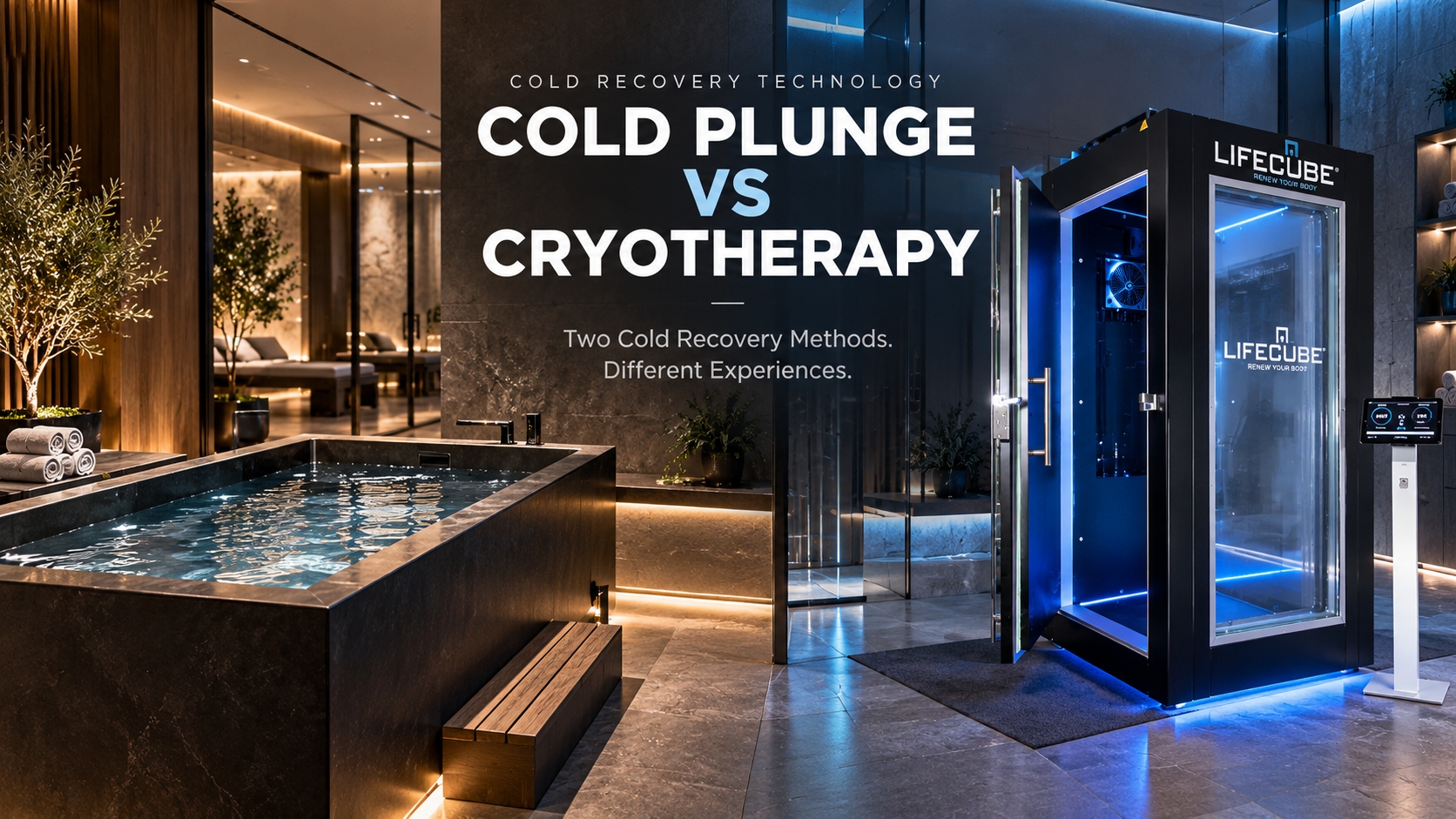
Cryotherapy vs. Traditional Ice Baths: Which is Better?

For years, the ice bath was the gold standard. However, the tide has turned toward Whole Body Cryotherapy (WBC) for several reasons:
- Time Efficiency: An ice bath requires 15–20 minutes of discomfort. A cryo-session is done in three minutes.
- Dry vs. Wet: Being “dry” is much more pleasant for players. There’s no need to shower and dry off repeatedly, making it easier to fit into a busy training schedule.
- Consistency: A cryotherapy machine provides a precise, controlled temperature that doesn’t fluctuate, unlike a tub of melting ice.
Pro Tip: While ice baths are great for localized numbing of a specific injury, whole-body chambers provide a more holistic systemic recovery that benefits the entire nervous system.
Integrating Cryotherapy into the Weekly Training Cycle
To get the most out of the technology, timing is everything. Here is how a typical professional schedule might look:
Match Day +1 (The Recovery Day)
The day after a game is usually the “peak” of soreness. A morning cryo-session helps reduce the stiffness that sets in overnight, allowing the player to engage in active recovery like light cycling or swimming.
Pre-Match Activation
Surprisingly, some players use cryotherapy before a game or heavy training session. Short exposures can “wake up” the nervous system, increasing heart rate and oxygen flow, leading to a feeling of increased energy and alertness.
Investing in Recovery: Costs and Setup
As the demand for this technology grows, many local clubs and private sports clinics are looking at the financial side of things. If you are a club owner or a high-level athlete, you might be wondering about the cryotherapy machine cost.
Understanding the Investment
The price of a professional-grade unit can vary wildly depending on whether it is a “cryosauna” (head-out) or a “walk-in chamber.” Generally, the cryotherapy machine cost starts at around £20,000 for entry-level models and can exceed £100,000 for multi-person electric chambers used by top-tier clubs.
Finding a Cryotherapy Machine for Sale
When looking for a cryotherapy machine for sale, it is vital to consider the running costs. Liquid nitrogen-fed systems often have a lower upfront cost but require ongoing gas deliveries. Electric systems have a higher initial price tag but are often cheaper and easier to maintain over a five-year period.
Staying Match-Ready
In the high-stakes world of football, the difference between winning a header and being a half-second too slow is often down to how well you’ve recovered. Cryotherapy for footballers offers a scientifically backed, time-efficient way to reduce pain, fight inflammation, and keep the body in peak condition from August through May.
Whether you are an individual looking to level up your game or a club manager looking for a cryotherapy machine for sale, investing in cold therapy is an investment in performance.
Ready to upgrade your recovery game?
Contact our specialist team today to learn more about our range of recovery solutions and get a bespoke quote on the latest cryotherapy technology. Don’t let soreness hold you back from your best season yet!
Frequently Asked Questions
Is cryotherapy safe for all footballers?
Yes, for the vast majority of players, it is very safe. However, individuals with high blood pressure, heart conditions, or Raynaud’s disease should consult a doctor first. Always ensure sessions are supervised by a trained professional.
How often should a footballer use cryotherapy?
In a peak season, elite players might use it 2–3 times a week. For amateur players, once a week (usually the day after a match) is enough to see significant improvements in recovery speed.
Does it actually help with ligament injuries?
While cryotherapy is excellent for muscle recovery and general inflammation, specific ligament tears (like the ACL) require a structured physiotherapy plan. Cryotherapy is a supplement to rehab, not a replacement for medical treatment.